
You have seen NAD supplements everywhere. You have heard it described as an anti-aging molecule, a cellular energy booster, and a longevity tool. But most of the explanations start in the middle, skipping the foundational question: what does NAD actually do inside your cells, and why does that matter for how you feel and age?
The four NAD roles give you the complete picture in plain language – from the moment NAD is formed to the way it influences how your body ages over decades. Understanding all four is what makes NAD supplementation feel grounded in biology rather than marketing.
The Short Answer
NAD function in the body covers four core roles: it shuttles electrons to power the mitochondria, converts food into ATP, enables the DNA repair enzymes that fix daily genetic damage, and activates sirtuin proteins that regulate how cells age. All four roles require NAD as their substrate, and all four operate below capacity when NAD levels decline, which they do gradually and consistently from the mid-30s onward.
What NAD Is, Before What It Does
NAD stands for nicotinamide adenine dinucleotide. It is a molecule found in every living cell, and it has been present in all living organisms since the earliest life on Earth. That universal presence is the first signal of how foundational it is.
NAD exists in two forms that cycle between each other constantly. NAD+ is the oxidized form, ready to accept electrons. NADH is the reduced form, carrying electrons that have been accepted. This cycling between the two forms is not a side feature. It is the primary mechanism through which NAD performs its central function in energy metabolism.
Cleveland Clinic describes NAD as a molecule that helps cells make energy by carrying electrons from one chemical reaction to another, powering nearly everything the body does, and keeping cells working properly as you get older (Cleveland Clinic NAD overview).
NAD is not produced in unlimited quantities. The body synthesizes it from vitamin B3 forms, including niacin and NR, as well as from the amino acid tryptophan. The total cellular NAD pool is maintained by a balance of synthesis, consumption, and recycling through the salvage pathway. When any of those three systems is disrupted, by age, inflammation, poor diet, or excessive NAD consumption by repair enzymes, the total pool drops.
The Four NAD Roles
Each of the four NAD roles is distinct, each depends on adequate NAD availability, and each declines when NAD is depleted.
The Electron Shuttle
The most fundamental NAD function is the simplest to describe. NAD acts as an electron carrier, accepting electrons from one molecule and donating them to another. In its oxidized form (NAD+), it picks up electrons during metabolic reactions, becoming NADH. NADH then delivers those electrons to the mitochondrial electron transport chain, where they are used to generate ATP.
This electron shuttle role is why NAD is described as central to energy metabolism. It is not producing energy directly. It is moving the electrons that allow the mitochondria to produce energy. Without NAD, the electron transport chain cannot run, and cells cannot convert food into the ATP they need for every biological process.
NIH ODS confirms that NAD is primarily involved in catabolic reactions that transfer the potential energy in carbohydrates, fats, and proteins to ATP, and that more than 400 enzymes require NAD to catalyze reactions in the body (NIH ODS niacin fact sheet).
The Energy Converter
The second role is what most people are describing when they say NAD supports energy. It is the specific application of the electron shuttle to the three main energy-producing pathways: glycolysis, the citric acid cycle, and mitochondrial oxidative phosphorylation.
NAD+ accepts electrons from glucose breakdown in glycolysis and from the citric acid cycle, forming NADH. All of this NADH delivers electrons to the mitochondria to drive ATP synthesis. The total ATP yield depends directly on NAD+ availability at every stage. When NAD+ is limited, the cycle runs slowly. When it is abundant, it runs efficiently. This is the mechanism connecting NAD levels to consistent energy versus persistent fatigue.
Research confirms that NAD is a coenzyme for redox reactions central to energy metabolism, and that the NAD+/NADH ratio controls the activity of several key enzymes in energy-producing pathways.
The Repair Enabler
The third NAD role is the one with the most direct connection to aging. PARP enzymes, which stand for poly ADP-ribose polymerases, are the primary machinery for identifying and repairing damage to DNA. Every day, your DNA sustains damage from UV radiation, reactive oxygen species produced during normal metabolism, environmental exposures, and replication errors. PARP enzymes scan for this damage continuously and use NAD+ as their substrate to carry out repairs.
Each repair event consumes NAD. Healthline confirms that NAD activates PARP enzymes directly involved in DNA repair, and that NAD levels continue to fall with age, linked to the accumulation of DNA damage that drives age-related cellular decline (Healthline NR and NAD overview).
This is one of the reasons NAD decline with age creates a reinforcing problem. Lower NAD means less PARP activity, which means less DNA repair. Unrepaired damage accumulates faster. And accumulated damage activates PARP more strongly, further depleting NAD. The cycle runs in the wrong direction.
The Aging Regulator
The fourth NAD role is the one most connected to the longevity research that has driven the explosion of interest in NAD supplementation. Sirtuins are a family of seven proteins that regulate gene expression, cellular metabolism, inflammation response, cellular senescence, and the rate at which cells age. All seven require NAD+ as their substrate to function.
Sirtuin activity is therefore directly gated by NAD availability. When NAD is abundant, sirtuins can run at full capacity, keeping gene expression tightly regulated, metabolic efficiency high, and cellular aging processes well-controlled. When NAD declines, sirtuin activity declines proportionally, and the cellular regulatory systems they maintain become less precise.
PMC research on NR supplementation confirms that NAD is an essential cofactor for sirtuins and PARP enzymes, and that adequate NAD is directly linked to the cellular processes that maintain tissue and metabolic homeostasis and support healthy aging across multiple organ systems (PMC NR current state of research).
How NAD Declines With Age

The decline in NAD with age is one of the most consistent findings in cellular biology research. By midlife, most adults have roughly half the NAD they had at 20. By older age, the decline is more significant still.
The drivers compound each other: CD38 enzyme degradation of NAD increases with age, PARP repair consumption rises as DNA damage accumulates, NAD synthesis capacity declines, and dietary precursor intake often decreases. The result is a system where NAD demand is increasing while synthesis is decreasing and degradation is accelerating.
NIH NIA confirms that NAD decline is a driven biological process linked to altered metabolism and increased susceptibility to age-associated diseases, and that the research case for NAD precursor supplementation rests on restoring a supply that multiple age-related processes are simultaneously depleting (NIH NIA NAD metabolism and aging).
What Happens When NAD Is Low
When NAD is insufficient for the electron shuttle, mitochondrial energy production becomes less efficient, energy feels less consistent, and recovery takes longer. When NAD is insufficient for DNA repair, damage accumulates faster than the repair machinery can address it. When NAD is insufficient for sirtuin activation, the regulatory proteins that control gene expression and metabolic efficiency become less active, and the cellular aging process accelerates.
WebMD notes that low NAD levels are linked to health concerns including aging and chronic illnesses such as heart disease, Alzheimer’s disease, and vision loss, and that supplementation with NR appears effective at raising NAD levels in a way that can support these cellular functions (WebMD nicotinamide riboside overview).
How the Body Makes and Maintains NAD
NAD is not obtained directly from food in meaningful amounts. The body synthesizes it through three pathways: the de novo pathway from tryptophan, the Preiss-Handler pathway from nicotinic acid, and the salvage pathway that converts nicotinamide, NR, and NMN back into NAD. The salvage pathway is the most active in most cells and the one NR supplements work through. NR enters cells through nucleoside transporters, converts to NMN, then to NAD, making it the most efficient oral precursor for raising cellular NAD. NIH MedlinePlus confirms the body needs NAD for many processes and that low levels can cause health problems (NIH MedlinePlus NAD overview).
Research confirms that all tissues in the body convert absorbed niacin into NAD as the main metabolically active form, and that more than 400 enzymes require NAD to catalyze reactions throughout the body, more than for any other vitamin-derived coenzyme.
Foods That Support NAD Production
Food does not contain meaningful amounts of NAD directly. When dietary NAD and its precursors are consumed, they are converted to nicotinamide in the gut before absorption and then used to synthesize NAD through the salvage pathway.
The best dietary support for NAD production comes from foods rich in vitamin B3 and tryptophan. Meat, including chicken, turkey, and beef, provides both. Fish, particularly tuna and salmon, is another strong source. Legumes, whole grains, nuts, and seeds deliver meaningful amounts of niacin and tryptophan. Dairy and eggs provide tryptophan specifically.
None of these foods will produce the same NAD elevation as a daily NR supplement. But they provide the foundational substrate availability that the body’s NAD synthesis systems depend on. A diet chronically low in these foods compounds the age-related NAD decline that supplementation is trying to address.
Why Consistent NAD Support Matters
The four NAD roles operate simultaneously around the clock. DNA repair happens continuously. The electron shuttle cycles constantly. Sirtuin regulation is an ongoing process. NAD support needs to be consistent rather than occasional because a single dose raises blood NAD sharply then returns to baseline, while daily supplementation maintains an elevated level that keeps all four roles supplied continuously.
Common Myths Worth Addressing
“NAD+ and NADH are the same thing.” NAD+ is the oxidized, electron-accepting form. NADH is the reduced, electron-carrying form. Both are necessary. “You can get enough NAD from food.” Food provides precursors, not NAD itself. Dietary vitamin B3 and tryptophan support baseline synthesis but do not overcome age-related NAD decline. “NAD supplements work immediately.” NR raises blood NAD within hours but functional benefits across all four roles require weeks of consistent elevated NAD. “If NAD makes energy, it’s like caffeine.” NAD supports mitochondrial efficiency, producing a stable consistent baseline rather than an acute stimulant peak.
Frequently Asked Questions: NAD Function in the Body
What is the function of NAD in the body?
NAD function in the body covers four distinct roles. First, it acts as an electron shuttle, carrying electrons between metabolic reactions and the mitochondria. Second, it enables the conversion of food into ATP through glycolysis, the citric acid cycle, and oxidative phosphorylation. Third, it powers PARP enzymes that repair DNA damage continuously throughout the day. Fourth, it enables sirtuin proteins that regulate gene expression, inflammation, and the cellular aging process. All four require NAD as their substrate, and all four are impaired when NAD levels decline.
What does NAD do for your cells?
NAD cycles constantly between NAD+ and NADH, shuttling electrons that power the mitochondria. It serves as the substrate for PARP enzymes that repair genetic damage and for sirtuin proteins that regulate cellular aging. When NAD is adequate, all these processes run efficiently. When depleted, all four functions decline simultaneously.
What happens when NAD levels are too low?
Low NAD reduces ATP output, slows PARP-mediated DNA repair, and decreases sirtuin activity, reducing the precision of gene expression control and inflammatory response. Over time, low NAD is linked to accelerated cellular aging, reduced metabolic efficiency, and increased risk of age-associated conditions. The decline is gradual enough that most people notice it as a slow shift in energy and recovery rather than a distinct change.
How does NAD affect aging?
NAD affects aging through all four roles simultaneously. The DNA repair function maintains genomic integrity. Sirtuin activation regulates cellular aging directly. Energy conversion determines how efficiently cells maintain function as metabolic efficiency declines. NAD decline is linked causally to age-associated diseases including cognitive decline, metabolic disorders, muscle loss, and cardiovascular conditions.
What foods increase NAD in the body?
No food contains meaningful amounts of NAD directly. The body makes NAD from vitamin B3 forms and tryptophan. Foods rich in these include chicken, turkey, beef, tuna, salmon, eggs, dairy, legumes, whole grains, and nuts. They support baseline synthesis but do not produce the same elevation in cellular NAD that daily NR supplementation achieves.
How do you increase NAD naturally?
Diet, regular exercise, quality sleep, and limiting alcohol all support healthy NAD levels. Exercise increases the NAD+/NADH ratio in muscle cells. Sleep supports circadian NAD cycling. Alcohol metabolism consumes large amounts of liver NAD. For adults with age-related NAD decline, daily NR supplementation produces consistent and measurable increases in blood and tissue NAD that lifestyle measures alone do not achieve.
How Goli Renew Addresses the NAD Decline Directly
Understanding the four NAD roles makes the case for consistent NAD support clear. The electron shuttle, energy conversion, DNA repair, and aging regulation functions all run continuously and all require NAD as their substrate. Letting NAD decline over years without support means all four systems gradually slow together.
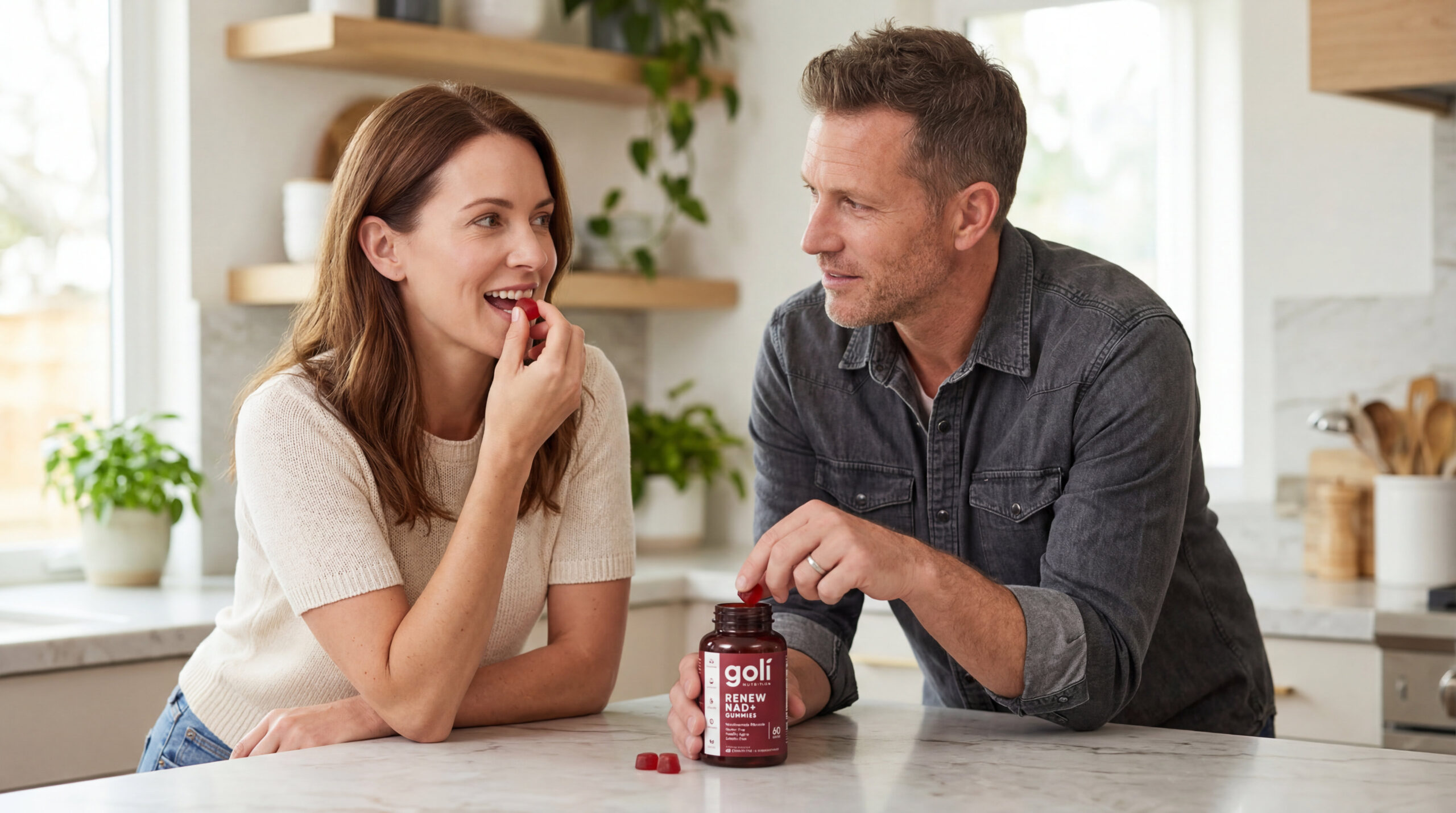
Goli Renew NAD+ Gummies are formulated with NR as the primary precursor, the form that enters cells through confirmed nucleoside transporters and converts to NAD in two efficient enzymatic steps. Vitamin B3 in the formula supports the salvage pathway from a complementary entry point. Vitamin C protects the cellular environment where the four NAD roles operate. The liquid-center gummy format makes daily consistency achievable without effort.
The certifications confirm the formulation quality: Gluten-Free, Non-GMO, Vegan, Gelatin-Free, Physician Owned, and Science-Backed Ingredients.
People who build daily NAD routines tend to understand the four roles and why consistently supporting all four is what ultimately drives results.
I have secured exclusive TikTok pricing for Better Gut Daily readers. Get access here.
You May Also Like
Understanding how NAD function in the body connects to everyday symptoms is the natural next step after biology. The gut and NAD are more connected than most people realize, since gut inflammation actively depletes NAD through CD38 enzyme activity. Building the gut health habits that reduce that baseline inflammation is the food-layer complement to daily NAD support.
If you are experiencing digestive symptoms alongside the energy and recovery changes associated with NAD decline, the IUD bloating and gut adjustment guide covers how hormonal changes affect both the gut and cellular environment, and what supports both layers simultaneously.
The Bottom Line
The Four NAD Roles give NAD function in the body a complete and plain-language answer: the electron shuttle powers mitochondria, the energy converter turns food into ATP, the repair enabler maintains genetic integrity daily, and the aging regulator keeps sirtuin proteins running at full capacity. All four decline when NAD declines, and all four recover when NAD is consistently restored.
Start this week by anchoring two Goli Renew gummies to the same midday meal every day. The four roles begin receiving more substrate from the first dose. Each week of consistent intake builds on the last as cellular adaptation compounds across the electron shuttle, the repair system, and the regulatory layer simultaneously.
Your cells respond to what you give them consistently, and daily NR support is the most evidence-backed daily investment you can make across all four NAD roles simultaneously.
I have secured exclusive TikTok pricing for Better Gut Daily readers. Get access here.
References
- Cleveland Clinic: NAD nicotinamide adenine dinucleotide overview
- NIH Office of Dietary Supplements: Niacin health professional fact sheet
- PMC: Nicotinamide riboside, the current state of research and therapeutic uses
- NIH MedlinePlus: Nicotinamide riboside overview and safety
- Healthline: Nicotinamide riboside benefits, side effects and dosage
- NIH National Institute on Aging: NAD metabolism and aging research
- WebMD: Nicotinamide riboside overview, uses and side effects