
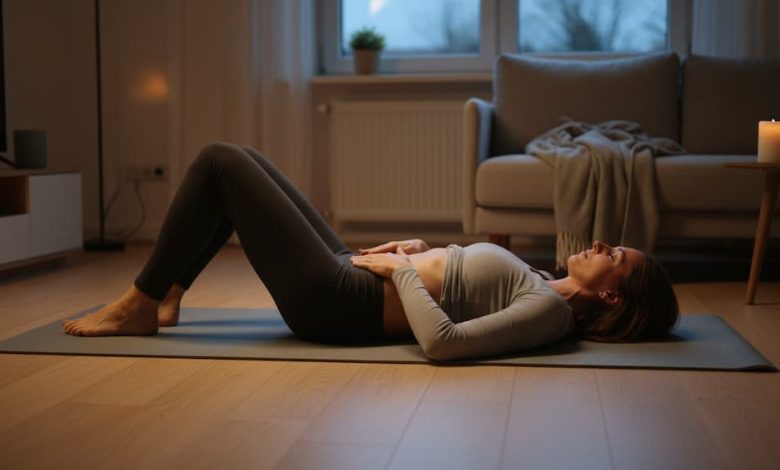
That tight, full, pressurized feeling in your abdomen is not something you have to wait out. Stomach massage for bloating is one of the most accessible and evidence-supported tools for getting relief without medication, and you can do it lying on your couch in about five minutes.
The research is clear that gentle abdominal massage relaxes the stomach muscles, stimulates intestinal movement, and helps move trapped gas through the digestive tract. The technique matters. Random circular rubbing produces inconsistent results. The Gut Release Sequence is a three-step approach that follows the actual path of your colon, which is what makes it work reliably.
The Short Answer
Stomach massage for bloating works by relaxing the abdominal muscles, stimulating peristalsis, and physically guiding trapped gas through the colon. The most effective technique follows the colon’s path: up the right side, across the top, and down the left. A five to ten minute session with light to moderate pressure can reduce bloating within 15 to 30 minutes. Consistent daily practice produces longer-term improvements in digestive comfort and transit regularity.
Why Bloating Happens and What Massage Does to It
Bloating is fundamentally a pressure problem. Gas or fluid builds up in the digestive tract faster than it moves through, creating distension, tightness, and discomfort. The causes are varied: swallowed air during eating, fermentation of food by gut bacteria, constipation slowing transit, hormonal fluctuations affecting gut motility, and food sensitivities triggering inflammation.
Abdominal massage addresses bloating through three overlapping mechanisms. The first is muscular relaxation. Tension in the abdominal wall restricts intestinal movement. Gentle pressure releases that tension and allows the intestines to move more freely underneath. The second is direct mechanical movement. Pressure applied along the colon’s path physically nudges gas and stool forward, reducing the backlog that causes distension. The third is nerve stimulation. The vagus nerve runs through the abdomen and controls gut motility. Massage stimulates vagal activity, which increases the wave-like contractions that move contents through the digestive tract.
Healthline notes that research confirms abdominal massage helps relax stomach muscles, stimulates digestion, and reduces constipation, with a 15-minute session twice daily shown to significantly reduce abdominal bloating and circumference in clinical settings (Healthline stomach massage benefits).
The Gut Release Sequence
The Gut Release Sequence is a three-step abdominal massage approach that follows the anatomical path of the large intestine. The colon begins at the lower right abdomen, travels upward, crosses left, and descends to the lower left. Massage that mirrors this path works with your digestive system rather than across it, producing faster and more consistent relief than unfocused rubbing.
The Warm-Up Pass
Lie on your back on a firm surface, bend your knees, and place your feet flat. This position relaxes the abdominal wall and removes the tension that would otherwise resist the massage. If lying flat is uncomfortable, a small pillow under the knees makes the position easier to hold.
Before applying directional pressure, spend one to two minutes warming the abdomen. Place both palms flat on your belly and make slow clockwise circles covering the entire abdomen. Use light pressure, about the weight of a resting hand. This relaxes surface tension and increases blood flow to the area, preparing the muscles for the deeper work in Step Two.
The Colon Trace
Place your fingertips or the heel of your hand at your lower right abdomen, just inside your hip bone. This is where the ascending colon begins. Apply moderate, sustained pressure and move slowly upward toward your right ribs, across the upper abdomen below the sternum, and then down the left side toward your left hip bone. This horseshoe path is the exact route of your large intestine.
Cleveland Clinic confirms that the large intestine travels up the right side of the abdomen, across the upper stomach, and down the left side, and that starting the massage at the lower right and working in a horseshoe pattern is the most effective approach for gas and bloating relief (Cleveland Clinic bloating remedies).
Complete the horseshoe path slowly. Repeat the full circuit four to six times. Gurgling or movement as gas shifts is the desired response. If any section feels tight or tender, spend extra time there with gentle circles before moving on.
The I.L.U. Finish
The I.L.U. stroke is the refinishing pass that targets the descending colon specifically, which is where gas most commonly gets trapped before the final exit. The letters describe the shape of each movement.
The I stroke: using both hands, make a single vertical stroke from just below the left rib cage straight down to the left hip bone. Repeat 10 times. The L stroke: start at the lower right abdomen, stroke horizontally across to the left side, then down to the left hip bone, forming an L shape. Repeat 10 times. The U stroke: stroke up the right side, across the top, and down the left side in one continuous movement, tracing a U shape across the full colon path. Repeat 10 times.
WebMD confirms that the I.L.U. technique, which follows the large intestine path using progressively longer strokes, is an effective self-massage approach for digestive relief and bowel regularity (WebMD belly massage for digestion). Complete the full sequence in five to ten minutes.
What the Research Shows
A 2018 randomized controlled trial found that people who received 15-minute abdominal massage twice daily for three days showed significant reductions in bloating, decreased abdominal circumference, and improvement in constipation. A separate study found that 85 percent of participants who practiced daily abdominal massage continued after the study ended.
PMC research confirms that abdominal massage has a scientifically evidence-based effect on reducing bloating and constipation symptoms across multiple randomized controlled trials, with consistent findings across different populations including older adults and people with chronic digestive conditions. Results from one trial found that 75 percent of participants reported less bloating, more complete evacuation, and improved appetite after six weeks of daily practice (PMC abdominal massage evidence review).
NIH’s National Center for Complementary and Integrative Health confirms that massage therapy, including abdominal techniques, has documented positive effects on both physical symptoms and associated stress and anxiety that often worsen digestive discomfort (NIH NCCIH massage therapy overview).
Pressure, Timing, and Frequency
Three practical variables determine how effective the Gut Release Sequence is for any individual.
Pressure is the most important. Too light produces no mechanical effect. Too hard creates discomfort and resistance that works against the goal. The target is moderate pressure: enough that you feel your fingers making contact with the tissue beneath the skin, but not enough to cause pain. If an area is tender, reduce pressure and use slower, smaller circles rather than linear strokes.
Timing matters less than most guides suggest, but there are useful defaults. Avoiding sessions within 30 to 45 minutes of a large meal reduces the risk of discomfort. Evening sessions, one to two hours after dinner, work well because the digestive system is processing the day’s food and the body is moving toward rest. Morning sessions can help establish transit regularity. Both are effective.
Frequency is where most people underinvest. A single session provides acute relief. Daily sessions over two to four weeks produce cumulative improvements in transit time, baseline gut comfort, and reduction in recurring bloating episodes. NIH MedlinePlus confirms that digestive health depends on consistent habits over time rather than intermittent interventions (NIH MedlinePlus digestive health overview). The most reliable anchoring strategy: tie the sequence to an existing evening routine, such as post-dinner wind-down. The full sequence takes five to eight minutes and requires no equipment.
Who This Is For

The Gut Release Sequence is appropriate for most adults experiencing functional bloating from gas accumulation, constipation, slow transit, or general digestive sluggishness.
It is particularly well-suited for people who notice afternoon or evening bloating after eating, experience recurrent constipation that contributes to gas buildup, or feel bloated without a clear dietary trigger.
It is not appropriate during pregnancy. It should be avoided if there is an abdominal wound less than six weeks old, unstable spinal injury, or active abdominal infection. If bloating is accompanied by severe pain, fever, blood in stool, or unexplained significant weight change, the cause warrants medical evaluation before relying on self-massage for management.
What Massage Does Not Address
Abdominal massage relieves the immediate pressure and discomfort of trapped gas and slow transit. It does not address the underlying imbalances that cause recurring bloating.
If bloating returns daily or near-daily without a clear food trigger, the root cause is typically a disrupted gut microbiome: low populations of beneficial bacteria that produce gas-reducing enzymes, high populations of fermentative bacteria that produce excess gas, or a compromised gut lining that allows bacterial byproducts to trigger inflammation.
Massage provides relief in the window before those underlying conditions are addressed. The gut microbiome and digestive enzyme environment determines how much gas is produced in the first place. Addressing that layer, through consistent daily probiotic support, prebiotic fiber, and digestive function support, reduces how often the Gut Release Sequence is needed.
Timeline: When to Expect Results
Acute relief can be felt within 15 to 30 minutes of completing a session. Transit regularity improvements emerge within one to two weeks of daily practice. Meaningful reduction in how often bloating occurs requires two to four weeks of consistent daily sessions, which is the timeline documented in the clinical research.
Myths About Stomach Massage for Bloating
“Harder pressure means faster relief.” The opposite is often true. Excessive pressure causes the abdominal muscles to tense in response, which works against the relaxation the massage needs to produce. Light to moderate pressure maintained consistently across the colon path is more effective than hard pressing.
“Any circular rubbing works the same way.” Unfocused circular rubbing does relax surface muscles and may produce mild relief. But massage that follows the colon’s anatomical path, up the right, across, down the left, directly moves contents toward the exit. Direction is the critical variable.
“You need to do it for a long time to get results.” A 2018 clinical study produced significant bloating reduction with 15-minute sessions. For most functional bloating, five to eight minutes using the Gut Release Sequence produces measurable relief. Duration matters less than technique.
“Massage only helps if the bloating is from gas.” Abdominal massage also reduces bloating caused by constipation, slow transit, and fluid retention by stimulating motility and lymphatic flow. It is not limited to gas-driven bloating.
Frequently Asked Questions: Stomach Massage for Bloating
Does stomach massage actually help with bloating?
Yes, with the right technique. A 2018 randomized controlled trial found significant reductions in abdominal bloating and circumference after 15-minute sessions twice daily for three days. The technique needs to follow the colon’s clockwise path from the lower right abdomen to be consistently effective.
How do you massage your stomach to relieve bloating?
Lie on your back with knees bent. Start with gentle clockwise circles across the whole abdomen to warm the muscles. Then apply moderate pressure along the colon’s path: begin at the lower right abdomen, move upward toward the right ribs, stroke across the upper belly, and descend down the left side. Finish with the I.L.U. stroke, which targets the descending colon using progressively longer strokes following the same left-side path. The full sequence takes five to ten minutes.
How long does a stomach massage take to relieve bloating?
Most people notice relief within 15 to 30 minutes of completing the session as gas shifts and muscle tension releases. The acute relief is the fastest and most reproducible outcome. Transit regularity improvements emerge after one to two weeks of daily practice. Meaningful reduction in how often bloating occurs requires two to four weeks of consistent daily sessions.
Where do you massage for bloating?
Focus on the large intestine path: lower right abdomen, upward along the right side toward the ribs, across the upper abdomen, and downward along the left side. The lower left abdomen, where the descending colon meets the sigmoid colon, is the most common location for trapped gas.
Is it good to massage a bloated stomach?
Yes, for most functional bloating causes. It is low-risk and has documented benefits for gas, constipation, slow transit, and IBS-associated bloating. Avoid during pregnancy, immediately after eating, or with an active abdominal wound.
What direction do you rub your stomach for gas?
Clockwise is the correct direction, because it follows the natural flow of the large intestine. The colon runs upward on the right side, across the top, and downward on the left. Massaging in the opposite direction can push contents backward, which is counterproductive. Start at the lower right, move up toward the right ribs, cross to the left, and work down toward the left hip bone in a consistent clockwise horseshoe pattern.
How the Goli Daily System Supports What Massage Cannot
The Gut Release Sequence relieves the immediate symptoms of bloating. It does not address the gut microbiome conditions that determine how much gas is produced, how efficiently the gut lining processes food, or how consistently the digestive system functions day to day.
That underlying layer is where the Goli daily supplement system works. The Goli ACV+ Gummies support digestive enzyme activity and stomach acid production at meals, which reduces fermentation that produces gas in the first place. The Goli Pre+Post+Probiotics gummy delivers the live bacterial cultures and postbiotics that shift the microbiome balance toward populations that ferment food cleanly rather than producing the excess gas that triggers bloating.
Goli confirms the Pre+Post+Probiotics gummy is designed to support digestive health, immune function, and balanced gut bacteria through a combined prebiotic, probiotic, and postbiotic formula.
The Zero Sugar 3-Pack Bundle pairs both alongside Ashwagandha+ Gummies for the cortisol management that directly affects gut motility. High cortisol slows digestion and increases gas production. Lowering the stress load on the gut reduces how often you reach for the Gut Release Sequence in the first place.
Over 700,000 Goli Zero Sugar 3 Pack bundles have sold on TikTok Shop in under a year, and 10 billion Goli gummies have been sold worldwide since 2018. The supplement layer and the physical relief layer work best when they are both consistent.
I have secured exclusive TikTok pricing for Better Gut Daily readers. Get access here.
You May Also Like
Once the physical pressure of bloating is under control, the natural next step is understanding what is driving that bloating at the gut bacteria level. Many people who experience daily or near-daily bloating have a gut microbiome that is producing excess gas because the bacterial balance has shifted. Supporting the food layer that feeds beneficial gut bacteria is the most durable way to reduce how often bloating becomes a problem.
If you want to combine the Gut Release Sequence with stronger gut microbiome support, the Goli Renew NAD wellness guide covers how cellular health and digestive health connect, and how the Goli daily system supports both layers simultaneously.
The Bottom Line
The Gut Release Sequence gives stomach massage for bloating a reliable three-part structure: warm the abdomen and relax the muscles, trace the colon clockwise from lower right to lower left, then finish with the I.L.U. stroke targeting the descending colon. That sequence, done consistently, produces faster and more predictable relief than unfocused rubbing.
Start tonight. Lie on your back after dinner, spend five minutes on the three passes, and notice the difference within 30 minutes. The sequence takes one session to learn and holds up every time after that.
Each week of daily practice builds on the last. Massage addresses the pressure and discomfort of trapped gas in the moment. The Goli ACV+ Gummies and Pre+Post+Probiotics gummies work on the layer beneath that, supporting the digestive enzyme activity and gut bacterial balance that determines how much gas builds up in the first place. Used together, the physical technique and the daily supplement routine produce more consistent gut comfort than either does alone. Your gut responds to what you do regularly, and both belong in the same daily routine.
I have secured exclusive TikTok pricing for Better Gut Daily readers. Get access here.
References
-
- Healthline: Stomach massage benefits, risks and how-to guide:
- Cleveland Clinic: How to get rid of bloating, 13 ways for relief:
- WebMD: What to know about belly massage for digestion:
- PMC: Scientific evidence-based effects of abdominal massage in people with constipation:
- NIH National Center for Complementary and Integrative Health: Massage therapy overview:
- NIH MedlinePlus: Digestive diseases overview: