

If your digestion feels unpredictable, your energy fades faster than it used to, and your body stays in a low-grade reactive state most days, you are not alone in that. Poor gut health builds quietly. It usually shows up first as bloating that returns more often, cravings that feel harder to ignore, sleep that does not fully restore, and a body that feels slower to bounce back. Most people do not connect those dots until the pattern is hard to ignore.
Over 168 days of TikTok Live conversations, I have watched thousands of people share their gut health experiences in real time. The Goli Zero Sugar 3 Pack has now moved over 700,000 bundles on TikTok Shop, and the pattern I see across those buyers is consistent. The common thread is not dramatic. It is ordinary modern life catching up with the gut. Stress, rushed meals, inconsistent routines, and low fiber intake place steady pressure on digestion over time. The people who turn things around are not the ones who try the hardest reset. They are the ones who figure out how to fix poor gut health by building stable daily habits and sticking with them.
The gut microbiome is adaptable. When you give it consistent, steady inputs, it responds. That is the foundation of everything in this article.
The Short Answer
If you want to know how to fix poor gut health, the answer is consistent daily habits: fiber-rich foods, steady hydration, stress management, and quality sleep. The gut microbiome responds to patterns you repeat, not short bursts of effort. Most people begin noticing real changes within a few weeks of building those habits, with deeper gut balance developing over two to three months.
Support your gut daily with the Goli Zero Sugar 3 Pack. Get exclusive TikTok pricing here.
What Digestive Imbalance Actually Means
The gut microbiome is the ecosystem of trillions of microorganisms living in your digestive tract. These microbes help break down fiber, produce compounds that support immune function and inflammation regulation, and communicate with the nervous system through what researchers call the gut-brain axis.
When the microbiome is diverse and well-supported, digestion tends to feel steady. When it is disrupted by low fiber intake, chronic stress, inconsistent sleep, or highly processed food patterns, the ecosystem becomes less balanced. Research in gut microbiome science consistently links reduced microbial diversity to digestive irregularity, altered immune signaling, and metabolic disruption.
The gut does not operate in isolation either. It interacts closely with the immune system and the nervous system, which is why gut imbalance can show up as fatigue, stronger cravings, stress sensitivity, sleep disruption, or skin changes, not just digestive discomfort. When you fix one, you often feel it across all of them.
This kind of imbalance is not a permanent state. It shifts when inputs change. That distinction matters because it means what you do today has a direct effect on how your gut functions in the weeks ahead.
How to Fix Poor Gut Health: The Gut Stability Method
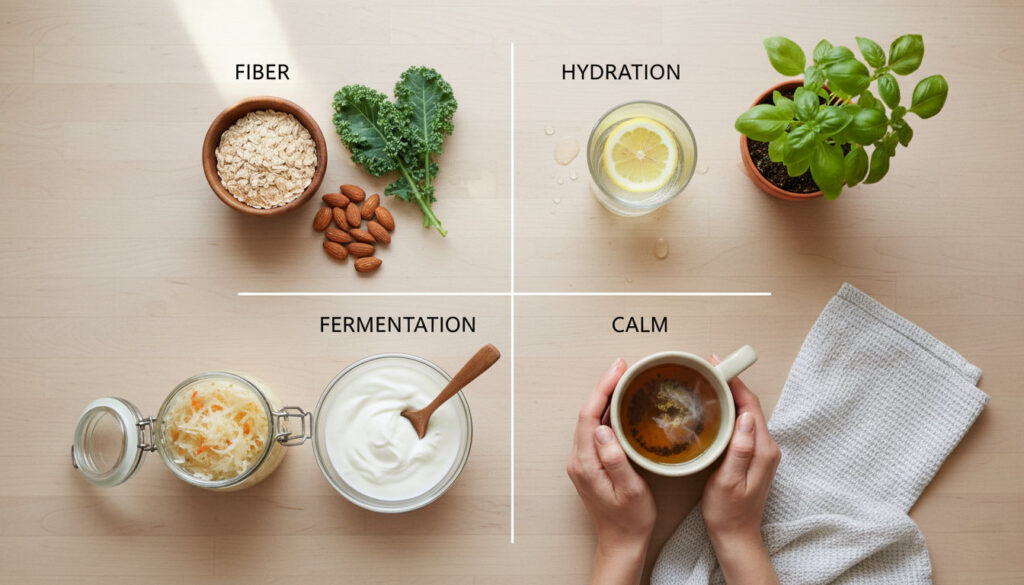
This is the framework I use and the one I walk people through on TikTok Live. It is intentionally simple, because simple is what actually gets repeated.
Feed. Hydrate. Calm. Repeat.
Four pillars. Every step in this article connects to one of them.
- Feed your microbiome with fiber and diverse plant foods
- Hydrate steadily so digestion can function smoothly
- Calm the gut-brain connection through stress and sleep support
- Repeat long enough for your gut to trust the pattern
If a piece of gut health advice does not connect to one of these four pillars, it is usually noise.
Step One: Make Fiber Your Daily Anchor
Fiber is the primary fuel source for beneficial gut bacteria. NIDDK microbiome research consistently links fiber-rich eating patterns to greater microbial diversity and digestive regularity.
Most adults consume far less fiber than recommended. The fix does not require a complete dietary overhaul. Start with one fiber anchor per meal and build gradually from there.
Breakfast: oats, berries, chia seeds, or avocado. Lunch: beans, lentils, or whole grains. Dinner: vegetables and legumes as the base, not the side. Increase gradually over a week or two. Mild bloating during adjustment is common and typically resolves as the gut adapts.
Step Two: Build Variety Like a Weekly Habit
Different fibers feed different bacteria. A microbiome that receives the same foods every week develops a narrower range of microbes over time. NIH consumer guidance on gut health highlights that eating a wide variety of plant foods is one of the most reliable ways to support microbial diversity.
A practical approach: rotate colors and food groups across the week. Change your grains, alternate your fruits, and introduce one vegetable you would not normally reach for. Diversity does not require perfection. It requires rotation.
Step Three: Add Prebiotics and Probiotics Consistently
Prebiotics are fibers that feed beneficial bacteria. Probiotics are live microorganisms that add to the microbial community. The CDC connects dietary fiber intake to gut microbiome balance and broader metabolic health, underscoring why both prebiotics and probiotics matter together, not just one or the other. That is exactly what the Goli Pre+Post+Probiotic Gummies are designed to deliver in a single daily serving.
Food sources for prebiotics include oats, onions, garlic, and bananas. Probiotic-rich foods include yogurt with live cultures, kefir, sauerkraut, and miso. Start with small portions and increase based on tolerance. For those who find food-based consistency difficult to maintain every single day, the Goli Pre+Post+Probiotic Gummies close that gap reliably without adding complexity to your routine. More on what makes them different shortly.
Step Four: Hydrate Steadily, Not Reactively
Hydration supports stool movement, digestive comfort, and the overall environment your microbiome lives in. Federal fiber intake guidance consistently notes that fiber works best when water intake supports it.
The pattern that tends to work: steady intake from morning through mid-afternoon rather than large amounts consumed reactively late in the day. Fiber without adequate hydration can actually increase digestive discomfort. They work together.
Step Five: Calm the Gut-Brain Connection
The gut and brain are in constant two-way communication. Stress affects digestion directly, and digestive discomfort can increase stress. Managing one helps the other. WHO healthy diet guidance recognizes lifestyle factors including stress and sleep as significant contributors to digestive function.
Gentle movement after meals, consistent sleep timing, and brief wind-down routines in the evening reduce digestive reactivity over time. A 10-minute post-dinner walk and a consistent bedtime are enough to begin shifting the pattern without overhauling your life.
Step Six: Move Daily and Keep It Simple
Movement supports gut motility, which is the process that moves food through the digestive system. Walking is enough. Daily consistency matters more than intensity or duration. The goal is not an exercise overhaul. It is removing stagnation from the gut’s daily rhythm.
What the Research Actually Shows About Gut Health
A few widely held beliefs about gut health deserve a closer look.
Dramatic short-term resets produce lasting results. They rarely do. Short cleanses and elimination protocols produce short-term results because the microbiome adapts to what it receives consistently. The gut does not respond to a seven-day intervention the same way it responds to seven weeks of daily habit. Resets feel productive but they do not build the kind of stability that holds.
Fixing your digestion requires expensive protocols. The most evidence-supported inputs are not expensive. Fiber, hydration, sleep, and stress management are accessible to most people and are what the research consistently points back to as foundational. Advanced protocols tend to be built on top of these basics, not instead of them.
Supplements replace the fundamentals. They do not. Supplements work best when they complement a solid daily foundation. The right supplement, added to consistent habits, can make those habits easier to maintain and fill gaps that food alone does not always close reliably. The distinction matters: support, not substitute.
What Changes as Gut Health Improves
Progress with gut health is gradual and individual. Without overpromising, common patterns people report with consistent support over weeks and months include more predictable digestion day to day, less frequent or less intense bloating after meals, steadier energy throughout the day without the mid-afternoon drop, reduced intensity of sugar cravings, and a calmer overall relationship with food.
These changes tend to develop over time, not overnight. That is normal and expected. The microbiome responds to the pattern you repeat, not a single week of effort. The people who notice the clearest results are consistently the ones who stay patient long enough for the pattern to establish itself.
Who This Approach Works Best For
This framework is designed for healthy adults dealing with everyday gut struggles: bloating that returns too often, irregular digestion, uneven energy, or cravings that feel harder to manage than they should. It is appropriate for anyone who wants a straightforward, sustainable system they can actually follow week to week.
It is not a replacement for medical care, and it is not designed to address acute or severe digestive conditions. If symptoms are persistent, severe, or concerning, professional evaluation is always appropriate. Generally well-tolerated by healthy adults. Not recommended during pregnancy or for people with serious gastrointestinal conditions without guidance from a healthcare provider. If you take prescription medications or have existing health conditions, check with your healthcare provider before adding any new supplement.
For most people, this foundation creates real, noticeable improvement without extremes.
What to Expect and When
Early shifts, such as improved digestive comfort, better hydration patterns, and reduced bloating frequency, can appear within two to three weeks of consistent habits.
Deeper gut balance, the kind where digestion feels reliably predictable and energy steadies across the day, typically develops over two to three months. Understanding how to fix poor gut health means understanding that timeline. The microbiome adapts to patterns, not quick fixes. Slow progress is not failure. It is how stability actually forms.
Goli customers who incorporate the Pre+Post+Probiotic Gummies into their daily morning routine commonly report noticeable digestive improvement within the first one to two weeks, with continued improvement building from there as the microbiome adjusts.
Frequently Asked Questions About How to Fix Poor Gut Health
How long until you notice a difference in gut health?
Most people begin noticing early improvements within two to three weeks of building consistent habits around fiber, hydration, and sleep. Deeper changes, where digestion feels reliably steady day to day, typically develop over two to three months. The microbiome adapts to patterns you repeat, not short bursts of effort.
What is the best first step when learning how to fix poor gut health?
The most effective starting point is adding one fiber-rich food to your day and drinking one extra glass of water earlier in your routine. Simple, repeatable changes build momentum faster than dramatic overhauls because they are sustainable.
Can stress alone disrupt your digestion?
Yes. The gut-brain connection is a real, well-documented two-way pathway. Stress influences gut motility, microbiome composition, and digestive comfort directly. Many people see meaningful digestive improvement when they address stress consistently, even without major dietary changes.
Why does fiber sometimes make gut symptoms worse at first?
When fiber intake increases too quickly, the gut microbiome needs time to adapt. Starting gradually and pairing increased fiber with consistent hydration usually reduces this effect significantly within a week or two.
What do probiotics actually do for gut health?
Probiotics introduce live beneficial microorganisms to the gut environment. When taken consistently alongside prebiotic fiber, they support microbial diversity, digestive regularity, and immune function. Strain specificity matters, which is why clinically studied strains like Bacillus Subtilis DE111 are preferred over generic blends that do not disclose the strains they use.
Making Daily Gut Support Easier to Maintain
I have taken the Goli Pre+Post+Probiotic Gummies every morning for over five months as part of my daily gut health foundation. The improvement was not dramatic on day one. It was gradual. Digestion became more predictable. Bloating after meals became less frequent and less intense. The gut-running-smoothly feeling went from occasional to consistent.
What sets these gummies apart is the formulation. They are the world’s first 3-in-1 Pre+Post+Probiotic gummy, which means one daily serving covers all three layers of gut support at once. The probiotic strain is Bacillus Subtilis DE111, a clinically studied, shelf-stable strain that adds beneficial bacteria to the gut environment without requiring refrigeration. The postbiotic is Lactobacillus paracasei MCC1849, which supports immune health. The prebiotic is XOS, or Xylooligosaccharides, which feeds the beneficial bacteria so they can do their job effectively.
Zero sugar. No artificial sweeteners. Vegan, gluten-free, non-GMO, and gelatin-free. Everything in the formula has a purpose. And on TikTok Live, watching thousands of people share their gut health experiences in real time over 168 days, the people who see the fastest results are consistently the ones who pair solid food habits with a dependable daily probiotic routine. Not as a shortcut, but as a consistency tool.
Over 700,000 Zero Sugar 3 Pack bundles sold on TikTok Shop. Ten billion Goli gummies sold worldwide since 2018. The trust is there because the results are there. See the full formulation on the Goli product page.
I have secured exclusive TikTok pricing below if you want to add these to your daily routine.
Get exclusive access to Goli pricing →
You May Also Like
If the Gut Stability Method resonates with you, the next step is understanding exactly what to look for when choosing a daily gut support product. Not all probiotics are formulated the same way, and the difference between a clinically studied strain and a generic probiotic blend matters more than most labels make obvious. Knowing what to look for saves time and money.
The full breakdown, including what DE111 does, why strain specificity is the most overlooked detail in the probiotic category, and how to build Jeremy’s complete daily stack around gut health, digestion, and energy, is available through the Better Gut Daily resource page. Visit the Better Gut Daily Shop to explore the full Goli Zero Sugar 3 Pack and get Jeremy’s exclusive TikTok discount.
The Bottom Line
The Gut Stability Method comes down to four actions: feed your microbiome with fiber and variety, hydrate steadily throughout the day, calm the gut-brain connection through stress and sleep support, and repeat long enough for your gut to trust the pattern.
Start today with one concrete action. Add one fiber-rich food to your next meal. Drink one extra glass of water before noon.
Repeat weekly. Plan three dinners this week with vegetables and legumes as the base. Take a short walk after one meal each day.
The people who rebuild their digestive health in real life are not the ones who chase the most aggressive reset. They are the ones who build a stable environment and stay patient long enough to see it work. When you do that, digestion becomes more predictable, energy steadies, and the reactive feeling that brought you here begins to fade.
That is not a quick fix. It is a reliable one. And over 700,000 people on TikTok Shop have already found that out.
References
- PubMed Central: Gut Microbiome Composition and Dietary Patterns:
- National Institute of Diabetes and Digestive and Kidney Diseases: Diet and Gut Microbiome Interplay:
- NIH News in Health: Keeping Your Gut in Check:
- Centers for Disease Control and Prevention: Fiber and Metabolic Health:
- Dietary Guidelines for Americans: Food Sources of Fiber:
- World Health Organization: Healthy Diet Fact Sheet:
- Goli Nutrition: Pre+Post+Probiotics Gummies: