

Bloating is one of those uncomfortable digestive issues that can disrupt your entire day. If you’ve been dealing with persistent abdominal fullness, gas, or distension, you’ve probably heard that probiotics might help. But the advice around probiotics for bloating gets confusing quickly. Some people swear probiotics fixed their bloating, while others say probiotics made their bloating worse.
The truth is, probiotics can help reduce bloating in certain situations, but they’re not a universal solution. Understanding when probiotics work for bloating, which types are most effective, and how to use them strategically makes all the difference. This guide explains exactly how probiotics affect bloating and gives you a practical approach to deciding whether they’re right for you.
The Short Answer
Probiotics for bloating work by restoring balance to your gut bacteria, which can reduce gas production and improve digestion. Research shows that specific probiotic strains help reduce bloating in people with irritable bowel syndrome and some other digestive issues, with most people noticing improvements within two to four weeks. However, probiotics can temporarily worsen bloating during the first week as your gut adjusts, and they may not help if your bloating stems from food intolerances or small intestinal bacterial overgrowth.
The Probiotic Response Framework
Understanding whether probiotics will help your bloating comes down to three simple questions. This framework helps you make informed decisions about trying probiotics without wasting time or money on approaches that won’t work for your situation.
The three questions are: Does your bloating type match situations where probiotics help? Which specific strains should you try? What timeline should you expect? This Probiotic Response Framework guides you through each decision point systematically, from initial assessment through strain selection to realistic outcome expectations.
How Probiotics Can Reduce Bloating
Probiotics are live bacteria that benefit your digestive system when consumed in adequate amounts. Your gut naturally contains trillions of bacteria, and when these populations become imbalanced, digestive problems like bloating can occur. This imbalance is called dysbiosis.
Probiotics work by adding beneficial bacteria back into your gut ecosystem. These helpful bacteria perform several functions that can reduce bloating. They help break down food more completely, which means less undigested material sitting in your intestines fermenting and producing gas. They also compete with gas-producing bacteria for resources and space, potentially reducing the overall gas production in your digestive tract.
Some probiotic strains produce substances that improve the integrity of your intestinal lining. A healthier gut barrier means better regulation of what stays in your intestines and what gets absorbed, which can reduce inflammation and the bloated feeling that comes with it. Other strains help food move through your digestive system at a more appropriate pace, preventing the stagnation that contributes to gas buildup and bloating.
The effectiveness of probiotics for bloating depends largely on what’s causing your bloating in the first place. If your bloating comes from an imbalance in gut bacteria, probiotics have a good chance of helping. If it comes from other causes like food intolerances, swallowing too much air, or certain medical conditions, probiotics alone may not solve the problem.
Which Probiotic Strains Help With Bloating
Not all probiotics work the same way, and research shows that specific strains are more effective for bloating than others. The most studied and effective strains for reducing bloating belong to two main groups: Lactobacillus and Bifidobacterium.
Bifidobacterium lactis has shown consistent benefits for bloating in multiple studies. This strain helps improve bowel regularity and reduce gas production, both of which directly impact bloating. It’s particularly helpful for people whose bloating comes with constipation, as it can speed up transit time through the digestive system.
Lactobacillus acidophilus supports digestion by producing lactase, the enzyme that breaks down lactose. If your bloating worsens after consuming dairy, this strain may help by improving your ability to digest milk products. It also helps maintain a healthy balance of bacteria in your intestines, which can reduce overall gas production.
Bifidobacterium infantis has been specifically studied in people with irritable bowel syndrome and shows significant benefits for reducing both bloating and abdominal pain. Research suggests it works by reducing inflammation in the gut and improving the gut barrier function.
Saccharomyces boulardii is actually a beneficial yeast rather than a bacteria. It’s particularly useful if your bloating started after taking antibiotics, as it helps restore gut balance without being affected by antibiotic medications. This makes it safe to take alongside antibiotics when necessary.
Most effective probiotic supplements contain between 1 billion and 10 billion colony-forming units per dose. Higher doses aren’t necessarily better and may actually increase bloating in some people. Multi-strain products that combine several of these beneficial organisms can be more effective than single-strain products for some people, though individual responses vary.
The Bloating-Probiotics Paradox
Here’s something that confuses many people: probiotics can temporarily make bloating worse before it gets better. This happens in about 20 to 30 percent of people who start taking probiotics, typically during the first three to seven days.
When you introduce new bacteria into your gut, your existing gut ecosystem needs to adjust. During this adjustment period, you might experience increased gas, mild cramping, or more noticeable bloating than usual. This is generally a sign that the probiotics are working and your gut microbiome is shifting. The key word here is temporary. If bloating worsens and stays worse beyond one week, probiotics probably aren’t the right solution for your situation.
There’s another situation where probiotics can make bloating persistently worse rather than better. Some people develop small intestinal bacterial overgrowth, where bacteria that should stay in the large intestine migrate up into the small intestine. In these cases, adding more bacteria through probiotics can worsen the problem rather than help it. Research has found links between probiotic overuse and severe bloating accompanied by brain fog in some patients. Warning signs that this might be happening include worsening bloating that doesn’t improve, brain fog, and bloating that gets worse with probiotic use and better when you stop taking them.
When Probiotics Help With Bloating
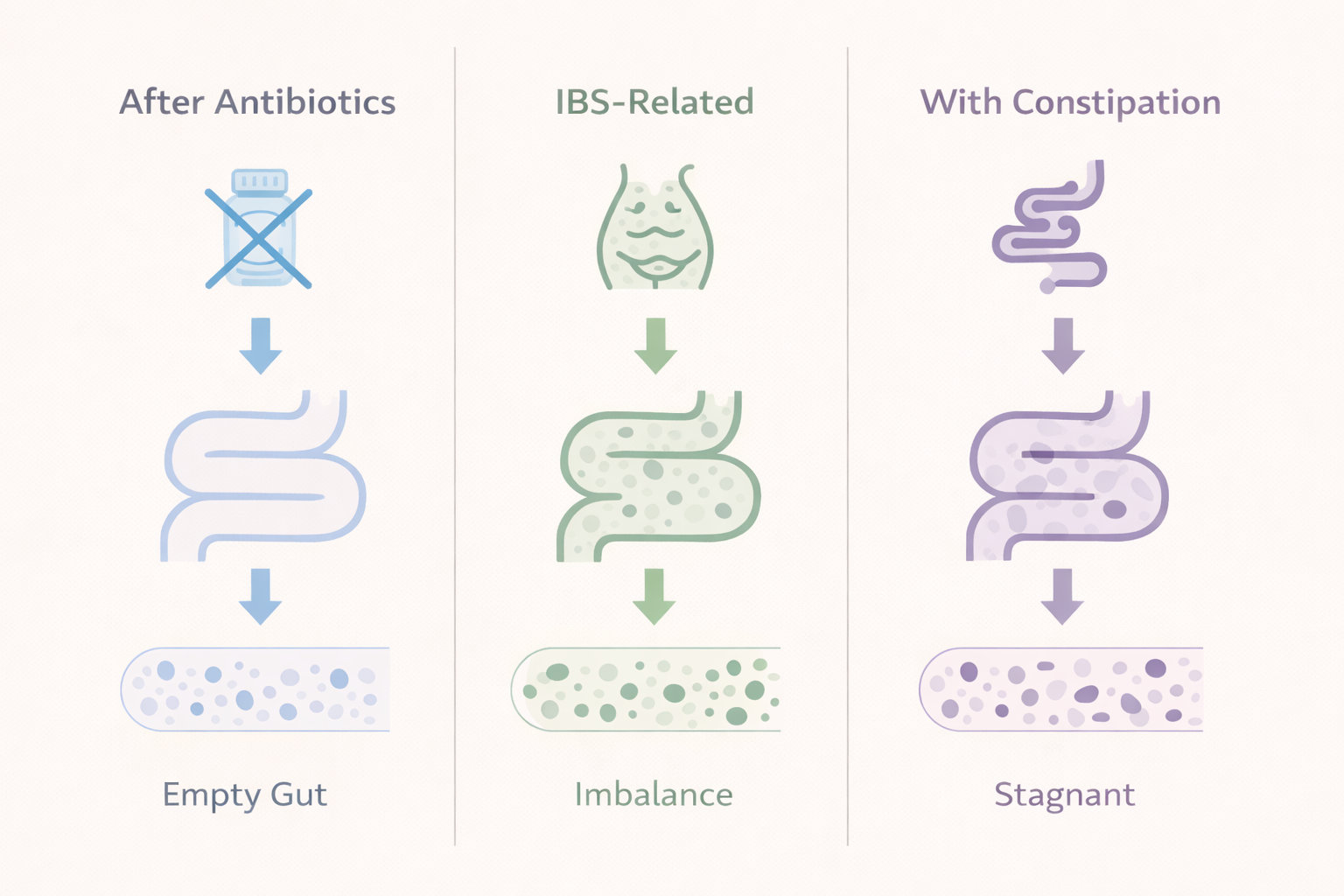
Probiotics are most likely to help your bloating in specific situations. If you have irritable bowel syndrome, research shows that certain probiotics can reduce bloating significantly. A systematic review found that specific probiotics help reduce bloating and distension in some patients with IBS. Studies found that about half of people with IBS who tried specific probiotic strains experienced meaningful improvements in bloating within four to eight weeks.
Bloating that started after taking antibiotics often responds well to probiotics. Antibiotics kill both harmful and beneficial bacteria, leaving your gut microbiome depleted. Replenishing beneficial bacteria through probiotics or fermented foods can help restore balance and reduce the bloating that follows antibiotic use.
If your bloating accompanies constipation, certain probiotic strains that speed up digestive transit may help. When food moves through your system too slowly, it has more time to ferment and produce gas. Probiotics that improve regularity address both the constipation and the bloating simultaneously.
Stress-related bloating sometimes improves with probiotics because gut bacteria influence the gut-brain connection. When stress disrupts your digestive system, restoring healthy gut bacteria populations may help your digestive system function more normally despite stress.
When Probiotics Won’t Help Bloating
Probiotics aren’t effective for all types of bloating. If your bloating comes from specific food intolerances like lactose intolerance or fructose malabsorption, avoiding the trigger foods works better than adding probiotics. While some probiotic strains help with lactose digestion, they don’t cure lactose intolerance.
Bloating from swallowing excess air during eating or drinking won’t improve with probiotics. This type of bloating requires changes to eating habits, like eating more slowly, chewing thoroughly, and avoiding carbonated beverages.
If you have celiac disease and continue eating gluten, probiotics won’t resolve your bloating. The underlying issue needs to be addressed first. Similarly, bloating from inflammatory bowel diseases like Crohn’s disease or ulcerative colitis requires medical management beyond probiotics alone.
People who already have small intestinal bacterial overgrowth should avoid probiotics until the overgrowth is treated. Adding more bacteria when you already have too many in the wrong place can make symptoms worse.
How to Try Probiotics for Bloating: A Step-by-Step Approach
Following the Probiotic Response Framework, this step-by-step approach helps you test whether probiotics work for your bloating systematically and safely.
Step 1: Start with Food Sources
Begin with fermented foods before moving to supplements. Yogurt with live cultures, kefir, sauerkraut, kimchi, and other fermented foods contain probiotics naturally. These foods also provide other nutrients and fiber that support gut health. Try adding one serving of a fermented food to your daily diet for two weeks and notice whether your bloating improves.
Food sources give you a low-risk way to test your body’s response to probiotics. If you notice improvements, you can continue with food sources alone. If you see no change or need more concentrated doses, move to Step 2.
Step 2: Choose the Right Supplement
If food sources don’t provide enough relief, consider a probiotic supplement. Choose a product that contains one or more of the strains known to help with bloating: Bifidobacterium lactis, Lactobacillus acidophilus, or Bifidobacterium infantis. Start with a lower dose, around 1 to 5 billion CFU per day, and take it consistently for at least four weeks before deciding whether it’s working.
Starting with a lower dose reduces the chance of adjustment symptoms. You can increase the dose after one to two weeks if needed, but many people find relief at lower doses.
Step 3: Time Your Doses Correctly
Take probiotics with or shortly after a meal for better survival of the bacteria through your stomach acid. Some probiotics specify they should be taken on an empty stomach, so follow the product instructions if they differ from this general guidance.
Consistency matters more than precise timing. Choose a time you can stick with daily, whether that’s breakfast, lunch, or dinner.
Step 4: Track Your Response Daily
Track your symptoms daily for the first month. Note whether your bloating is better, worse, or unchanged. Also track any other changes like bowel movement frequency, gas, or abdominal discomfort. This information helps you make an informed decision about continuing.
Write down your observations rather than relying on memory. Patterns become clearer when you review written records over several weeks.
Step 5: Evaluate After Four Weeks
Most people notice some improvement within two to four weeks if probiotics are going to help. If you see no change or your bloating worsens after one month of consistent use, probiotics probably aren’t the right solution for your bloating.
At the four-week mark, review your tracking notes and decide whether to continue, adjust your approach, or stop. Clear improvement means continue. No change means try a different strain or stop. Worsening means stop immediately.
What to Expect: Timeline
During the first week, expect some adjustment. You might notice slightly increased bloating or gas as your gut microbiome shifts. This is normal and usually temporary. If bloating becomes significantly worse rather than mildly increased, consider reducing your dose or stopping.
By week two, adjustment symptoms should be settling down. Some people begin noticing subtle improvements at this point, like slightly less evening bloating or a bit less gas. Others won’t notice changes yet, which is also normal.
Weeks three and four typically bring clearer signals about whether probiotics are helping. If they’re going to work for you, you should notice consistently less bloating, less gas, or more comfortable digestion by the end of the first month. If you still see no improvement by week four, continuing beyond this point is unlikely to produce different results.
Long-term use shows the most stable benefits. Once you’ve found a probiotic that helps, continuing it for three to six months allows your gut microbiome to fully stabilize. After this period, some people can maintain improvements with just fermented foods, while others need to continue supplements.
Signs Probiotics Aren’t Working
Stop taking probiotics if you experience worsening bloating that persists beyond the first week. This suggests probiotics aren’t right for your situation.
Brain fog, excessive fatigue, or difficulty concentrating that starts after beginning probiotics can indicate small intestinal bacterial overgrowth. These symptoms warrant stopping probiotics and consulting a healthcare provider.
If you develop severe abdominal pain, persistent diarrhea, or signs of an allergic reaction like rashes or difficulty breathing, stop immediately and seek medical advice.
No improvement after four consistent weeks of use at an adequate dose means probiotics aren’t addressing your particular bloating cause. Continuing beyond this point is unlikely to change the outcome.
Common Myths About Probiotics and Bloating
The belief that all probiotics help bloating isn’t accurate. Different strains have different effects, and some have no benefit for bloating at all. Choose strains with research supporting their use for digestive symptoms.
Higher doses don’t automatically work better. Very high doses can actually increase bloating and gas in some people. Start with moderate doses and increase only if needed.
Probiotics aren’t a quick fix. They take time to colonize your gut and create changes in your microbiome. Expecting overnight results leads to disappointment.
The idea that probiotics are always safe because they’re natural overlooks the fact that they can cause problems in certain situations. While generally safe for healthy people, they can worsen some conditions.
FAQ: Probiotics for Bloating
How long does it take for probiotics to reduce bloating?
Most people who respond to probiotics notice improvements within two to four weeks. Some see subtle changes earlier, while others need the full four weeks. If you see no improvement after one month of consistent use, probiotics likely aren’t effective for your type of bloating.
Can probiotics make bloating worse?
Yes, probiotics can temporarily worsen bloating during the first three to seven days as your gut adjusts. This usually resolves on its own. However, if bloating worsens and stays worse beyond one week, stop taking probiotics. In some cases, particularly with small intestinal bacterial overgrowth, probiotics can persistently worsen symptoms.
What’s the best probiotic strain for bloating?
Bifidobacterium lactis and Lactobacillus acidophilus have the most research supporting their use for bloating. Bifidobacterium infantis shows particularly strong benefits for IBS-related bloating. Multi-strain products containing these organisms often work well, though individual responses vary.
Should I take probiotics on an empty stomach?
Most probiotics survive better when taken with or shortly after food. Some products specify taking them on an empty stomach, so follow the instructions on your specific product. Consistency matters more than precise timing.
Are fermented foods as effective as probiotic supplements?
Fermented foods contain probiotics along with other beneficial nutrients and compounds that support gut health. While supplements provide higher concentrations of specific strains, fermented foods offer broader benefits. Starting with food sources is reasonable, progressing to supplements if needed.
Can I take probiotics long-term for bloating?
Yes, long-term probiotic use is generally safe for most healthy people. Many people take them for months or years without issues. Once bloating improves, some people can maintain benefits with fermented foods alone, while others continue supplementation.
Support Your Gut Health Naturally
While probiotics can be helpful for bloating, they work best as part of a comprehensive approach to gut health. Managing stress plays a significant role in digestive comfort, as stress directly affects gut function through the gut-brain connection.
Goli Ashwagandha gummies provide a convenient way to support your body’s stress response. Ashwagandha has been used traditionally to help the body adapt to stress, and reducing stress can positively impact digestive function. These gummies complement probiotic use by addressing the stress component that often worsens bloating. They work best alongside proper nutrition, adequate hydration, and attention to gut health basics like eating slowly and chewing food thoroughly.
The Bottom Line
Probiotics for bloating work by restoring balance to your gut bacteria, which can reduce gas production and improve digestion. The Probiotic Response Framework helps you determine whether probiotics will work for your situation by answering three key questions: Does your bloating type match situations where probiotics help? Which specific strains should you try? What timeline should you expect? Specific strains like Bifidobacterium lactis and Lactobacillus acidophilus show the most consistent benefits, with research supporting their use for IBS-related bloating and other digestive issues.
This week, decide whether your bloating might respond to probiotics. Consider whether your bloating started after antibiotics, accompanies IBS symptoms, or comes with constipation. If any of these apply, trying probiotics makes sense.
Start with food sources this week. Add one serving of yogurt with live cultures, kefir, sauerkraut, or kimchi to your daily routine. Track whether your bloating improves, stays the same, or worsens.
If food sources don’t provide enough relief after two weeks, consider adding a probiotic supplement. Choose one containing researched strains, start with a moderate dose, and give it four full weeks of consistent use before deciding whether it’s working. Most people who benefit from probiotics for bloating notice meaningful improvements within this timeframe.
References
https://www.healthline.com/health/digestive-health/probiotics-bloating https://my.clevelandclinic.org/health/treatments/14598-probiotics https://www.medicalnewstoday.com/articles/probiotics-for-bloating https://pmc.ncbi.nlm.nih.gov/articles/PMC5900870/ https://ods.od.nih.gov/factsheets/Probiotics-HealthProfessional/ https://www.healio.com/news/gastroenterology/20180808/probiotics-linked-to-brain-fog-severe-abdominal-bloating https://www.health.harvard.edu/blog/fermented-foods-for-better-gut-health-201805161607 https://pmc.ncbi.nlm.nih.gov/articles/PMC9003261/