

Your digestive system works around the clock to convert food into energy, absorb nutrients, and keep everything moving smoothly. But when bloating, gas, or discomfort become familiar visitors after meals, it’s natural to wonder if a supplement for digestion might help. The good news is that targeted supplements can support your gut in meaningful ways when paired with sensible daily habits.
This guide walks you through everything you need to know about digestive support, from understanding how different supplements work to choosing the right one for your specific needs. By the end, you’ll have a clear path forward that doesn’t require guesswork or frustration.
The Short Answer
A supplement for digestion works best when matched to your specific concern. Probiotics support the balance of beneficial bacteria in your gut, prebiotics feed those helpful microbes, digestive enzymes help break down food into absorbable nutrients, and fiber promotes regularity. Understanding which type addresses your situation is the first step toward lasting relief.
What Your Digestive System Actually Needs
Your gut is home to trillions of microorganisms that influence everything from nutrient absorption to immune function. This community of bacteria, fungi, and other microbes forms what scientists call the gut microbiome. When this ecosystem stays balanced, digestion tends to run smoothly. When it tips out of balance, discomfort often follows.
Several factors can disrupt this delicate environment. Poor dietary habits, emotional stress, lack of sleep, antibiotic use, and even aging can shift the types and amounts of bacteria in your gut. The result may show up as occasional gas, bloating, irregular bowel movements, or general digestive unease.
Your body also relies on digestive enzymes to break food into smaller molecules that can be absorbed. The pancreas, stomach, and small intestine naturally produce these enzymes, but sometimes production falls short. When food isn’t fully broken down, it can ferment in the intestines and create uncomfortable symptoms.
The Gut Balance Blueprint: A Framework for Choosing Your Supplement
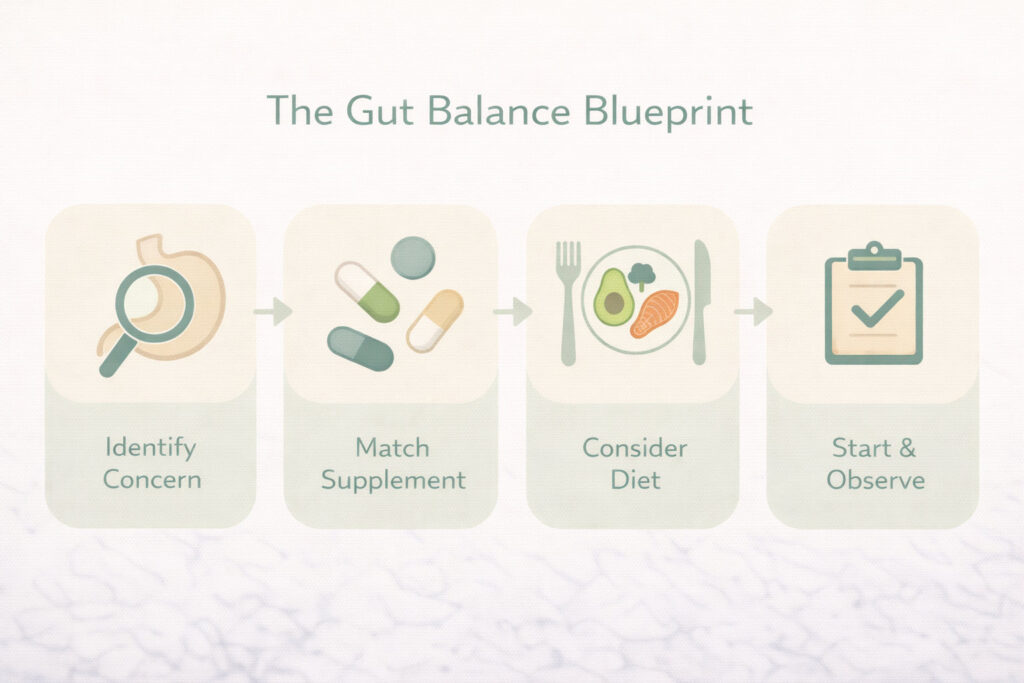
Finding the right supplement for digestion becomes much simpler when you follow a structured approach. The Gut Balance Blueprint helps you match your symptoms to the most appropriate solution in four straightforward steps.
Step 1: Identify Your Primary Concern
Start by pinpointing what bothers you most. Is it bloating after meals? Difficulty digesting dairy? Irregular bowel movements? Gas from beans and vegetables? Each symptom points toward a different type of support.
Step 2: Match the Supplement Category
Once you know your main concern, you can narrow down which category of supplement is most likely to help. Probiotics address bacterial imbalance. Prebiotics support existing beneficial bacteria. Digestive enzymes tackle food breakdown issues. Fiber supplements promote regularity.
Step 3: Consider Your Diet and Lifestyle
Your daily habits matter. Someone eating plenty of fermented foods may need less probiotic support than someone whose diet lacks these items. Similarly, if you’re already consuming adequate fiber from fruits, vegetables, and whole grains, a fiber supplement may not be your priority.
Step 4: Start Simple and Observe
Begin with one supplement at a time so you can clearly observe its effects. Give it several weeks to work before evaluating results. This patient approach prevents confusion about what’s actually helping.
Types of Supplements for Digestive Support
Probiotics: Restoring Beneficial Bacteria
Probiotics contain live microorganisms that resemble the beneficial bacteria naturally present in your gut. These supplements can help restore balance when stress, illness, or antibiotics have depleted your friendly microbe population.
Common probiotic strains include Lactobacillus acidophilus, Lactobacillus rhamnosus, Bifidobacterium bifidum, and Bifidobacterium lactis. Research has shown that certain probiotics may provide relief from diarrhea and may also help with symptoms of irritable bowel syndrome.
Probiotic supplements are measured in colony-forming units, often abbreviated as CFU. Products range from 1 billion to 50 billion CFU per serving. Higher numbers aren’t automatically better. The right amount depends on your individual needs and the specific strains included.
Food sources of probiotics include yogurt with live cultures, kefir, kimchi, sauerkraut, miso, tempeh, and kombucha. Eating these foods regularly can support your gut without supplements, though many people find supplements more convenient and consistent.
Prebiotics: Feeding Your Friendly Bacteria
Prebiotics are fibers that nourish the beneficial bacteria already living in your digestive tract. Think of them as fertilizer for your gut garden. Unlike probiotics, which add new bacteria, prebiotics support what’s already there.
Inulin, derived from chicory root, is one of the most common prebiotic ingredients in supplements. It absorbs water and promotes softer stools and easier bowel movements. Psyllium husk is another effective prebiotic fiber that can swell to many times its original size when mixed with water, adding bulk and supporting regularity.
Food sources of prebiotics include garlic, onions, bananas, oats, artichokes, and leeks. These foods contain the types of fiber that beneficial gut bacteria thrive on. If your diet falls short in these areas, a prebiotic supplement can help fill the gap.
Digestive Enzymes: Breaking Down Food More Efficiently
Digestive enzymes help break carbohydrates, proteins, and fats into smaller molecules your body can absorb. Your mouth, stomach, and small intestine naturally produce these enzymes, but production can decrease with age or certain health conditions.
Several types of enzymes target different nutrients. Amylase breaks down carbohydrates. Protease handles proteins. Lipase works on fats. Lactase specifically targets lactose, the sugar in dairy products. Alpha-galactosidase helps digest the complex carbohydrates in beans and cruciferous vegetables that often cause gas.
Lactaid and Beano are two well-known over-the-counter enzyme supplements. Lactaid provides lactase for people who don’t produce enough on their own, allowing them to enjoy dairy without the usual bloating, gas, or diarrhea. Beano contains alpha-galactosidase, which breaks down the fiber in beans before it reaches the intestines where it would otherwise ferment and produce gas.
Prescription digestive enzymes, such as pancreatic enzyme replacement therapy, are regulated by the FDA and prescribed for conditions like chronic pancreatitis, cystic fibrosis, or pancreatic insufficiency. Over-the-counter enzyme supplements are not regulated in the same way, so quality and potency can vary between products.
Fiber Supplements: Supporting Regularity
Most adults don’t consume the recommended amount of fiber each day, which falls between 25 and 38 grams depending on age and sex. Fiber adds bulk to stool, promotes regular bowel movements, and feeds beneficial gut bacteria.
Psyllium husk is one of the most effective fiber supplements because it contains both soluble and insoluble fiber. Soluble fiber dissolves in water and forms a gel that helps lower cholesterol and stabilize blood sugar. Insoluble fiber adds bulk and helps food pass through the digestive system more efficiently.
When starting a fiber supplement, increase your intake gradually and drink plenty of water. Adding too much fiber too quickly can temporarily worsen bloating and gas. A slow approach gives your digestive system time to adjust.
Herbal and Botanical Options
Several herbs have traditional uses for digestive support, and some have research backing their benefits.
Peppermint oil contains menthol, which may reduce intestinal spasms and ease symptoms of irritable bowel syndrome. Enteric-coated capsules allow the oil to reach the intestines without dissolving in the stomach. One caveat: peppermint can relax the lower esophageal sphincter and may worsen heartburn for some people.
Ginger has a long history of use for stomach upset and nausea. It’s generally considered safe in small doses of 1 to 2 grams per day and may help relieve nausea during pregnancy or after surgery.
Globe artichoke stimulates bile production in the liver, which improves digestion of fats and may relieve bloating. Research has shown artichoke supplements can reduce symptoms of bloating, flatulence, abdominal pain, and constipation in people with irritable bowel syndrome.
Chamomile is widely used for upset stomach, gas, and general digestive discomfort. People with allergies to ragweed or related plants should use chamomile with caution due to potential cross-reactivity.
L-glutamine is an amino acid that supports the intestinal lining and may help with gut repair. It’s found naturally in foods like bone broth and may be helpful for people recovering from illness or antibiotic use.
Common Digestive Myths Worth Questioning

Myth: More CFUs in a probiotic always means better results.
The number of colony-forming units matters less than the specific strains included and whether those strains have research supporting their use for your particular concern. A well-designed product with 1 billion CFU of the right strains may outperform a 50 billion CFU product with less-studied varieties.
Myth: Digestive enzymes can fix any stomach problem.
Enzymes help when the issue is inadequate food breakdown. They won’t address problems caused by bacterial imbalance, stress, food sensitivities, or underlying medical conditions. Matching the right supplement to the right problem matters more than simply taking something.
Myth: Natural supplements are always safe for everyone.
Even natural products can interact with medications or cause problems for people with certain health conditions. Beano, for example, may cause reactions in people with alpha-gal syndrome or mold allergies. Pregnant women should consult their healthcare provider before starting any supplement.
Myth: You can skip fiber in food if you take a supplement.
Fiber supplements can help bridge a gap, but whole foods provide additional nutrients and compounds that work together for digestive health. Fruits, vegetables, and whole grains offer fiber along with vitamins, minerals, and antioxidants that supplements can’t fully replicate.
Myth: Probiotics immediately fix gut problems.
Restoring bacterial balance takes time. Most people need several weeks of consistent use before noticing significant changes. Expecting overnight results leads to unnecessary disappointment.
What to Expect: A Realistic Timeline
Days 1-3: Your body begins adjusting to the new supplement. Some people notice mild changes in gas or bowel movements as the gut microbiome shifts. This is normal and usually temporary.
Weeks 1-2: Initial improvements may start to appear. With probiotics, you might notice more regular bowel movements. With digestive enzymes, post-meal discomfort may begin to decrease. Fiber supplements often show effects within this window as regularity improves.
Weeks 3-4: Benefits typically become more consistent and noticeable. Your gut has had time to adapt, and the supplement’s effects have accumulated. This is a good point to evaluate whether you’re seeing the results you hoped for.
Month 2 and Beyond: Long-term benefits emerge with continued use. Gut bacterial populations stabilize, and digestive patterns become more predictable. Some people find they can eventually reduce their supplement use while maintaining improvements through diet alone.
Who Should Think Carefully Before Supplementing
Not everyone needs or should take digestive supplements without guidance. Certain situations call for a conversation with a healthcare provider first.
People with diagnosed digestive conditions like Crohn’s disease, ulcerative colitis, celiac disease, or chronic pancreatitis should work with their medical team before adding supplements. These conditions require careful management, and supplements may interact with treatment plans.
Anyone taking prescription medications should check for potential interactions. This includes blood thinners, immunosuppressants, and medications for diabetes or heart conditions. Some supplements can affect how medications are absorbed or metabolized.
Pregnant and breastfeeding women should consult their healthcare provider before starting new supplements. While many digestive supplements are considered safe, professional guidance ensures the best outcomes for both mother and child.
People with weakened immune systems need extra caution with probiotic supplements. Live bacteria that benefit healthy individuals could potentially cause problems for those with compromised immunity.
If digestive symptoms are severe, persistent, or accompanied by weight loss, blood in stool, or significant pain, professional evaluation should come before supplement use. These signs may indicate conditions that require medical treatment rather than supplement support.
Building Sustainable Gut Health Habits
Supplements work best as part of a broader approach to digestive wellness. Diet, lifestyle, and daily habits all contribute to how your gut functions.
Eat a variety of fiber-rich foods. Aim for fruits, vegetables, whole grains, and legumes at most meals. Different types of fiber feed different beneficial bacteria, so variety matters.
Include fermented foods regularly. Yogurt with live cultures, kefir, kimchi, sauerkraut, and miso provide natural probiotics that support gut health without supplements.
Manage stress effectively. Your gut and brain communicate through what scientists call the gut-brain axis. Chronic stress can disrupt this connection and worsen digestive symptoms. Regular relaxation practices, adequate sleep, and physical activity all help.
Stay well hydrated. Water helps fiber do its job and keeps the digestive system functioning smoothly. Aim for consistent fluid intake throughout the day.
Chew food thoroughly. Digestion begins in the mouth. Taking time to chew food well gives your saliva a chance to start breaking down carbohydrates and signals your stomach to prepare for incoming food.
[Internal link: Gut microbiome basics] [Internal link: Probiotic foods vs supplements] [Internal link: Signs of poor gut health] [Internal link: Fiber-rich foods list] [Internal link: Stress and digestion connection]
Finding Quality Products
Because the FDA does not regulate supplements the same way it regulates prescription medications, quality varies between products. Looking for third-party testing can help you find reliable options.
Organizations like ConsumerLab, NSF International, and USP independently test supplements for quality, purity, and accuracy of labeling. Products bearing these certifications have been verified to contain what they claim without harmful contaminants.
Read labels carefully. Check for the specific strains and amounts included, the CFU count for probiotics, and whether the product requires refrigeration. Avoid products with excessive fillers or additives you don’t recognize.
Store supplements according to package directions. Some probiotics require refrigeration to keep the bacteria alive and effective. Others are shelf-stable but should be kept away from heat and moisture.
Frequently Asked Questions About Supplements for Digestion
What is the best supplement for digestion to start with?
The best starting point depends on your specific symptoms. For general gut support and bacterial balance, a probiotic with well-researched strains is a reasonable first choice. For digestive discomfort after specific foods like dairy or beans, targeted enzyme supplements may be more helpful. For irregular bowel movements, fiber supplements often provide relief.
Can I take multiple digestive supplements at the same time?
Yes, many people combine supplements successfully. Probiotics and prebiotics work well together because prebiotics feed probiotic bacteria. Digestive enzymes address a different aspect of digestion and can be taken alongside probiotics. Start with one supplement at a time to understand its individual effects before adding others.
How long should I take a supplement for digestion before expecting results?
Most people should give a supplement at least four to six weeks before evaluating its effectiveness. Gut bacteria populations shift gradually, and enzymes need time to integrate into your eating patterns. Fiber supplements may show results sooner, often within one to two weeks.
Are digestive supplements safe to take every day?
For most healthy adults, daily use of well-chosen digestive supplements is considered safe. Probiotics, prebiotics, and fiber supplements are typically designed for ongoing daily use. Digestive enzymes are usually taken with meals rather than continuously throughout the day.
Should I take supplements for digestion with food or on an empty stomach?
Timing depends on the supplement type. Digestive enzymes work best when taken with meals because they need food to act upon. Probiotics may be taken with or without food, though some research suggests taking them with meals improves survival through stomach acid. Fiber supplements can be taken at any time but require adequate water.
Supporting Healthy Digestion Beyond Supplements
While finding the right supplement for digestion can provide meaningful relief, daily habits form the foundation of gut health. Eating plenty of fiber from whole foods, including fermented foods in your routine, managing stress, and staying hydrated all contribute to a digestive system that functions well.
Supplements serve as helpful tools when specific support is needed, but they work best alongside these foundational practices rather than as replacements for them.
If you’re looking for gentle, daily support while building better gut habits, products like Goli Ashwagandha Gummies can help address the stress component that often disrupts digestion. Ashwagandha is an adaptogen that supports the body’s response to stress, and when stress goes down, digestive function often improves naturally. These gummies offer a pleasant-tasting way to incorporate stress support into your routine without adding complexity.
The Bottom Line
The Gut Balance Blueprint gives you a clear framework: identify your primary concern, match it to the right supplement category, consider your current diet and lifestyle, then start simply and observe the results.
Today, take stock of what bothers you most about your digestion. Is it bloating? Irregularity? Discomfort after certain foods? Let that answer guide your first choice.
Over the coming weeks, focus on one supplement while also increasing your fiber intake from whole foods and including at least one fermented food daily. These combined efforts support lasting improvement rather than temporary fixes.
Your digestive system is remarkably adaptable. With the right support and consistent habits, the discomfort that feels overwhelming today can become a distant memory. Small, steady steps lead to real change.
References
- National Institutes of Health Office of Dietary Supplements. Probiotics Fact Sheet for Consumers.
- Harvard Health Publishing. Digestive Enzymes: How Supplements Like Lactaid and Beano Can Help with Digestion.
- WebMD. 8 Digestive Health Supplements.
- Healthspan. The Best Supplements for the Digestive System.
- Hartford HealthCare. 5 Supplements That Can Help Your Gut Feel Its Best.
- Nature Made. Digestion and Gut Health Supplements.