

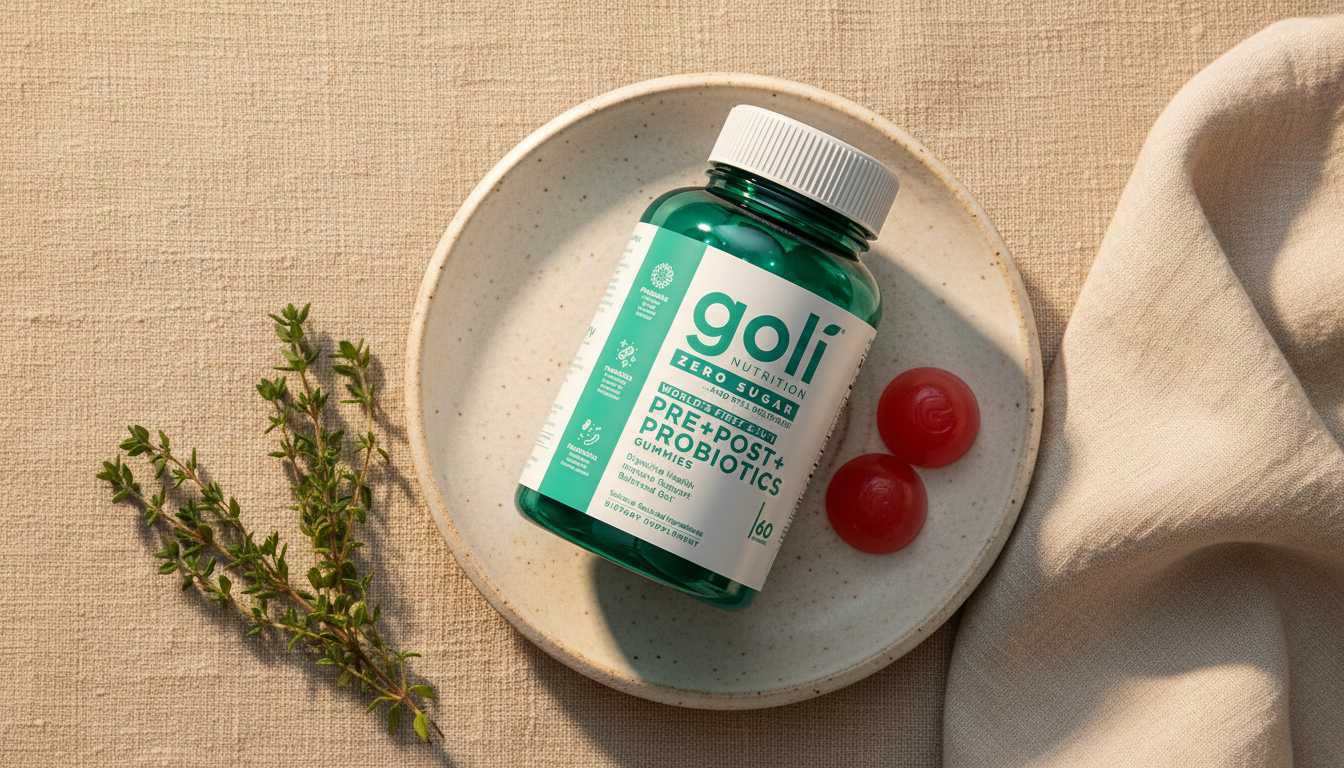
You have probably seen the Goli Pre+Post+Probiotics gummies on TikTok, in your feed, or on the shelf next to the ACV gummies you already know. The bottle says “World’s First 3-in-1” and lists prebiotics, probiotics, and postbiotics as three separate ingredients. If you have been wondering what that actually means for your gut, and whether it is worth adding to your daily routine, this is the article that answers that question in full.
Gut health supplements are easy to market and hard to evaluate. What sets this formula apart is not the gummy format or the branding. It is the specific ingredients inside and the research behind each one. Over 750,000 Zero Sugar 3 Pack bundles have been sold on TikTok Shop since late May 2025, and 10 billion Goli gummies have been sold worldwide since 2018. That level of adoption reflects something more than clever packaging.
The Short Answer
Goli probiotics deliver a clinically studied three-ingredient formula: DE111, a spore-forming Bacillus subtilis probiotic that survives stomach acid and germinates in the small intestine; XOS, a prebiotic fiber that feeds beneficial bacteria; and MCC1849, a heat-stable postbiotic that supports immune function. Together they address gut health through three complementary layers simultaneously, which is why the 3-in-1 claim is mechanically meaningful rather than just marketing.
What Makes Goli Probiotics Different
Most probiotic supplements contain one type of bacteria in one format. The Goli Pre+Post+Probiotics gummies contain three distinct components that work at three different points in the digestive process. Understanding each one separately is what makes the combined formula make sense.
The first distinction is the probiotic strain itself. DE111 is Bacillus subtilis, a spore-forming bacterium. Spore-forming means it is protected by a hard outer shell that allows it to survive stomach acid, heat, and shelf storage without refrigeration. Most traditional probiotic strains are fragile. They die in heat, lose viability on shelves, and are often destroyed by stomach acid before reaching the gut where they need to work. DE111 does not have this problem.
The second distinction is the inclusion of both a prebiotic and a postbiotic alongside the probiotic. The prebiotic feeds the beneficial bacteria. The postbiotic provides immune support from stable bacterial metabolites. These are not redundant. They are sequential. The prebiotic fuels the probiotic. The probiotic’s activity produces postbiotic-like compounds. Including all three addresses the full gut support chain rather than just one link.
Cleveland Clinic confirms that the evidence for specific probiotic strains is strongest when those strains have been studied in controlled human clinical trials (Cleveland Clinic probiotics overview).
The 3-Layer Gut System
The 3-Layer Gut System describes how the three components address gut health from the ground up. Each layer has a distinct function. Each depends on the others to work most effectively.
The Prebiotic Layer
The prebiotic in the formula is XOS, short for xylooligosaccharides. XOS is a plant-derived fiber that the human body cannot digest. Instead, it passes to the colon where it serves as food for beneficial bacteria, specifically Bifidobacterium and Lactobacillus strains already living in your gut.
The prebiotic layer matters because probiotic bacteria, whether from supplements or food, need an energy source to establish themselves and thrive. Without adequate prebiotic substrate, incoming probiotics may colonize temporarily and then decline as they run out of fuel. XOS creates the environment in which the DE111 probiotic can establish itself and remain active.
NIH ODS confirms that prebiotics are non-digestible food components that selectively stimulate the growth and activity of beneficial microorganisms in the gut, and that the combination of prebiotics with probiotics may enhance the survival and activity of probiotic strains (NIH ODS probiotics fact sheet).
The Probiotic Layer
DE111 is the probiotic strain at the center of the formula. Bacillus subtilis DE111 is a spore-forming bacterium that has achieved FDA Generally Recognized As Safe status. What distinguishes DE111 from common probiotic strains like Lactobacillus acidophilus is its survival mechanism. The spore form allows DE111 to pass through stomach acid intact. Human clinical research confirmed that DE111 spores germinate in the small intestine within three hours of ingestion, producing active vegetative bacterial cells where they are needed.
This germination in the small intestine is clinically significant because it means DE111 reaches the area of the gut responsible for nutrient absorption and immune interaction in its active, functioning state, not depleted or destroyed by the digestive journey.
PMC research confirms that Bacillus subtilis DE111 demonstrates probiotic activities that support gut microbiome diversity, modulate immune cell populations, and produce metabolites that aid nutrient absorption, with germinated DE111 cells confirmed in the small intestines of human subjects (PMC DE111 gastrointestinal and immunomodulatory effects).
The Postbiotic Layer
The postbiotic in the formula is MCC1849, a heat-stable Lactobacillus paracasei strain. Postbiotics are defined as stable bacterial components or metabolites that confer health benefits even without live bacteria activity. MCC1849 is heat-stable, meaning it retains its function at temperatures that would destroy most live probiotic strains.
The postbiotic layer addresses the immune function side of gut health. The gut-associated lymphoid tissue, which makes up roughly 70 percent of the body’s immune system, is directly influenced by the bacterial metabolites and signals produced in the gut environment. MCC1849 supports this immune layer from the colon side, complementing the microbiome diversification work of DE111 in the small intestine.
Mayo Clinic confirms that probiotic and prebiotic supplementation can contribute to a healthier gut environment by increasing beneficial bacterial populations and that this improved gut environment is associated with better immune function and reduced digestive discomfort in many adults (Mayo Clinic prebiotics and probiotics guide).
The Clinical Evidence Behind the Formula
The three ingredients in the formula are not proprietary blends. They are named, studied compounds with published clinical trial records.
DE111 has been studied in multiple randomized, double-blind, placebo-controlled human trials. One trial found increased anti-inflammatory immune cell populations in DE111 subjects compared to placebo. A separate study confirmed DE111 spore germination in living human small intestines. XOS prebiotics have been studied for selective Bifidobacterium fermentation and short-chain fatty acid production. XOS has a more targeted fermentation profile than inulin or FOS. MCC1849 postbiotic has been evaluated for immune-supporting properties and heat stability.
Healthline confirms that research on specific probiotic strains shows meaningful variation in effects depending on the strain studied, that the strongest evidence supports strains with human clinical trial backing, and that the combination of prebiotics and probiotics has additive effects on gut health outcomes (Healthline probiotics 101).
How to Take It for Best Results
The formula is designed to be taken consistently rather than occasionally. Three gummies once daily with a meal delivers DE111, XOS, and MCC1849 together in a single serving.
Taking the gummies with food moderates stomach acid, which supports DE111 germination, and ensures XOS enters the colon alongside other fermentable substrates from the meal. Consistency is the more important variable. The gut microbiome shifts gradually in response to sustained inputs. A single dose produces minimal measurable change. Daily intake over three to four weeks begins to show shifts in bacterial diversity. Most people who report noticeable improvements in bloating, regularity, and digestive comfort describe changes emerging at the two to four week mark with full stabilization around six to eight weeks.
WebMD confirms that Bacillus subtilis is generally well-tolerated in healthy adults across multiple clinical studies and that mild initial digestive adjustment symptoms, including temporary gas or bloating, are common in the first week as the gut microbiome adapts to new probiotic input (WebMD Bacillus subtilis overview).
What People Actually Report
The pattern across verified reviews is consistent: less bloating first, then improved regularity, then digestion that is quieter and more predictable. Some people report no subjective changes in the first two weeks, which is not unusual. The gut microbiome takes time to shift measurably, and DE111’s evidence is based on consistent use over four to six weeks minimum.
The minority experience mild initial gas or bloating in the first week as the microbiome adjusts to DE111 and XOS fermentation. It typically resolves by week two without any change to the routine.
NIH MedlinePlus confirms that probiotics are generally considered safe for healthy adults, that some people experience mild gas and bloating when first starting probiotic supplementation, and that these symptoms typically improve as the body adjusts (NIH MedlinePlus probiotics overview).
Who This Formula Is Best For
The 3-Layer Gut System addresses gut health broadly rather than targeting a single symptom. That makes it useful across a wide range of situations.
Adults who experience regular bloating, gas, or digestive irregularity are the core audience. The three-layer approach addresses all contributors to these symptoms simultaneously rather than one at a time. People who have taken antibiotics recently benefit from DE111 specifically because its spore form re-establishes in a disrupted microbiome more reliably than fragile strains. Travelers benefit from DE111’s room-temperature stability.
This formula is not appropriate for people who are immunocompromised, pregnant, or nursing without healthcare guidance. Those managing a diagnosed gastrointestinal condition should consult their doctor before adding it.
How This Formula Compares to Standard Probiotics
Most probiotic supplements on the market use Lactobacillus or Bifidobacterium strains in a capsule format. These strains have strong research backing for specific conditions, but they come with practical limitations. They require refrigeration in many cases. They are vulnerable to stomach acid. Viability at the time of purchase is not guaranteed.
This formula uses a spore-forming strain that does not have these limitations. DE111 is shelf-stable without refrigeration, survives stomach acid in its spore form, and germinates into active bacteria in the small intestine where it needs to work. The addition of XOS prebiotic and MCC1849 postbiotic means the formula addresses the gut environment rather than simply adding bacteria to it.
The practical result is a format that is easier to take consistently, more likely to reach the gut in active form, and more likely to support the conditions that make probiotic colonization durable.
Myths Worth Addressing
“More CFU means a better probiotic.” CFU count matters less than viability and survivability. Ten billion CFU of a strain destroyed by stomach acid delivers less effective bacteria than one billion CFU of DE111, which survives. Strain quality and gut delivery determine effect, not label numbers.
“Probiotics work immediately.” The gut microbiome responds to sustained inputs over time. Probiotic supplementation shifts bacterial populations gradually. Most people begin to notice measurable subjective changes at two to four weeks, with the pattern stabilizing over six to eight weeks. Daily consistency during this window is what produces results.
“You only need probiotics, not prebiotics.” Probiotic bacteria need a food source to establish in the gut. Without adequate prebiotic substrate, incoming bacteria colonize temporarily then decline. XOS addresses this directly by providing the specific fiber that feeds DE111 and other beneficial strains.
“Gummy probiotics cannot work because heat kills bacteria.” This is true for fragile strains, not for spore-forming bacteria. DE111 spores resist heat above 100 degrees Celsius. The gummy manufacturing process does not compromise its viability, which is specifically why this strain was selected for a gummy format.
Frequently Asked Questions: Goli Probiotics
What are Goli probiotics good for?
The Pre+Post+Probiotics formula is designed to support three layers of gut health simultaneously. The DE111 probiotic adds beneficial bacteria and diversifies the gut microbiome. The XOS prebiotic fiber feeds those beneficial bacteria and existing gut flora. The MCC1849 postbiotic supports immune function through the gut-associated lymphoid tissue. Together they address bloating, digestive irregularity, microbiome diversity, and immune support, making it useful for anyone seeking broad gut health improvement rather than a single symptom fix.
How long does it take to work?
Most people notice the first changes at the two to four week mark with daily use. The gut microbiome shifts gradually, not immediately. Full stabilization typically takes six to eight weeks. Consistency matters more than any other variable.
What are the side effects?
The most common side effects are mild and temporary: increased gas or bloating in the first week as the gut microbiome adjusts to DE111 and XOS fermentation. These typically resolve by week two. The formula is Gluten-Free, Non-GMO, Vegan, Gelatin-Free, and free from common allergens.
Is Goli a good probiotic?
The formula is backed by solid clinical evidence. DE111 has FDA GRAS status and multiple published human clinical trials confirming its survival through the stomach, germination in the small intestine, and positive effects on gut microbiome diversity and immune cell populations. XOS has peer-reviewed research supporting its prebiotic activity. MCC1849 has published evidence for its heat stability and immune support. The combination of a clinically studied strain with a delivery format that protects viability makes this one of the more scientifically grounded options in the gummy supplement category.
Does Goli probiotic help with weight loss?
The formula is not a weight loss supplement and does not make weight loss claims. However, gut microbiome diversity is associated with metabolic health in the broader research literature, and some people report improvements in bloating that change how they feel physically. Improved digestion and reduced bloating may change how someone looks and feels, but these effects are secondary to the formula’s primary gut health function. Anyone using these gummies specifically for weight management should have realistic expectations about its mechanism.
Can I take Goli probiotics every day?
Yes. The formula is designed for daily use. Three gummies once daily with a meal is the recommended serving. Daily consistency is what produces meaningful changes in gut microbiome composition, because the gut responds to sustained inputs over time rather than to occasional supplementation. Taking them daily with a meal also supports optimal DE111 germination and XOS fermentation timing.
What I Take Every Day for Gut Health
After 190 consecutive days on TikTok Live talking about gut health, the question I hear most often is what actually works for daily digestive support that is easy to stick to. My answer has not changed.
The Goli Pre+Post+Probiotics are part of my daily morning routine alongside the ACV+ gummies. The ACV+ gummies address digestive enzyme activity at meals. The Pre+Post+Probiotics address the microbiome layer. What I notice most is that my digestion is quieter: less bloating after meals, more predictable. The kind of change that becomes obvious when you skip a few days.
The formula carries all six certifications I look for: Gluten-Free, Non-GMO, Vegan, Gelatin-Free, Physician-Owned, and Science-Backed. Over 750,000 Zero Sugar 3 Pack bundles have been sold on TikTok Shop since late May 2025, and 10 billion Goli gummies have been sold worldwide since 2018. That is the pattern of a product that works for real people in real daily routines.
I have linked exclusive TikTok pricing below for Better Gut Daily readers.
Exclusive TikTok pricing below
You May Also Like
If you are building a complete daily supplement routine around gut health and cellular energy, the Goli ACV+ and Pre+Post+Probiotics address the gut microbiome and digestive enzyme layer. The next layer for many people is cellular energy support, particularly for those who notice that better digestion does not fully explain the fatigue they feel in the afternoon.
For readers who want to understand the cellular energy side of the picture, the Cellular Recharge Method guide covers how NR supports the mitochondrial energy system that gut inflammation and aging both affect.
The Bottom Line
The 3-Layer Gut System makes Goli probiotics mechanically meaningful rather than just marketable. The prebiotic layer fuels beneficial bacteria. The probiotic layer adds DE111, a clinically validated spore-forming strain that survives stomach acid and germinates in the small intestine. The postbiotic layer supports immune function through heat-stable MCC1849. Together they address the gut environment from three complementary directions rather than one.
Start today by anchoring three gummies to the same daily meal. The first two weeks establish the baseline shift in your gut environment. Every week after that compounds on it. Over 750,000 Zero Sugar 3 Pack bundles have been sold on TikTok Shop since late May 2025. People taking these daily are not expecting dramatic overnight changes. They are building a quieter, more resilient gut – one consistent day at a time. That is the only mechanism that works.
References
- PMC: Examining the Gastrointestinal and Immunomodulatory Effects of the Novel Probiotic Bacillus subtilis DE111
- WebMD: Bacillus subtilis overview, uses and safety
- Healthline: Probiotics 101, a simple beginners guide
- Cleveland Clinic: Probiotics overview and benefits
- NIH Office of Dietary Supplements: Probiotics health professional fact sheet
- NIH MedlinePlus: Probiotics overview and safety
- Mayo Clinic: Prebiotics, probiotics and your health