

If you have spent any time researching NAD supplements, you have encountered the same three acronyms in every conversation: NAD, NR, and NMN. The marketing around all three is confident and occasionally contradictory. One source says NMN is superior. Another says NR has more human evidence. A third says you can just take NAD directly.
The Precursor Pathway Breakdown settles the NMN vs NR vs NAD question by tracing how each molecule travels from supplement to cell, what the human clinical research shows, and which is the most evidence-backed choice for daily supplementation.
The Short Answer
The NMN vs NR vs NAD question starts with one fact: NAD cannot be taken directly and absorbed into cells. NMN and NR are both oral precursors that convert to NAD inside cells. NR has the most completed human clinical trials, the most consistent human evidence, and the clearest regulatory status. For daily oral supplementation, NR is the most studied and most available option.
Why You Cannot Just Take NAD Directly
Before comparing NMN and NR, the foundational question is why supplements use precursors in the first place rather than NAD itself.
NAD is a large molecule that cannot cross cell membranes directly. When you swallow an NAD capsule, the molecule is broken down in the digestive tract before meaningful amounts can be absorbed. Even if some reaches the bloodstream, it cannot pass through the plasma membrane to reach the intracellular environment where it is needed. IV NAD drips exist and do raise blood NAD, but they are expensive, require clinic visits, and produce side effects during infusion.
Cleveland Clinic confirms that NAD supplements marketed as oral capsules containing NAD directly are generally not effective at raising intracellular NAD because the molecule cannot pass through the cell membrane, and that precursors like NR are what oral supplementation research has focused on (Cleveland Clinic NAD supplement overview).
NAD precursors solve this problem by being smaller molecules that cells can absorb and then convert to NAD internally through confirmed enzymatic pathways.
The Precursor Pathway Breakdown
The Precursor Pathway Breakdown traces each of the three molecules from oral ingestion to cellular NAD, revealing exactly where their differences matter and where they converge.
NAD Direct
Oral NAD supplements are widely marketed but poorly supported by evidence. The molecule is too large to survive digestion intact and too large to cross cell membranes. For oral use, NAD converts to nicotinamide in the gut before absorption and feeds back into NAD synthesis through the salvage pathway, making it functionally similar to taking nicotinamide, not NAD itself.
NR
NR, or nicotinamide riboside, is a form of vitamin B3. It enters cells through confirmed nucleoside transporters, converts to NMN inside the cell, and NMN converts to NAD in a second enzymatic step. The pathway is direct, efficient, and well-characterized.
NR has FDA GRAS status, Health Canada approval, and European Food Safety Authority clearance. It was identified as a naturally occurring compound in milk, which contributed to its pathway to regulatory approval. The human clinical trial record for NR is the most extensive of any NAD precursor, with multiple randomized, double-blind, placebo-controlled trials across healthy adults, middle-aged and older adults, and specific patient populations.
Healthline confirms that animal and human studies show NR efficiently and consistently raises blood NAD levels, and that it is more readily converted by the body than other NAD precursors, making it the most studied option for oral supplementation (Healthline NR benefits and dosage).
NMN
NMN, or nicotinamide mononucleotide, is one step closer to NAD than NR in the biosynthetic pathway. NMN contains an extra phosphate group, which means it cannot enter cells directly through the same nucleoside transporter that NR uses. Earlier research suggested NMN must first be dephosphorylated to NR before entering cells, which would make it effectively equivalent to NR in terms of cellular uptake. More recent research identified a specific intestinal NMN transporter, though its expression varies by tissue and age.
NMN also faces a regulatory complication in the United States. In November 2022, the FDA ruled that NMN may not be legally marketed as a dietary supplement in the US because it has been authorized for investigation as a new drug. This does not affect NR, which retains GRAS status for supplement use.
NIH ODS confirms that NMN is not marketed or labeled as a source of niacin in supplement form and that its regulatory status in the US is distinct from NR, which remains available as a dietary supplement (NIH ODS niacin fact sheet).
The Clinical Evidence Compared
The research base for NR and NMN is different in both volume and depth, and understanding that difference is what makes the comparison practically useful.
NR has been studied in humans since 2016. The foundational paper by Trammell et al. demonstrated that oral NR is uniquely and orally bioavailable in mice and humans and raises blood NAD in a dose-dependent manner. Multiple subsequent randomized controlled trials confirmed this finding across different populations. A 2018 study found that chronic NR supplementation was well-tolerated and elevated NAD in healthy middle-aged and older adults. Signals on blood pressure reduction and inflammatory cytokine reduction have been documented across multiple NR trials.
NMN human trials are fewer but growing. A 2023 randomized controlled trial of 65 healthy adults found that NMN and NR comparably doubled circulating NAD levels over 14 days, with no significant difference between the two. NMN trials have also documented signals on blood vessel stiffness reduction and walking speed maintenance in older adults. The safety profile for NMN in completed trials is favorable.
PMC research confirms that NR is one of the most studied NAD precursors, with accumulating evidence validating its efficiency in raising NAD across human clinical trials, and that the human evidence base for NMN, while growing, is less extensive than for NR (PMC NR current state of research).
The most direct head-to-head comparison available showed NMN and NR performing comparably when raising blood NAD. No completed trial shows one significantly outperforming the other on that primary endpoint.
Where NMN and NR Actually Differ
The meaningful differences between NMN and NR are not about efficacy on raising blood NAD. The regulatory situation is the most practical difference: NR is freely available as a supplement in the US, EU, and Canada, while NMN’s supplement status in the US is legally ambiguous after the 2022 FDA ruling. NR also has more completed randomized controlled trials and a longer human safety record. Tissue specificity remains a theoretical difference not yet established in clinical evidence
Why NR Is the Most Evidence-Backed Daily Choice
When the comparison is applied to a practical decision, the recommendation aligns clearly with NR for most people seeking daily oral NAD support.
NR has more human clinical trial data. It has cleaner regulatory status in every major market. It has a confirmed cell entry mechanism through nucleoside transporters. The head-to-head comparison showed it performs comparably to NMN on the primary endpoint of raising blood NAD. For daily supplementation, comparable efficacy plus superior regulatory clarity plus superior evidence depth points consistently to NR.
WebMD notes that NR is well-tolerated at standard doses with a favorable safety profile, and that its primary documented mechanism is cellular metabolism through the NAD pathway rather than any acute stimulant effect (WebMD nicotinamide riboside overview).
What Raising Blood NAD Actually Does
Elevated cellular NAD enables four core functions: mitochondrial energy production through the electron transport chain, DNA repair through PARP enzyme activity, sirtuin activation that regulates gene expression and cellular aging, and the NAD+/NADH ratio that signals cellular metabolic health. All four require NAD as their substrate and all four decline when NAD levels drop with age.
NIH MedlinePlus confirms that the body needs NAD for many processes to work normally and that low NAD levels can cause health problems, with NR as a vitamin B3 derivative having an established profile for raising NAD in humans (NIH MedlinePlus NR overview).
The precursor question, whether to take NMN or NR, is ultimately a question about which delivery vehicle most reliably and consistently gets NAD substrate to the cells that need it. NR currently answers that question more completely than any alternative.
How Often to Take NAD Precursors and What to Expect
Blood NAD rises within hours of the first dose and reaches a stable plateau within two weeks of daily use. Functional benefits build over six to twelve weeks of sustained elevated NAD. Stopping supplementation reverses the elevated NAD within days. Consistency is the most important variable once you have selected the right precursor.
Common Myths About NMN vs NR vs NAD
“NMN is better because it is closer to NAD.” Molecular proximity to NAD does not determine efficacy. The head-to-head trial showed NMN and NR performing comparably on raising blood NAD. “Oral NAD supplements work just like NR.” Oral NAD converts to nicotinamide in the gut before absorption, making it functionally different from NR. NR delivers the NR molecule directly to nucleoside transporters.
“NMN has been banned.” NMN has not been banned. The FDA ruled it cannot be marketed as a dietary supplement because it is under investigation as a new drug. NMN products remain available in the market but exist in a legally ambiguous space, which affects quality assurance and regulatory oversight rather than access.
“The best option is whichever has the highest dose.” Dose matters less than the consistency and quality of the supplement. NR studies have produced meaningful results at 250 to 300 mg per day. Larger doses do not proportionally increase intracellular NAD beyond a threshold. Consistent daily intake of a quality NR supplement is more effective than intermittent high-dose intake.
Frequently Asked Questions: NMN vs NR vs NAD
What is the difference between NMN, NR, and NAD?
NAD is the coenzyme itself, found in every cell but unable to cross cell membranes when taken orally. NR and NMN are oral precursors that cells absorb and convert to NAD through enzymatic pathways. NR enters cells through nucleoside transporters and converts to NAD in two steps. NMN is one step closer to NAD in the biosynthetic pathway but cannot enter cells through the same transporters as NR. Both NMN and NR raise blood NAD comparably in the only head-to-head human trial completed to date.
Is NMN or NR better for raising NAD levels?
A 2026 randomized controlled trial of 65 healthy adults found that 14 days of NMN and NR supplementation comparably doubled circulating NAD levels, with no significant difference between the two. For raising blood NAD, both appear equivalent in humans. NR is the stronger choice on other criteria: it has more completed human clinical trials, cleaner regulatory status in the US and internationally, and a confirmed cell entry mechanism through nucleoside transporters.
Can you take NAD directly as a supplement?
Oral NAD supplements do not deliver NAD to cells effectively. The molecule is broken down in the digestive tract and cannot cross cell membranes even when some reaches the bloodstream. It converts to nicotinamide before absorption, making it functionally similar to taking nicotinamide rather than NAD itself. IV NAD drips do raise blood NAD directly but are impractical for daily supplementation. For oral use, NR or NMN are the appropriate precursor options.
Which is better, NMN or NR?
For daily oral supplementation, NR is the better-supported choice based on the totality of evidence. NR has more completed human clinical trials, FDA GRAS status, Health Canada approval, and European Food Safety Authority clearance. NMN’s supplement status in the US is legally ambiguous following the 2022 FDA ruling. On the primary endpoint of raising blood NAD, both perform comparably in head-to-head comparison. NR’s superior regulatory clarity and evidence depth make it the more reliable choice for most people.
How long does it take for NMN or NR to work?
Blood NAD begins rising within hours of the first dose of either NMN or NR. A stable elevated baseline is typically reached within two weeks of consistent daily use. The first subjective changes, most commonly more consistent afternoon energy and faster recovery, typically emerge around weeks two to four. Meaningful functional results across the broader benefit areas build from weeks six to twelve. Eight weeks of consistent daily use is the minimum evaluation window.
What is the most effective NAD precursor?
Based on current human clinical trial data, NR is the most thoroughly studied and most consistently effective oral NAD precursor available. It has the most completed randomized controlled trials in humans, the most favorable regulatory status across major markets, and a confirmed cellular uptake mechanism. NMN is comparable on the primary endpoint of raising blood NAD, but has fewer completed human trials and more complicated regulatory status. Both outperform nicotinamide and niacin on the specific endpoint of raising blood NAD levels.
Why Goli Renew Uses NR and What That Means
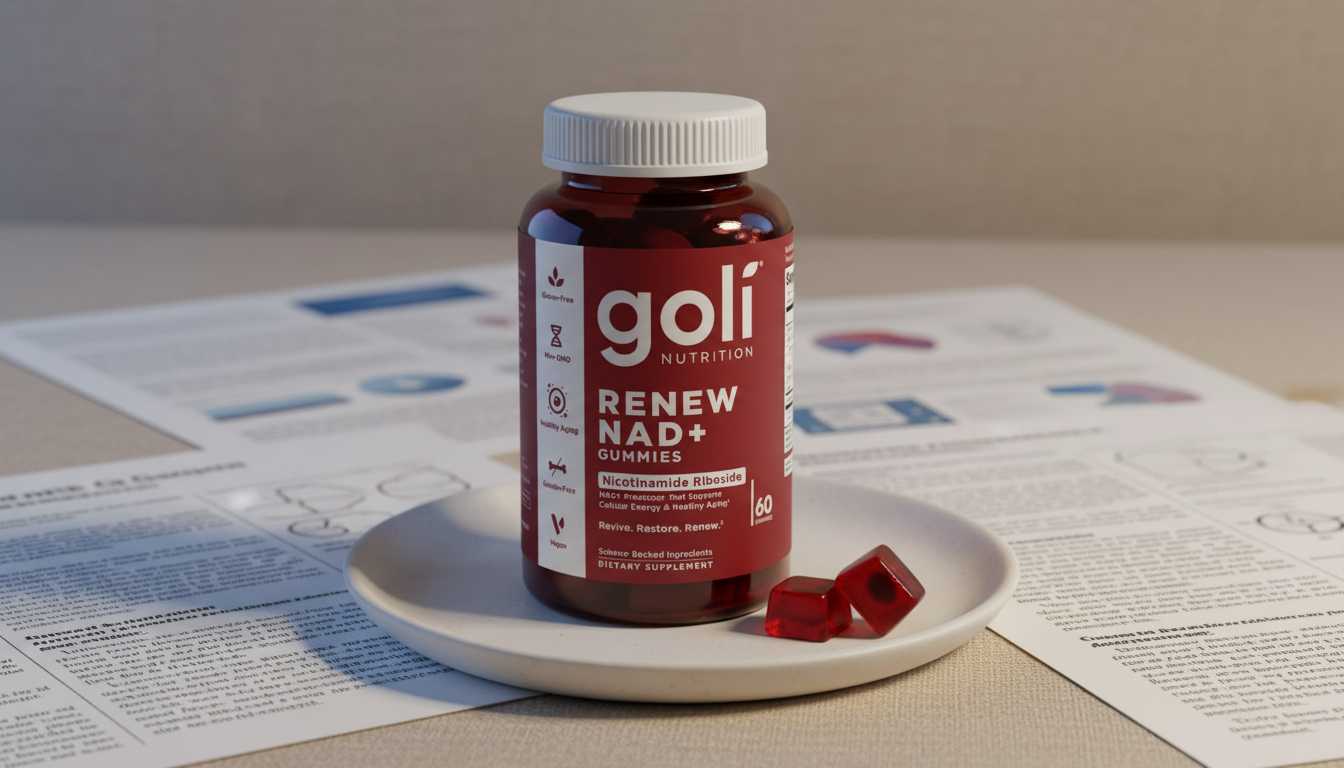
The choice of NR over NMN in Goli Renew NAD+ Gummies is a direct reflection of the evidence landscape. NR has the most completed human clinical trials, the cleanest regulatory pathway, and a confirmed cell entry mechanism. These are formulation decisions, not marketing ones.
The liquid-center gummy format delivers NR alongside Vitamin B3, which supports the NAD salvage pathway from a complementary entry point, and Vitamin C, which provides antioxidant protection for the cellular environment where NR’s benefits operate. Together, the three active ingredients address NAD support through complementary mechanisms rather than a single pathway.
The certifications confirm the formulation quality: Gluten-Free, Non-GMO, Vegan, Gelatin-Free, Physician Owned, and Science-Backed Ingredients.
Goli confirms the formula is designed to support cellular energy production, metabolism, and healthy aging through NR, Vitamin B3, and Vitamin C working in combination.
Over 700,000 Goli Zero Sugar 3 Pack bundles have sold on TikTok Shop in under a year, and 10 billion Goli gummies have been sold worldwide since 2018. People who choose NR daily are typically making that decision based on the available evidence.
I have secured exclusive TikTok pricing for Better Gut Daily readers. Get access here.
You May Also Like
Understanding what NR does after it becomes NAD inside your cells is the natural next step after deciding which precursor to take. The four core NAD functions – the electron shuttle, the energy converter, the repair enabler, and the aging regulator – are what make daily NR support meaningful rather than speculative.
If you want the complete biology behind why consistent NAD support matters, the NAD function in the body guide covers what NAD actually does inside every cell and why the four roles all decline together when NAD levels drop.
The Bottom Line
The Precursor Pathway Breakdown settles the NMN vs NR vs NAD comparison clearly: oral NAD cannot enter cells, NMN and NR both convert to NAD efficiently with comparable efficacy on raising blood NAD, and NR is the better-supported choice for daily supplementation based on evidence depth, regulatory status, and clinical track record.
Start this week by anchoring two Goli Renew gummies to a midday meal you already eat. The NR reaches your cells within hours, and each week of consistent intake builds on the last as the four NAD functions operate with more substrate available.
Goli Renew delivers the NR that your cells convert to NAD, alongside the Vitamin B3 and Vitamin C that support the cellular environment where that NAD does its work. The precursor question has a clear answer, and the formulation question has a clear answer. What remains is the consistency variable that determines whether results materialize. Your cells respond to what you give them daily, and NR is what the research most consistently supports.
I have secured exclusive TikTok pricing for Better Gut Daily readers. Get access here.
References
- Healthline: Nicotinamide riboside benefits, side effects and dosage
- WebMD: Nicotinamide riboside overview, uses and side effects
- Cleveland Clinic: NAD supplements, can they really slow down aging
- PMC: Nicotinamide riboside, the current state of research and therapeutic uses
- NIH Office of Dietary Supplements: Niacin health professional fact sheet
- NIH MedlinePlus: Nicotinamide riboside overview and safety