

You have heard that NAD is good for energy. You have probably seen it described as a longevity molecule, a mitochondrial fuel, and the molecule that declines with age. But most of the explanations skip the part that actually matters: what is the mechanism? How does a molecule called nicotinamide adenine dinucleotide become the energy you feel in the afternoon, or fail to become it when you do not have enough?
The Cellular Energy Chain answers that question in three steps. Each step reveals a distinct way that NAD determines how efficiently your cells produce energy, how well they repair damage, and how fast they age. Understanding all three is what makes NAD supplementation make sense rather than feel like a wellness trend. Over 750,000 Zero Sugar 3 Pack bundles have been sold on TikTok Shop since late May 2025, and 10 billion Goli gummies have been sold worldwide since 2018. People building daily NAD routines understand the chain.
The Short Answer
NAD cellular energy refers to the role NAD plays as an electron carrier inside your mitochondria, enabling the conversion of food into ATP, your body’s primary energy currency. NAD levels decline with age due to increased consumption by repair enzymes and decreased synthesis capacity. When NAD drops, the Cellular Energy Chain slows, and consistent daily NR supplementation is the most evidence-backed approach to restoring the baseline.
What NAD Actually Is
NAD stands for nicotinamide adenine dinucleotide. It is a coenzyme found in every living cell, present in two interconverting forms: NAD+, the oxidized form ready to accept electrons, and NADH, the reduced form carrying electrons ready to deliver. NAD+ picks up electrons during nutrient breakdown, becomes NADH, delivers those electrons to the mitochondria where they are harvested to produce ATP, and converts back to NAD+ to repeat the cycle. This constant cycling is the primary mechanism through which NAD determines cellular energy efficiency.
Cleveland Clinic confirms that NAD helps cells make energy by carrying electrons from one chemical reaction to another, that this process powers nearly everything the body does, and that NAD keeps cells working properly as the body ages by maintaining this essential electron-carrying function (Cleveland Clinic NAD body overview).
This cycling happens continuously, billions of times per second, in every cell in your body. The rate of the cycle, and the total pool of NAD available to participate in it, determines how efficiently your cells produce energy. That is why this is not a metaphor. It is a direct biochemical mechanism.
The Cellular Energy Chain
The Cellular Energy Chain describes how NAD moves from its role as an electron carrier to its role in ATP production to its role as the trigger for cellular repair. Each link in the chain depends on adequate NAD availability. When any link weakens, the downstream consequences follow automatically.
The Electron Shuttle
The first role of NAD is the most fundamental. Glucose breakdown in glycolysis and pyruvate processing in the citric acid cycle both generate NADH. This NADH delivers its electrons to Complex I of the mitochondrial electron transport chain, where they pass through embedded protein complexes, releasing energy that pumps hydrogen ions across the inner membrane. The resulting electrochemical gradient drives ATP production through ATP synthase.
Research published in Nature confirms that NAD is an essential redox coenzyme, that the ratio between its oxidized and reduced forms is critical for energy generation, metabolic homeostasis, and mitochondrial function, and that NAD levels act as a rate-limiting factor in determining the efficiency of mitochondrial energy production (Nature NAD metabolism and mitochondria).
The electron shuttle step is why the total pool of available NAD is so critical. A cell with adequate NAD runs the electron transport chain at full capacity. A cell with depleted NAD runs it below capacity. The ATP output per unit of food consumed falls, and the cellular energy deficit begins.
The ATP Generator
The second link is where this process becomes felt energy. The electron transport chain, running on NADH from glycolysis and the citric acid cycle, produces roughly 34 of the 36 ATP molecules generated from a single glucose molecule. When NAD+ is abundant, this system runs at maximum efficiency. When NAD+ is limiting, the entire chain slows simultaneously: NADH cannot be oxidized back to NAD+, the citric acid cycle backs up, and glycolysis slows because it cannot offload its NADH.
PMC research confirms that NAD is involved in the catabolism of glucose in glycolysis, required for fatty acid metabolism during beta-oxidation, and necessary for the mitochondrial processes that produce ATP in the electron transport chain, making it essential for energy generation across all three major metabolic pathways simultaneously (PMC NAD metabolism and mitochondrial disorders).
The Repair Signal
The third link in the Cellular Energy Chain is the one most directly connected to aging. NAD is not only the substrate for energy production. It is also the substrate for PARP enzymes that repair DNA damage and for sirtuin proteins that regulate cellular aging, gene expression, and metabolic efficiency.
PARP enzymes detect daily DNA damage from UV radiation, reactive oxygen species, and replication errors, and use NAD+ as their fuel to carry out repairs. When damage is high, PARP activity surges and NAD drops sharply. Sirtuins, the proteins that regulate cellular aging, require NAD+ as their obligate cofactor. When NAD declines, sirtuin activity declines proportionally, gene expression regulation becomes less precise, and cellular aging accelerates.
NIH ODS confirms that NAD participates in more than 400 enzymatic reactions throughout the body, more than for any other vitamin-derived coenzyme, including critical reactions involved in DNA repair and cellular regulation that all require NAD as their substrate (NIH ODS niacin fact sheet).
Why NAD Declines With Age
By midlife, most adults have roughly half the NAD of their younger selves. By older age, the decline is more pronounced still. Three independent drivers converge to create it. First, CD38, an enzyme that degrades NAD, becomes substantially more active with age due to chronic low-grade inflammation. CD38 is the primary consumer of NAD in non-energetic contexts, and its age-related increase creates a significant drain on the NAD pool that does not slow down.
Second, PARP enzyme activity increases with age because accumulated DNA damage requires more continuous repair effort. The same repair system that protects genomic integrity consumes NAD to do so, and as the damage load increases with age, the NAD consumption for repair increases alongside it.
Third, the body’s NAD synthesis capacity declines with age as the enzymes responsible for producing NAD through the salvage pathway become less active. This means the supply is decreasing while the demand from CD38 and PARP activity is increasing simultaneously.
Nature research on NAD metabolism in aging confirms that NAD decline is a driven biological process involving multiple compounding mechanisms rather than simple passive depletion, and that the interaction between increased NAD consumption and decreased synthesis creates a progressively worsening deficit over time.
How NAD Decline Changes How You Feel
NAD decline translates into specific daily experiences that most people recognize without connecting them to cellular biology. When the electron transport chain operates below capacity, less ATP is produced per unit of food consumed. The result is a gradual narrowing of the energy window rather than a dramatic crash. The afternoon holds less reliably. Recovery after physical effort takes longer.
Cognitive function is particularly sensitive to NAD status because the brain consumes roughly 20 percent of the body’s ATP while representing only 2 percent of its weight. Reduced afternoon mental clarity and persistent effort required to maintain focus are common early indicators of declining NAD.
Physical recovery from exercise also changes. When NAD is declining, the same exercise effort produces more fatigue and slower recovery, not because fitness has decreased but because the cellular repair infrastructure is operating with less substrate.
NIH MedlinePlus confirms that the body needs NAD for many normal processes and that low NAD levels can cause health problems, with NR as a confirmed oral precursor that raises blood NAD in ways that support normal cellular functions that become less efficient with age (NIH MedlinePlus NR overview).
How NR Restores the Cellular Energy Chain
NAD cannot be taken directly as an oral supplement and absorbed into cells. The molecule is broken down in the digestive tract before reaching the bloodstream in useful quantities. Nicotinamide riboside enters cells through confirmed nucleoside transporters and converts to NAD in two enzymatic steps. This intracellular pathway makes NR the most efficient oral precursor, with a confirmed cell entry mechanism and resulting NAD available to all three links of the Cellular Energy Chain.
Healthline confirms that NR supplementation efficiently and consistently raises blood NAD levels in multiple human trials, that the increases are dose-dependent and sustained with daily supplementation, and that NR is better converted to NAD by the body than other precursors available for oral use (Healthline NR benefits overview).
WebMD confirms that NR has a well-characterized safety profile in clinical trials, is generally well-tolerated at standard doses, and that its mechanism of action through cellular energy metabolism rather than nervous system stimulation produces a different and more stable energy effect than stimulant-based approaches (WebMD NR overview).
What the Evidence Shows on Timeline and Results
Blood NAD begins rising within hours of the first dose. A stable elevated baseline is typically reached within two weeks of consistent daily intake. The cellular adaptation that produces measurable changes in energy, recovery, and cognitive endurance builds over six to eight weeks.
The results most consistently reported include more consistent afternoon energy, shorter recovery from physical exertion, and more sustained cognitive endurance. These are not acute stimulant effects but the downstream consequences of mitochondria running the electron transport chain more efficiently. Stopping supplementation allows blood NAD to return toward its declining baseline within days, which is why daily consistency is the critical variable.
Who Benefits Most From NAD Support
The evidence base for NR supplementation is strongest in specific populations where the NAD deficit is most pronounced and the cellular energy gap between demand and supply is widest.
Adults over 35 are the primary group, where CD38 activity, PARP consumption, and declining synthesis capacity combine to produce a functionally significant deficit that worsens progressively. Clinical trials have produced the most consistent results in this population.
High-stress professionals are a second group: chronic stress activates PARP enzymes through oxidative damage, adding an additional drain beyond age-related decline. Regular exercisers are a third: exercise itself consumes NAD through elevated metabolic demand, and athletes noticing slower recovery are often experiencing the combined effect of both mechanisms simultaneously.
Common Myths About NAD Cellular Energy
“NAD gives you energy like caffeine.” NAD supports mitochondrial energy production efficiency, which produces a stable, consistent energy baseline rather than an acute stimulant peak. The mechanism is cellular metabolism, not nervous system stimulation. The experience is more consistent energy across the day, not a caffeine-like spike that fades within hours.
“The best way to boost NAD is through food.” Food provides vitamin B3 forms and tryptophan that the body uses to synthesize NAD. Dietary support contributes to baseline synthesis but cannot overcome age-related decline. Enzymatic efficiency losses in the salvage pathway mean that even a precursor-rich diet produces less NAD than it would have at 25.
“NAD+ and NADH are interchangeable.” They are complementary. NAD+ accepts electrons and enables the electron transport chain to run. NADH carries electrons ready for delivery. The ratio between the two is what the cell uses to assess its metabolic state. Both are essential; neither alone is sufficient.
“NR and NMN produce the same results.” Both raise blood NAD comparably in the only head-to-head trial. But NR has more completed human clinical trials, a confirmed cell entry mechanism, and cleaner regulatory status, making it the more defensible daily choice.
Frequently Asked Questions: NAD Cellular Energy
What is NAD cellular energy?
NAD cellular energy refers to the role nicotinamide adenine dinucleotide plays in mitochondrial energy production. NAD cycles between its oxidized form (NAD+) and reduced form (NADH), shuttling electrons from food breakdown through the electron transport chain, where that electron movement drives ATP synthesis. When NAD levels decline, mitochondrial energy production becomes less efficient across every tissue simultaneously.
How does NAD produce energy in cells?
NAD produces energy by acting as an electron carrier across glycolysis, the citric acid cycle, and the electron transport chain. NAD+ accepts electrons from glucose and pyruvate breakdown, becoming NADH. That NADH delivers its electrons to the mitochondrial electron transport chain, where the energy released drives production of approximately 34 of the 36 ATP molecules extracted from a single glucose molecule.
Why does NAD decline with age?
Three mechanisms compound each other: CD38, which degrades NAD, becomes more active with age due to chronic inflammation; PARP enzyme activity increases as accumulated DNA damage requires more repair effort; and NAD synthesis capacity declines as salvage pathway enzymes become less active. All three drive the decline simultaneously, producing the roughly 50 percent reduction in NAD observed by midlife.
Can you increase NAD cellular energy?
Yes. Daily NR supplementation is the most studied approach. Multiple randomized, double-blind, placebo-controlled human trials confirm that NR raises blood and tissue NAD measurably and safely. Regular exercise, quality sleep, and reducing alcohol consumption also support NAD levels. Supplementation produces the most consistent elevation, particularly for adults where age-related decline has created a significant deficit.
Does NAD give you more energy?
NAD supports mitochondrial energy production efficiency, producing a more consistent energy baseline rather than an acute boost. The mechanism is improved ATP production per unit of food, not nervous system stimulation. Most people describe the experience as the absence of the usual energy drop. The effect builds over six to eight weeks of consistent daily supplementation.
What is the best supplement for raising NAD?
Nicotinamide riboside is the most thoroughly studied oral supplement. It enters cells through confirmed nucleoside transporters, converts to NAD in two enzymatic steps, and has been validated in multiple human clinical trials. NR has FDA GRAS status, Health Canada approval, and European Food Safety Authority clearance. NR paired with Vitamin B3 and Vitamin C addresses the conversion pathway from complementary entry points.
Why Goli Renew Uses NR and What That Means Daily
After many days on TikTok Live watching the NAD conversation evolve in real time, the pattern I see in the people who get consistent results is clear: they understand the Cellular Energy Chain and they do not stop too early.
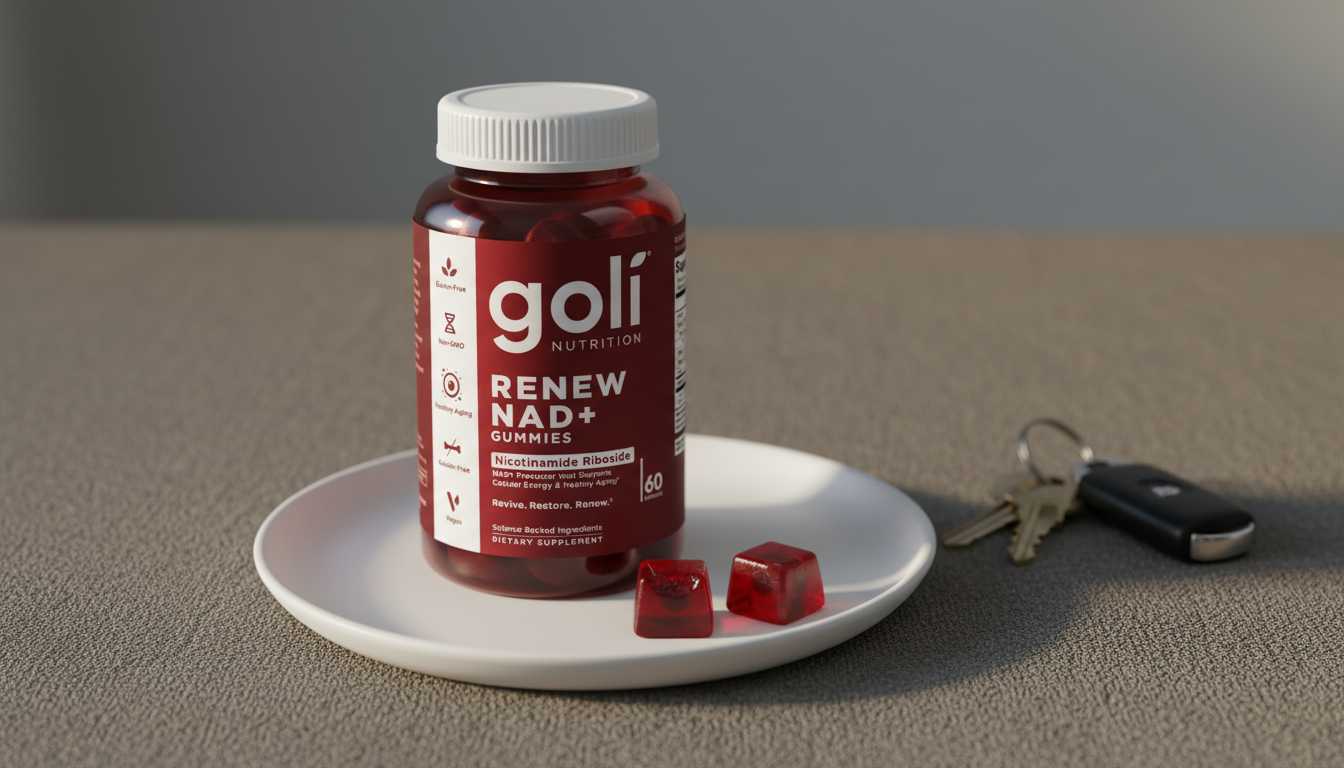
Goli Renew NAD+ Gummies deliver NR alongside Vitamin B3 and Vitamin C, addressing NAD production through three complementary entry points. The liquid-center gummy format makes daily consistency achievable without the friction that causes capsule supplements to be skipped during the six to eight week window.
The six certifications confirm the formulation standard: Gluten-Free, Non-GMO, Vegan, Gelatin-Free, Physician-Owned, and Science-Backed. Over 750,000 Zero Sugar 3 Pack bundles have been sold on TikTok Shop since late May 2025. Ten billion Goli gummies have been sold worldwide since 2018. People in those numbers are running the Cellular Energy Chain with more substrate available every day.
You May Also Like
Understanding the Cellular Energy Chain is one layer of a complete daily cellular and gut health routine. The gut environment is directly connected to NAD metabolism because gut inflammation activates CD38, the enzyme that degrades NAD, and because gut health determines how efficiently the body absorbs the nutrients its NAD synthesis depends on.
For readers building a complete daily foundation, the Gut Nutrition Stack guide covers how vitamins support the three gut health layers that cellular energy draws from.
The Bottom Line
The Cellular Energy Chain is what NAD supplementation actually addresses: the electron shuttle carries electrons from food breakdown to the mitochondria, the ATP generator converts that electron energy into usable cellular fuel, and the repair signal uses NAD to maintain genomic integrity and sirtuin activity. When NAD declines, all three links weaken simultaneously, which is why the consequences of declining NAD are so broad rather than symptom-specific.
Start this week by anchoring two Goli Renew NAD+ Gummies to your morning meal. Blood NAD begins rising from the first dose. Each week of consistent daily intake builds on the last as all three links of the Cellular Energy Chain operate with more substrate available. The six to eight week evaluation window is when the cumulative effect becomes clearly attributable.
Over 750,000 Zero Sugar 3 Pack bundles have been sold on TikTok Shop since late May 2025. The Cellular Energy Chain does not rebuild overnight. It rebuilds one consistent daily dose at a time.
References
- PMC Emerging therapeutic roles for NAD+ metabolism in mitochondrial and age-related disorders
- Nature The role of NAD+ metabolism and its modulation of mitochondria in aging and disease
- Cleveland Clinic NAD nicotinamide adenine dinucleotide, what it is and what it does
- WebMD Nicotinamide riboside overview, uses and side effects
- NIH Office of Dietary Supplements Niacin health professional fact sheet
- NIH MedlinePlus Nicotinamide riboside overview and safety
- Healthline Nicotinamide riboside benefits, side effects and dosage