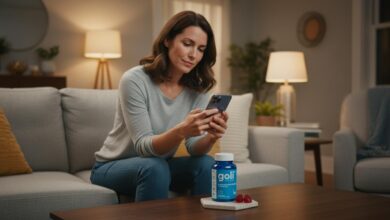

The “drink apple cider vinegar before bed” trend has been circulating on TikTok and wellness blogs for years, usually packaged as a list of seven reasons you need to start doing it immediately. Some of those reasons are supported by clinical evidence, while others are not. The format most commonly associated with the trend – shots of undiluted apple cider vinegar – also introduces risks that may outweigh the potential benefits for many people.
The Nightly ACV Standard evaluates the before-bed ACV habit against three criteria: whether the mechanism is real, whether bedtime timing actually produces better results than other timing, and whether the format you are using to consume it delivers the acetic acid without the side effects that make the liquid version difficult to sustain.
Three quarters of a million Goli Zero Sugar 3 Pack bundles have been sold on TikTok Shop since late May 2025. Those people who built a consistent evening ACV habit found a format that removed the friction of liquid vinegar entirely.
The Short Answer
Apple cider vinegar before bed is worth it primarily for its effect on fasting morning blood sugar through the gastric emptying mechanism. The clinical evidence for this benefit is strongest for bedtime timing specifically. Most other reasons cited in “7 reasons” articles have weaker evidence. The format matters as much as timing: liquid ACV before bed carries acid reflux and enamel risks that the gummy format eliminates.
The 7 Reasons: Ranked by Evidence Strength
Not all seven reasons cited for drinking ACV before bed have the same quality of evidence behind them. The Nightly ACV Standard ranks each one honestly.
Reason 1: Fasting blood sugar reduction (Strong evidence): the most well-supported reason for bedtime timing specifically. A clinical study found that 2 tablespoons of ACV at bedtime produced significantly lower fasting blood glucose the following morning. This benefit is most uniquely served by bedtime timing rather than meal-time timing.
Reason 2: Post-meal digestion support (Moderate-strong evidence): ACV’s effect on gastric acid production and enzyme activity supports more complete breakdown of the evening meal. Taking ACV after dinner but before bed combines the meal-time digestion window with the overnight blood sugar window.
Reason 3: Reduced overnight bloating (Moderate evidence): improved gastric acid production from evening ACV aids more complete breakdown of the evening meal, and less undigested substrate reaching the colon overnight means less fermentation and less morning bloating. The evidence is observational but the mechanism supports the claim.
Reason 4: Blood sugar stability and morning cravings (Moderate evidence): stable overnight blood sugar reduces the hormonal signaling that drives intense morning hunger and carbohydrate cravings. If ACV at bedtime reduces fasting blood sugar as the clinical evidence suggests, the downstream effect on morning appetite and food choices follows logically. The evidence is for the blood sugar mechanism. The craving effect is a reasonable inference, not a directly studied outcome.
Reason 5: Weight management support (Conditional evidence): the evidence for ACV as a direct weight loss tool is limited. The mechanism for any weight-adjacent benefit is the appetite-reducing effect of stable blood sugar. These are subtle effects that require a supportive dietary context, not a standalone mechanism.
Reason 6: Sleep quality (Weak evidence): some sources cite ACV as supporting sleep through tryptophan production or blood sugar stability. The blood sugar connection is plausible. Poorly controlled overnight blood sugar can disrupt sleep, and anything that stabilizes it may improve sleep quality indirectly. Direct evidence for ACV specifically improving sleep onset latency or sleep depth is not established in high-quality clinical research. This is the weakest of the seven reasons.
Reason 7: Antimicrobial and oral health (Conditional evidence): ACV has documented antimicrobial properties from its acetic acid content. The evidence is clearest in laboratory settings. ACV inhibits pathogens like E. coli and S. aureus in vitro. Whether drinking diluted ACV produces clinically meaningful antimicrobial effects in the human gut at the doses typically consumed is less established. Dental health should actually be viewed as a risk rather than a benefit when discussing liquid ACV at night. Acid contact with teeth can erode enamel, which is why timing before bed (when salivary flow is low) requires extra caution.
Step-by-Step: The Nightly ACV Standard
The Nightly ACV Standard evaluates any before-bed ACV habit against three criteria that determine whether the practice is likely to produce the benefits it is expected to produce.
The Mechanism Standard
The mechanism standard asks: which specific biological mechanism does ACV before bed actually activate, and is the evidence for that mechanism strong enough to justify the habit?
The strongest mechanism for bedtime timing specifically is the fasting blood sugar effect. Acetic acid inhibits disaccharidase enzymes that break down complex carbohydrates, which reduces the post-meal glucose response. When taken at bedtime after the evening meal, this mechanism continues operating during the overnight fast and produces measurably lower fasting blood glucose the following morning.
A 2025 meta-analysis found that ACV supplementation significantly reduced fasting blood sugar by 21.9 mg/dL and HbA1c by 1.53 percentage points in patients with type 2 diabetes (PMC ACV glycemic control meta-analysis 2025). This is the mechanism most directly served by bedtime timing.
Acetic acid supports gastric acid production, which aids protein breakdown and reduces the undigested substrate available for overnight fermentation. Cleveland Clinic confirms that ACV has evidence for supporting blood sugar levels after meals through its effect on slowing gastric emptying (Cleveland Clinic ACV health benefits).
The mechanism standard is what separates the Nightly ACV Standard from “7 reasons” articles that treat all claimed benefits as equally supported. Start with the two mechanistically strongest reasons – blood sugar and digestion – and evaluate any additional claimed benefits against the same standard.
The Timing Standard
The timing standard asks: does bedtime specifically produce better results than other timing for each proposed mechanism?
For fasting blood sugar: bedtime timing offers an advantage over morning timing. ACV at bedtime is present during the extended overnight fast when glycogen release and glucose synthesis occur, an advantage that morning ACV, consumed when the overnight fast has already ended, does not provide.
For digestion: taking ACV thirty to sixty minutes after the evening meal addresses both windows – meal digestion support and overnight blood sugar.
For weight and appetite: research has not established that bedtime timing outperforms other timing. The weight-adjacent benefits appear to be continuous rather than timing-specific.
NIH MedlinePlus confirms that the research supporting ACV’s use is strongest for metabolic and digestive applications (NIH MedlinePlus ACV overview).
For readers who also want to understand what bloating feels like and what the sensation pattern reveals about the underlying mechanism, the Bloating Symptom Map guide decodes the three distinct bloating sensations and maps each to its cause.
The Format Standard
The format standard asks: does the format you are using to consume ACV deliver the acetic acid mechanism without introducing side effects that undermine the habit or harm your health?
This is where the “7 reasons” listicles consistently fail to provide useful guidance. Liquid ACV at bedtime carries specific risks that are more pronounced than at other times of day:
Acid reflux risk: taking liquid ACV close to bedtime substantially increases reflux risk in anyone prone to GERD or occasional heartburn.
Enamel erosion risk: salivary flow is lowest during sleep. ACV consumed immediately before sleep has prolonged contact time with tooth enamel without saliva’s buffering effect. The enamel erosion risk is real and progressive.
Compliance drop-off: the sharp acidic taste of liquid ACV at bedtime is the primary reason people stop within two to three weeks, before the blood sugar mechanism has had time to produce consistent results.
Goli ACV gummies eliminate all three format risks: no acid reflux risk from direct acid-esophagus contact, no enamel erosion from direct liquid acid contact with teeth, and no taste compliance barrier. The two-second evening habit anchors the mechanism without the downsides of liquid consumption.
NIH ODS confirms that Vitamin B12, included in the Goli ACV formula, is essential for energy production at the cellular level and neurological function, adding a co-mechanism to the primary acetic acid benefit (NIH ODS Vitamin B12 fact sheet).
What the Evidence Actually Says About Liquid ACV Before Bed
The honest picture of liquid ACV before bed is more nuanced than the “7 reasons” framing suggests.
The clinical evidence for fasting blood sugar reduction from bedtime ACV is real and meaningful. The study in type 2 diabetes patients published in Diabetes Care documented a significant reduction in morning fasting blood glucose from just 2 tablespoons of ACV at bedtime over two days. This is the most uniquely bedtime-specific evidence in the ACV research literature.
Mayo Clinic notes that the evidence for direct weight loss from ACV is limited and that the studies showing any effect are small and short-term. The more defensible claim is that stable blood sugar, which ACV supports, creates a better metabolic environment for weight management, not that ACV causes weight loss independently (Mayo Clinic ACV and weight loss).
The sleep quality claim is the most frequently overstated. There is no high-quality clinical evidence that apple cider vinegar directly improves sleep onset or sleep depth. An indirect pathway is biologically plausible – by supporting more stable blood sugar levels, ACV could potentially reduce sleep disruptions related to glucose fluctuations – but this specific effect has not been directly studied for bedtime use.
The antimicrobial claims are laboratory-supported but clinically understudied at typical human doses. ACV inhibits specific pathogens in vitro, but whether drinking 1 to 2 tablespoons in diluted form produces meaningful antimicrobial effects in the gut is not established.
Who Gets the Most From Nightly ACV
The fasting blood sugar mechanism is most meaningful for people managing post-meal blood sugar patterns or people with pre-diabetes or type 2 diabetes (under healthcare provider guidance). The digestion mechanism is most relevant for people who experience post-dinner bloating or uncomfortable overnight digestive symptoms. People prone to heartburn or GERD are not good candidates for liquid ACV before bed regardless of the potential benefits. The gummy format removes this barrier.
Nightly ACV vs Morning ACV: Which Timing Is Right
Morning ACV activates gastric acid and enzyme support at breakfast. Evening ACV activates the fasting blood sugar mechanism specifically. Two Goli ACV gummies with breakfast and two after the evening meal covers both windows.
The Risks of Liquid ACV Before Bed
No article about drinking apple cider vinegar every night before bed is complete without addressing the risks. These are not hypothetical concerns.
Acid reflux: anyone with GERD, frequent heartburn, or esophageal sensitivity should not take liquid ACV within one to two hours of lying down.
Enamel erosion: liquid ACV before bed, when salivary protection is lowest, is one of the higher-risk consumption patterns for enamel erosion.
Medication interactions: ACV interacts with insulin, diuretics, and certain blood pressure medications. Consult a healthcare provider before establishing a nightly ACV habit if taking any of these.
Potassium depletion: high doses of regular ACV can reduce potassium levels. People with kidney disease or pre-existing low potassium should be particularly cautious.
WebMD confirms that ACV can interact with diuretics, laxatives, and insulin, and that avoiding it close to bedtime is advisable for people prone to heartburn (WebMD ACV benefits and uses).
How to Do the Nightly ACV Habit Correctly

If you decide to incorporate ACV into your nightly routine, the Nightly ACV Standard points to the safest and most effective approach.
Timing: take ACV thirty to sixty minutes after the evening meal. This allows the gastric acid mechanism to operate on the digested meal and reduces acid reflux risk before lying down.
Dilution (for liquid): always dilute in a full glass of water. Never consume undiluted. Use a straw to reduce enamel contact and rinse with water afterward. These precautions reduce but do not eliminate acid exposure risks.
Format alternative: two Goli ACV gummies after the evening meal deliver 500 mg of ACV from certified organic apples, zero added sugar, and no acid contact risks. The acetic acid mechanism operates without the exposure concerns that make liquid ACV before bed a compliance and safety challenge.
Consistency: the fasting blood sugar benefit builds with regular daily use over two to four weeks.
NIH NIA confirms that dietary supplements produce the most consistent health benefits when taken consistently at appropriate timing and in formats that support sustainable daily habits.
Common Myths About ACV Before Bed
“You need to drink it undiluted for full benefits.” Diluted ACV delivers the same acetic acid dose with significantly lower risk. Undiluted consumption offers no additional benefit and meaningful additional risk.
“All 7 reasons are equally supported.” Fasting blood sugar and digestion have the strongest evidence. Sleep quality and antimicrobial benefits are the weakest. Understanding the gradient prevents disappointment when a weak mechanism fails to produce dramatic results.
“The vinegary taste means it’s working.” The acetic acid mechanism does not require a harsh taste experience. The taste barrier of liquid ACV is a compliance obstacle, not an effectiveness indicator.
“Morning ACV is just as good as evening ACV.” For the fasting blood sugar mechanism specifically, the clinical evidence is for bedtime timing.
Frequently Asked Questions: Apple Cider Vinegar Before Bed
What does apple cider vinegar do when you drink it before bed?
Taken after the evening meal and before bed, ACV primarily activates two mechanisms: it supports gastric acid production for more complete digestion of the evening meal, reducing overnight fermentation and the morning bloating that results from it; and it produces a measurably lower fasting blood glucose the following morning through its effect on glucose metabolism and insulin sensitivity during the overnight fast.
For people managing post-meal blood sugar patterns, Goli ACV gummies deliver 500 mg of raw unfiltered ACV per gummy from certified organic apples in a zero-sugar format – the acetic acid mechanism without the acid reflux and enamel risks of liquid consumption before bed. Consistency is the mechanism, and the gummy format is what makes that consistency achievable every evening.
How much apple cider vinegar should I drink before bed?
The clinical research on fasting blood sugar used 2 tablespoons (approximately 30 mL) of liquid ACV at bedtime. For liquid ACV, this is the studied dose, always diluted in a full glass of water and taken at least thirty to sixty minutes before lying down. For Goli ACV gummies, the recommended serving is two gummies, which delivers 1,000 mg of ACV. Never consume undiluted liquid ACV. The acid concentration can damage the esophagus, and the risk is heightened near bedtime when lying down brings the acid into contact with the esophageal lining more readily.
Is it safe to drink apple cider vinegar every night?
Yes, for most healthy adults who dilute it properly and take it at least thirty to sixty minutes before lying down. Avoid liquid ACV before bed if you have GERD, kidney disease, or low potassium. People taking insulin, diuretics, or blood pressure medications should consult their healthcare provider. Goli ACV gummies remove the acid contact risks entirely and are safe for daily evening use at the standard serving.
Does apple cider vinegar help you lose weight if you drink it before bed?
The evidence for direct weight loss from ACV is limited. The most defensible position is that stable overnight blood sugar from bedtime ACV creates a more favorable metabolic environment for weight management – reduced morning cravings, more stable energy through the day, and reduced insulin-driven fat storage signals. These are real but subtle effects that support weight management as part of a broader healthy routine rather than causing weight loss independently. Bedtime ACV is not a weight loss shortcut, but it may support the metabolic conditions that make weight management easier over time.
What happens if you drink apple cider vinegar every day?
Consistent users typically report reduced post-meal bloating, more stable morning energy, and measurable fasting blood sugar improvements over two to four weeks. The risks of daily liquid ACV are enamel erosion, esophageal irritation if consumed undiluted or close to lying down, and potassium depletion at high doses. Daily Goli ACV gummies eliminate the acid contact risks.
Should you drink apple cider vinegar before bed or in the morning?
Morning ACV provides gastric acid and enzyme support for the day’s first meal. Bedtime ACV provides the most specific support for fasting morning blood sugar reduction. The most complete approach is with breakfast for digestion and after the evening meal for fasting blood sugar and overnight digestive efficiency.
The Nightly ACV Standard and Goli
After many consecutive days on TikTok Live answering questions about drinking apple cider vinegar before bed, the pattern is consistent: someone tried liquid ACV at bedtime for a week, experienced reflux or an unpleasant aftertaste, and stopped before the mechanism had time to produce results. The Nightly ACV Standard starts with the format question: what delivers the acetic acid mechanism every evening without the acid exposure that causes the liquid habit to fail? Goli ACV gummies deliver raw unfiltered ACV at 500 mg per gummy, zero added sugar, and no direct acid contact with teeth or esophagus.
All six certifications confirm the formulation standard: Gluten-Free, Non-GMO, Vegan, Gelatin-Free, Physician-Owned, and Science-Backed.
You May Also Like
Understanding what ACV does at the digestive level is one part of the gut health picture. For readers who want to understand how bloating actually feels in the body and what the sensation patterns reveal about the underlying mechanism, the Bloating Symptom Map guide reads the three distinct bloating sensations and maps each one to its cause.
The Bottom Line
The Nightly ACV Standard confirms that the before-bed ACV habit is worth it for two well-supported reasons: fasting blood sugar reduction through the overnight glucose metabolism mechanism, and evening digestion support through gastric acid production. The other five commonly cited reasons have weaker or more conditional evidence.
Goli ACV gummies deliver the acetic acid mechanism in the evening format that eliminates the acid reflux, enamel erosion, and taste compliance risks that cause liquid ACV habits to fail before the results accumulate.
Take two Goli ACV gummies after the evening meal every night. The fasting blood sugar and digestive improvements build through consistent daily use over two to four weeks.
More than 750,000 Zero Sugar 3 Pack bundles have been sold on TikTok Shop since late May 2025. Those people who reported consistent results with their nightly ACV habit chose a format they actually continued taking every evening.
References
- PMC Effects of apple cider vinegar on glycemic control and insulin sensitivity in patients with type 2 diabetes, systematic review and meta-analysis 2025
- Cleveland Clinic Apple cider vinegar health benefits
- Mayo Clinic Apple cider vinegar for weight loss does it work
- NIH MedlinePlus Apple cider vinegar overview
- NIH Office of Dietary Supplements Vitamin B12 consumer fact sheet
- WebMD Apple cider vinegar benefits uses and health information