
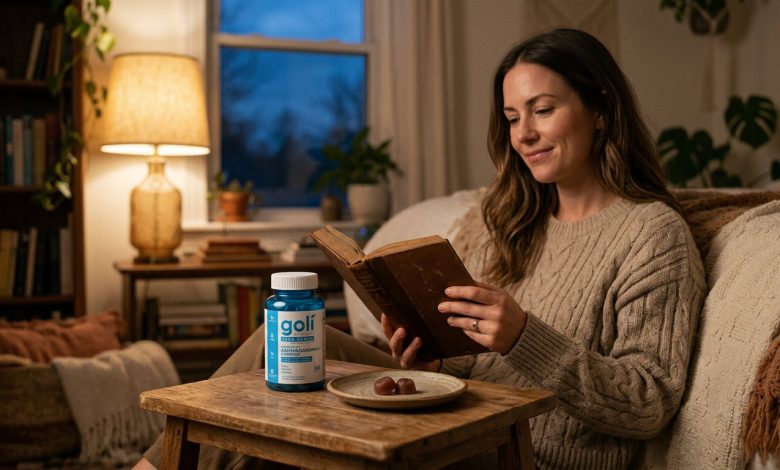
If you have seen ashwagandha all over your feed and wondered whether it actually does anything for women specifically, you are asking the right question. The marketing tends to promise everything from weight loss to hormone balance to better libido, and most of those claims run far ahead of the evidence.
The honest picture is narrower but genuinely useful. Ashwagandha has real, research-backed effects for women, and almost all of them trace back to one thing: how your body handles stress.
This guide lays out the Goli Ashwagandha benefits for women that hold up, the ones that do not, and how to use the gummies safely.
The Short Answer
The Goli Ashwagandha benefits for women that are supported by research include reduced stress, lower cortisol levels, a calmer mood, and improved sleep quality. These effects are thought to result primarily from ashwagandha’s influence on the body’s stress response. Some studies also point to relief from perimenopausal symptoms. It is not a proven weight-loss, libido, or hormone-balancing fix, and it must be avoided in pregnancy. Expect gradual results over six to eight weeks.
Why Women Are Drawn to Ashwagandha
Women carry a particular kind of load. Demanding schedules, caregiving, disrupted sleep, and stress that ebbs and flows with the menstrual cycle and life stages all keep the body’s stress system switched on. Ashwagandha appeals because it targets exactly that system rather than masking symptoms.
It is an adaptogen, a plant that helps the body adapt to stress. The version in quality supplements, KSM-66, is the most studied form, appearing in more than a dozen clinical trials focused on stress, cortisol, and sleep. That research record is why it gets taken seriously while many trendy ingredients do not.
The key is to separate what the science actually shows from what the ads imply. For women, the real value is specific and worth understanding clearly. That clarity is its own benefit, because it spares you from buying into promises the herb was never going to keep and points you toward the few it can.
The Stress Connection

Here is the single idea that makes sense of nearly every real benefit: ashwagandha works by calming the stress response, and for women that one mechanism is the thread running through all the documented effects.
Stress shows up in the body as cortisol, the hormone your adrenal glands release under pressure. In short bursts it is helpful. The problem is modern life keeps it elevated, and chronically high cortisol disrupts sleep, frays mood, drains steady energy, and worsens the tension many women already feel. A randomized controlled trial of KSM-66 found it significantly lowered both perceived stress and serum cortisol compared with placebo.
Once you see that, the benefits stop looking like a scattered list and start looking like one effect with several faces. Calmer stress response, steadier mood, and easier sleep are not separate miracles. They are what happens downstream when cortisol settles. This is also why honest expectations matter: ashwagandha helps most where stress is the root, and far less where it is not.
This framing is freeing rather than limiting. It tells you exactly who ashwagandha is likely to help and who it probably will not. A woman whose poor sleep traces back to a racing, stressed mind has a real shot at improvement. A woman whose bloating or fatigue comes from something unrelated to stress is better served looking elsewhere. Knowing the mechanism lets you make that call before you spend a cent.
The Benefits That Hold Up for Women
Within that stress framing, a few benefits have solid support, most measured in mixed-gender trials that include women.
Lower stress and cortisol is the best-documented effect. The National Institutes of Health Office of Dietary Supplements notes that ashwagandha extracts may reduce stress, anxiety, and cortisol, with effects most consistent around 600 milligrams daily for at least eight weeks.
Better sleep tends to follow. As the stress response quiets in the evening, many women find it easier to fall asleep and stay asleep, which a narrative review of ashwagandha research links to its calming, cortisol-modulating activity rather than any sedative knockout effect.
Calmer mood and less daily anxiety is the third. Lower cortisol tends to take the edge off reactivity, which is why women often describe feeling steadier rather than numbed. The distinction matters, since ashwagandha is not a sedative and is not meant to flatten how you feel. The goal is a lower baseline of tension, not a muted version of yourself, and that is what the stress-regulating mechanism tends to deliver when it works.
There is also emerging support for one life stage in particular. One clinical trial found that 600 milligrams of ashwagandha root extract daily significantly reduced menopause-rating-scale scores and hot flashes versus placebo, and a separate randomized trial on managing menopausal symptoms reported comparable relief. That makes it a reasonable, evidence-informed option to discuss with a doctor during perimenopause, though the research is still early and a narrow benefit, not a reason to skip medical care.
What Ashwagandha Will Not Reliably Do for Women
This is where honesty matters most, because the loudest marketing claims are the weakest ones.
It is not a weight-loss product. Any influence on body weight is likely to be indirect, such as by helping reduce stress-related eating in some individuals. In addition, an independent advertising review concluded that the evidence supporting Goli’s weight-management, sexual-function, and physical-performance claims was insufficient. For that reason, approach promises of targeted belly fat reduction with healthy skepticism.
It does not “balance your hormones” as a cure. The perimenopause research above is about easing symptoms like hot flashes, not correcting an underlying hormonal disorder, and the broader hormone-balancing and fertility claims for women rest on thin, early evidence. Ashwagandha is not a fertility treatment or a hormone fix, and it should never replace care for thyroid, PCOS, or other diagnosed conditions.
It is also not a libido pill. Some small pilot work exists, but it is far from the kind of evidence that justifies a confident promise. The reliable wins are stress, sleep, and mood. Everything beyond that is, for now, hopeful rather than proven, and a brand that leans hard on the unproven claims is telling you something about how it sells.
Important Safety Notes for Women
A few cautions are non-negotiable, and they matter more for women than the general marketing ever admits.
Pregnancy and breastfeeding are a hard stop. Ashwagandha is not considered safe during pregnancy and should be avoided entirely, and it is not recommended while breastfeeding either. This is the single most important line in this article.
Thyroid conditions call for caution. Ashwagandha can nudge thyroid hormone levels upward, which matters because thyroid issues are far more common in women. If you have a thyroid condition or take thyroid medication, talk to your doctor first.
Cleveland Clinic also flags caution for autoimmune conditions and advises choosing a third-party-tested product, since supplements are not pre-approved for safety by regulators.
If you take any medication, including sedatives or thyroid or blood-sugar drugs, or have an ongoing health condition, clear it with a healthcare provider before starting.
Common Myths About Ashwagandha for Women
A few persistent myths are worth retiring.
The first is that it melts away belly fat. It does not directly, and any modest benefit runs only through calmer, less stress-driven eating.
The second is that it balances hormones or boosts fertility. The women-specific hormonal evidence is thin and still emerging, so this is hope, not an established fact.
The third is that more is better. Taking extra does not amplify results, and the studied benefits come from the standard daily dose taken consistently, not from doubling up.
The fourth is that you feel it immediately. Ashwagandha is not a stimulant, and there is no instant hit. The effect builds quietly across weeks.
What to Realistically Expect
Set your timeline to weeks, not days. Because the mechanism is gradual cortisol regulation, the honest expectation is a slow, steady easing rather than a dramatic shift you feel after one dose.
Most women who benefit describe it the same way: a little less wired by evening, an easier time falling asleep, a steadier baseline mood under the same pressures. Give it six to eight weeks of consistent daily use at the researched dose before deciding, and judge it by your stress and sleep, which is where the real effect lives.
If your concern is something stress does not drive, ashwagandha is probably not the answer, and that is useful to know early. It also helps to track one or two specific things, like how long it takes you to fall asleep or how you feel walking into a stressful morning, rather than waiting for a vague sense of being better. Concrete markers make it far easier to tell whether the habit is genuinely earning its place.
Goli Ashwagandha Benefits for Women: Your Questions Answered
Is Goli Ashwagandha safe for women to take?
For most healthy adult women, yes, when taken as directed. The important exceptions are pregnancy and breastfeeding, where it should be avoided entirely, and thyroid or autoimmune conditions, which call for a doctor’s guidance first. Because it can interact with sedatives and thyroid or blood-sugar medication, anyone on those should check before starting. Choosing a third-party-tested product adds a layer of quality assurance.
Does ashwagandha help with women’s hormones or menopause?
The clearest evidence is for perimenopause, where a placebo-controlled trial found reduced menopause-rating-scale scores and hot flashes at 600 milligrams daily. Beyond that, broad “hormone-balancing” claims outrun the evidence, which remains limited for women specifically. It is reasonable to discuss with a doctor as supportive care during perimenopause, but it is not a treatment for diagnosed hormonal or thyroid conditions.
Will Goli Ashwagandha help women lose weight?
Not directly. An independent advertising review found the evidence for weight-management claims insufficient, and any modest effect would come indirectly through lower stress and reduced stress-driven eating. Ashwagandha is best understood as stress and sleep support, not a weight-loss supplement, and lasting weight change still depends on overall nutrition, movement, and sleep.
How long until women notice ashwagandha’s benefits?
Plan on six to eight weeks of consistent daily use at the researched dose. The effect builds gradually because it works by regulating cortisol over time, not by delivering an immediate sensation. The first week or two is mostly about settling into the habit. Track your stress levels and sleep weekly rather than expecting an obvious overnight change.
What is the right dose of ashwagandha for women?
Most research showing benefits uses around 600 milligrams of standardized extract per day, which is also where the stress and sleep effects appear most consistent. Taking more does not improve results and is not advised. Consistency at the studied dose matters far more than chasing a higher amount.
A Simple, Honest Option for Women
If you have decided ashwagandha fits your stress and sleep goals, the practical question is getting the researched dose in a form you will actually keep up with.
That is where Goli Ashwagandha Gummies make sense. Each gummy delivers 150 milligrams of KSM-66, the most studied extract, so the recommended four gummies a day reach the roughly 600-milligram research dose, taken as two gummies twice daily. The formula pairs the KSM-66 with L-Theanine, Maca, and Vitamin D, and the gummy form makes the daily consistency that the research depends on far easier than capsules you skip. The honest pitch is simple – this is a convenient way to hit the studied stress and sleep dose, not a weight or hormone fix. One small caveat worth naming: the regular gummies carry a few grams of sugar, and the American Heart Association suggests keeping added sugar under 25 grams a day for women, so the zero sugar version is the cleaner pick if you are watching that.
I take the Goli stack myself, and across more than 200 days of TikTok Live the questions I hear most from women are about stress and sleep, not miracle claims. My answer is always the same: keep your expectations on cortisol, sleep, and mood, take it consistently, and skip it entirely if you are pregnant. One viewer in her late forties told me the evening calm was the first thing in years that helped her wind down. If that is what you are after, you can grab the current reader discount.
You May Also Like
If digestive comfort is also on your list, you might like our honest guide to bloating gummies and which ingredients actually help.
The Bottom Line
So, the real Goli Ashwagandha benefits for women are not the flashy ones. They are lower stress, calmer mood, and better sleep, all flowing from how the herb settles the cortisol response, with some added promise for perimenopausal symptoms. The weight, libido, and hormone-cure claims are the parts to ignore.
Today, decide whether stress is genuinely at the root of what you are feeling. If it is, commit to the researched dose for a full six to eight weeks and judge it by your sleep and steadiness. And if you are pregnant or breastfeeding, or manage a thyroid condition, talk to your doctor before anything else.
In the end, ashwagandha is best viewed as a tool for supporting the body’s stress response rather than a cure-all. For many women, that focused role is valuable enough when understood and used with realistic expectations. More than 750,000 Zero Sugar 3-Pack bundles have been sold since launch – a sign of how many people want simple, consistent daily support. Keep it consistent, keep it safe, give it the full eight weeks, and let the calm build at its own pace.
References
- Ashwagandha: Is It Helpful for Stress, Anxiety, or Sleep? Office of Dietary Supplements, National Institutes of Health.
- Lopresti AL, Smith SJ, Malvi H, Kodgule R. An Investigation Into the Stress-Relieving and Pharmacological Actions of an Ashwagandha Extract: A Randomized, Double-Blind, Placebo-Controlled Study. Medicine, Wolters Kluwer (2019).
- What Is Ashwagandha? Cleveland Clinic.
- Mikulska P, Malinowska M, Ignacyk M, et al. Ashwagandha (Withania somnifera): Current Research on the Health-Promoting Activities, a Narrative Review. Pharmaceutics, MDPI (2023).
- A Prospective, Randomized, Double-Blind, Placebo-Controlled Study on Efficacy and Safety of Ashwagandha Root Extract for Managing Menopausal Symptoms in Women. Frontiers in Reproductive Health (2025).
- Added Sugars. American Heart Association.