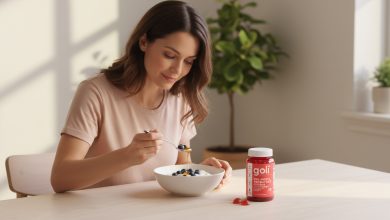

You searched for a straight answer about Goli Ashwagandha Zero Sugar and found a stack of reviews. Most of them mention four grams of added sugar, cane sugar, tapioca syrup, and a tester saying the flavor is sweet.
Here is the problem – the bottle those reviews describe is not the bottle you would receive. Goli reformulated this product, and a large share of the top search results were written before that happened or were never updated afterward.
That gap matters more than it sounds, because it changes the ingredients list, the sugar content, and part of what the product is actually for.
More than three quarters of a million Zero Sugar 3 Pack bundles have gone out on TikTok Shop since late May 2025, which means a lot of people are making this decision against outdated descriptions.
This article covers what changed, what stayed the same, and what the change does and does not do for you.
The Short Answer
Goli Ashwagandha Zero Sugar is a reformulation of the original gummy. The added sugar is gone, and L-Theanine and Maca were added alongside the same KSM-66 ashwagandha extract. It is not a stronger product, just a cleaner one for people avoiding sugar. It is not suitable during pregnancy or breastfeeding, or for anyone under 18.
What Actually Changed in the Formula
Three things moved, and it helps to see them separately.
The sugar came out. The original was sweetened with organic cane sugar and tapioca syrup, which is where the added grams in those older reviews came from. The current version carries none of that.
Two ingredients came in – L-Theanine, an amino acid found in green tea, and Maca root now sit alongside the ashwagandha. The gummy also carries Vitamin D.
And one thing did not move at all, which is the part most people care about. The active ingredient is still KSM-66, the same standardized root extract, at the same 300 milligram serving.
As Cleveland Clinic explains, ashwagandha is an adaptogen studied mainly for how the body handles stress, and the standardized extract is where that research sits. Nobody swapped it out to make room for the reformulation.
The Label Gap
Here is the frame worth holding, because it explains almost every confusing thing you will read about this product.
On one side sits the bottle the internet describes. Around four grams of added sugar per serving – the figure commonly reported in reviews rather than one taken from an older label. Cane sugar and tapioca syrup appear on the ingredient list. Testers comment on the sweetness, reviewers on retail sites express concerns about dental health, and product roundups often deduct points for the sugar content. The descriptions are detailed, specific, and largely accurate – for the product they were written about.
On the other side sits the bottle you would actually open: no added sugar, with L-theanine and maca included alongside the same KSM-66® Ashwagandha at the same serving size. There is far less written about this version because the reformulated product is newer than much of the online coverage.
The gap between those two is not a small detail. If you are avoiding sugar, the older reviews are describing the exact reason you would have skipped this product, and that reason no longer applies. If you loved the old flavor, the same gap works in the other direction and you should expect a different taste experience. Either way, you are being told about a bottle that is not the one on the shelf.
Reading Reviews Without Getting Misled
Once you know the gap exists, checking for it takes about ten seconds.
Look at the ingredients list any review prints. If it says cane sugar or tapioca syrup, that review covers the older formula, whatever its publication date says. Look for whether L-Theanine and Maca appear. If they are missing, same conclusion. Check the sugar line specifically rather than trusting a summary, since roundups often carry forward numbers from an earlier edit.
This is worth keeping in mind beyond this one product. As the U.S. Food and Drug Administration explains, dietary supplements are not reviewed for safety or effectiveness before they are marketed, making the product label the primary source of information rather than a secondhand description. Formulations can change over time, often without much notice, while reviews and comparison articles are rarely updated to reflect those changes.
What Zero Sugar Does Not Mean
A few assumptions travel with that phrase, and they are worth separating from what is actually in the jar. The most common one is that zero sugar implies artificial sweeteners, the aspartame and sucralose that people are often trying to avoid in the first place. That is not the case here.
A related assumption is that sugar-free products lean on sugar alcohols instead, which is a reasonable worry rather than a silly one: a systematic review of polyols found these are malabsorbed in a dose-dependent way even in healthy people, with malabsorption rising when several are combined, which is exactly how sugar-free products tend to produce gas and bloating. The Goli Zero Sugar line is made without them, which is the specific thing to check on any sugar-free gummy you are considering.
The assumption I want to push back on hardest, though, runs the other way. Removing sugar does not make ashwagandha work better. It is tempting to read a reformulation as an upgrade in effectiveness, and it is not one. The KSM-66 was doing the work before and it is doing the work now, at the same serving. What changed is what rides along with it. That is a real improvement if you are managing blood sugar, watching added sugars, or simply tired of supplements that are half candy, and the American Heart Association guidance on limiting added sugars is the reason that matters to a daily habit. But it is a formulation improvement, not a potency one, and anyone selling it as the latter is overstating it.
One more, since it appears on ashwagandha labels everywhere. This is not a testosterone booster, a muscle builder, or a weight loss product. Those claims are common in the category and they run well ahead of the evidence. Ashwagandha is studied for stress, sleep quality, and how you handle pressure. Buy it for that.
What to Expect in the First Month
Realistic expectations are what keep people taking something long enough for it to matter.
Ashwagandha is not acute. You do not take it and feel a shift twenty minutes later, and if a review describes that, be skeptical. The stress and sleep research generally runs across weeks, with the commonly studied windows sitting around eight weeks, so treat the first month as the beginning rather than the verdict.
What people tend to notice first is a smaller reaction to ordinary friction. The commute, the inbox, the thing that would normally set the tone for the afternoon. It is subtle enough that many people only notice in hindsight, which is why the honest advice is to keep taking it steadily rather than checking daily for a feeling.
L-Theanine is the newer piece and the research on it is worth reading carefully. A randomized crossover trial of L-Theanine in 30 healthy adults found improvements in stress-related and sleep-quality scores over four weeks. Two things belong alongside that finding. The trial used 200 milligrams daily, and in a gummy L-Theanine is a supporting ingredient rather than the headline, so do not assume the amounts match. And two of the study’s authors work for a company that produces L-Theanine commercially, which is worth knowing even though disclosing it is what good research practice looks like. The KSM-66 remains the reason to buy this. L-Theanine is a sensible addition, not the main event.
There is also a reason the specific extract matters more than simply seeing the word ashwagandha on the label. Research comparing standardized root extracts has found meaningful differences in bioavailability, which is why a named, standardized extract at a clearly stated serving is a meaningfully different choice from a generic ashwagandha powder.
Who Should Not Take This One
This section matters more than everything above it for a small number of readers, so it is deliberately blunt.
Do not take ashwagandha if you are pregnant or trying to become pregnant, and do not take it while breastfeeding. This is not a precaution born of missing data. Ashwagandha has been associated with increased risk of pregnancy loss, and no reformulation changes that. It is also not for anyone under 18.
There is a liver signal that is rare but real, and it deserves plain language rather than a footnote. The National Institutes of Health Office of Dietary Supplements documents case reports of liver injury associated with ashwagandha supplements, generally reversible after stopping. Rare does not mean impossible. If you develop yellowing of the skin or eyes, dark urine, persistent nausea, pain in the upper right abdomen, or unusual fatigue, stop taking it and seek medical care rather than waiting it out.
Beyond that, talk to your doctor first if you have a thyroid condition, an autoimmune condition, or are taking sedatives, immunosuppressants, thyroid medication, or blood pressure medication, since ashwagandha can interact with all of these. The same goes for anyone scheduled for surgery. If symptoms are persistent or severe, professional evaluation is appropriate.
Goli Ashwagandha Zero Sugar: Your Questions Answered
Is Goli Ashwagandha Zero Sugar the same formula as the original?
No; it is a reformulation. The added sugar from cane sugar and tapioca syrup was removed, and L-Theanine and Maca were added. The KSM-66 ashwagandha extract and its serving size stayed the same, along with the Vitamin D. This is why older reviews listing four grams of sugar do not describe the current product, even when they appear high in search results.
Does the Zero Sugar version contain artificial sweeteners?
No, and it does not use sugar alcohols either, which is the more common substitution in sugar-free gummies and the one most likely to cause gas or bloating. If you have reacted badly to sugar-free products before, that reaction was often about polyols like sorbitol or maltitol rather than the absence of sugar itself. Checking for those on any sugar-free supplement label is a habit worth keeping.
How many gummies should I take per day?
Follow the serving on the label rather than scaling up. The KSM-66 research is built on specific standardized doses, so more is not better and taking extra does not accelerate anything. Consistency across weeks is what the studies actually measured. If you are unsure whether it suits your situation, particularly alongside medication, ask your doctor before adjusting anything.
Does Goli Ashwagandha Zero Sugar work for stress?
The evidence for standardized ashwagandha extract in stress and sleep is among the better records in the supplement category, though it describes moderate rather than dramatic effects, measured over weeks. Most people describe a smaller reaction to everyday pressure rather than a noticeable change. Removing the sugar does not alter this either way, since the active ingredient and its serving are unchanged.
What are the side effects?
The large majority of people take ashwagandha without trouble, and the research record supports that. A smaller number notice mild stomach upset or drowsiness early on, which usually settles and is often helped by taking it with food. The one to take seriously is the rare liver signal: yellowing skin or eyes, dark urine, ongoing nausea, or upper right abdominal pain means stopping and seeking medical care. Removing the sugar does not change the safety profile of the ashwagandha itself.
Who should not take these gummies?
Anyone pregnant, trying to conceive, or breastfeeding should not take it, as ashwagandha has been associated with increased risk of pregnancy loss. Nobody under 18 should take it. Anyone with thyroid or autoimmune conditions, or taking sedatives, immunosuppressants, thyroid or blood pressure medication, should speak to their doctor first. Anyone with existing liver concerns should do the same.
Where This Fits in a Daily Routine

If the honest summary is that the ashwagandha does the work and the reformulation removed what was riding along with it, then the case for this version is straightforward rather than dramatic.
The Goli Ashwagandha Gummies in the Zero Sugar line carry KSM-66 at the studied 300 milligram serving, with L-Theanine, Maca, and Vitamin D, and no added sugar or sugar alcohols. They are vegan, gluten-free, non-GMO, and gelatin-free.
Capsules exist and cost less per serving, and for some people that is the right call. What decides results is whether you take it every evening for two months, and in my experience the format you look forward to is the one that survives a busy week. To be clear about what it is not: it will not fix a sleep schedule you are not protecting, and it is not for anyone pregnant, breastfeeding, or under 18.
Across more than 200 consecutive days of TikTok Live, the question I get about ashwagandha more than any other is whether the sugar version and the zero sugar version are the same thing.
One viewer put it plainly during a Live: she had stopped buying the original because of the sugar and had no idea the formula had changed. Personally, evening ashwagandha is the piece of my own stack I would replace last, and taking the sugar out removed the only reason I ever hesitated to recommend it to people watching their intake. If that describes you, the reader pricing is here.
You May Also Like
The same problem runs through the whole supplement aisle, which is that the claims and the evidence rarely line up neatly, and the useful answer lives between the hype and the debunking. Our guide to apple cider vinegar gummies explores which effects are supported by research, which benefit is most consistently oversold, and the single factor that may have the greatest influence on whether you experience any benefit. It pairs well with this guide because both ultimately come down to reading the label rather than the marketing.
The Bottom Line
So, Goli Ashwagandha Zero Sugar is the same active ingredient in a cleaner delivery. The KSM-66 is unchanged at the same serving, the added sugar is gone, and L-Theanine and Maca came along with the reformulation. That is worth having if sugar was your objection. It is not a strength upgrade, and you should be wary of anyone framing it as one.
Today, check the ingredients list on whatever review you are reading before you trust its sugar numbers. If it lists cane sugar or tapioca syrup, it is describing the old bottle.
From there, give it eight weeks of steady evening use before deciding, since that is the window the research actually measured.
Ten billion Goli gummies have been sold worldwide since 2018, and those people who report results are the ones who kept going past the first uneventful fortnight.
And if you are pregnant, breastfeeding, or under 18, this is one to skip entirely, no matter how good the rest of the case sounds.
References
- Ashwagandha: Fact Sheet for Health Professionals. National Institutes of Health, Office of Dietary Supplements.
- Hidese S, Ogawa S, Ota M, Ishida I, Yasukawa Z, Ozeki M, Kunugi H. Effects of L-Theanine Administration on Stress-Related Symptoms and Cognitive Functions in Healthy Adults: A Randomized Controlled Trial. Nutrients (2019);11(10):2362.
- Lenhart A, Chey WD. A Systematic Review of the Effects of Polyols on Gastrointestinal Health and Irritable Bowel Syndrome. Advances in Nutrition, Oxford Academic (2017);8(4):587-596.
- What Is Ashwagandha? Cleveland Clinic.
- Added Sugars. American Heart Association.
- FDA 101: Dietary Supplements. U.S. Food and Drug Administration.