

Your digestive system does a lot of heavy lifting every day. It breaks down food, absorbs nutrients, and keeps harmful substances from entering your bloodstream. When that process gets disrupted, you feel it. Bloating, irregular digestion, and general discomfort can become unwelcome companions.
L-glutamine has emerged as one of the most studied amino acids for supporting intestinal health. But knowing when to take l-glutamine for gut health can make the difference between modest results and meaningful improvement. Timing, dosage, and consistency all play important roles in how well this supplement supports your digestive system.
The good news is that the research offers clear guidance. With the right approach, l-glutamine can become a valuable part of your gut health routine.
The Short Answer
L-glutamine works best for gut health when taken on an empty stomach, ideally in the morning before breakfast or at bedtime. Taking it away from protein-rich meals improves absorption since other amino acids compete for uptake. Most research supports doses between 5 and 15 grams daily, taken consistently for several weeks to notice benefits.
What L-Glutamine Actually Does in Your Gut
L-glutamine is the most abundant amino acid circulating in your bloodstream. Your body produces it naturally, and you also get it from protein-rich foods. Under normal circumstances, most healthy people make enough to meet their needs.
But here’s where things get interesting for digestive health. The cells lining your intestinal walls, called enterocytes, use glutamine as their primary fuel source. These cells work constantly to maintain the barrier between what stays in your digestive tract and what enters your bloodstream. When they have adequate glutamine, they function well. When supplies run low, problems can emerge.
Research shows that glutamine supports the expression of tight junction proteins like occludin and claudins. These proteins act like the mortar between bricks, holding intestinal cells together and preventing unwanted substances from slipping through. When tight junctions weaken, intestinal permeability increases, sometimes called leaky gut.
A 2024 systematic review and meta-analysis examined 10 clinical trials involving 352 participants. The researchers found that glutamine supplementation at doses exceeding 30 grams per day significantly reduced intestinal permeability. Interestingly, shorter intervention periods of less than two weeks showed more pronounced effects than longer trials.
The Timing-First Approach to L-Glutamine
Understanding when to take l-glutamine for gut health starts with one fundamental principle: absorption matters more than almost anything else. If your body cannot efficiently absorb the glutamine you take, much of its potential benefit gets lost.
L-glutamine is a sensitive amino acid. Digestive enzymes can break it down, especially when other proteins are present. Taking it alongside a steak dinner or protein shake forces the glutamine to compete with dozens of other amino acids for absorption in your intestinal tract. Your gut can only process so much at once.
This is why timing recommendations consistently point toward the same guidance. Take l-glutamine on an empty stomach, at least one hour before eating or one to two hours after a meal. This gives the amino acid a clear path to absorption without competition from other nutrients.
Morning dosing works well for most people. Taking glutamine first thing when you wake up, about 30 minutes before breakfast, allows optimal absorption and gives your gut a supportive start to the day. Many people find this timing easiest to remember and maintain consistently.
Evening dosing offers an alternative approach. Taking glutamine at bedtime, well after dinner has digested, supports the repair processes that naturally occur during rest. Your body does significant healing work overnight, and having glutamine available may enhance these regenerative functions.
Some people split their daily dose between morning and evening. This approach maintains more consistent glutamine availability throughout the day and can work particularly well for those taking higher doses.
The Consistency Principle
One of the most overlooked aspects of l-glutamine supplementation is the importance of daily consistency. This is not a supplement that delivers dramatic overnight results. The benefits build gradually as your intestinal cells receive steady support.
Research on gut health outcomes typically involves consistent daily supplementation for periods ranging from one week to eight weeks. A 2019 study found that taking 15 grams of glutamine daily for eight weeks improved symptoms in people with diarrhea-predominant irritable bowel syndrome that had developed after an intestinal infection.
A 2021 study examined combining a low FODMAP diet with 15 grams of glutamine daily for six weeks. The group using both the diet and supplement experienced greater reductions in IBS severity compared to those following the diet alone.
The takeaway is clear. Sporadic supplementation is unlikely to produce meaningful results. Treating l-glutamine like a daily habit rather than an occasional intervention gives your gut the sustained support it needs.
What Temperature and Beverages to Use
Heat damages amino acids. Research dating back several decades has shown that amino acids like l-glutamine remain stable only up to approximately 120 degrees Fahrenheit (49 degrees Celsius). Above this temperature, the molecular structure begins to break down.
This means mixing glutamine powder into hot coffee, tea, or soup is not ideal. The heat can degrade the amino acids before they ever reach your digestive system.
Best options for mixing l-glutamine powder:
Water remains the optimal choice. It delivers glutamine without any interference and keeps things simple. Room temperature or cold water works perfectly.
Homemade flavored water using lemon, lime, or berries adds taste without compromising absorption.
Vegetable juices like tomato or beet juice work well if you prefer some flavor.
Diluted fruit juice, especially lower-sugar options, provides another alternative.
Cold-brewed tea or iced tea gives flavor without the heat concerns.
What to avoid:
Hot beverages above 120°F, including coffee, hot tea, or warm bone broth.
Protein shakes or smoothies containing protein powder. The competing amino acids reduce glutamine absorption.
Milk or dairy-based drinks, which contain significant protein.
Sports recovery drinks that contain added amino acids.
How Much L-Glutamine to Take
Dosage recommendations for gut health generally fall between 5 and 15 grams daily. The 2024 meta-analysis found that doses exceeding 30 grams per day showed the most significant effects on intestinal permeability, though this higher range may not be necessary for general gut support.
For most people starting out, 5 grams once or twice daily provides a reasonable beginning point. This is roughly one teaspoon of powder or the amount provided by most serving size recommendations on supplement labels.
Studies specifically examining IBS symptoms have often used 15 grams daily, typically divided into three 5-gram doses. This approach maintains glutamine availability throughout the day.
The body adjusts to glutamine over time. Starting with a lower dose and gradually increasing allows you to assess tolerance and response. Some people notice digestive comfort improves within the first two weeks, while others may need four to six weeks before observing meaningful changes.
The Barrier Support Method
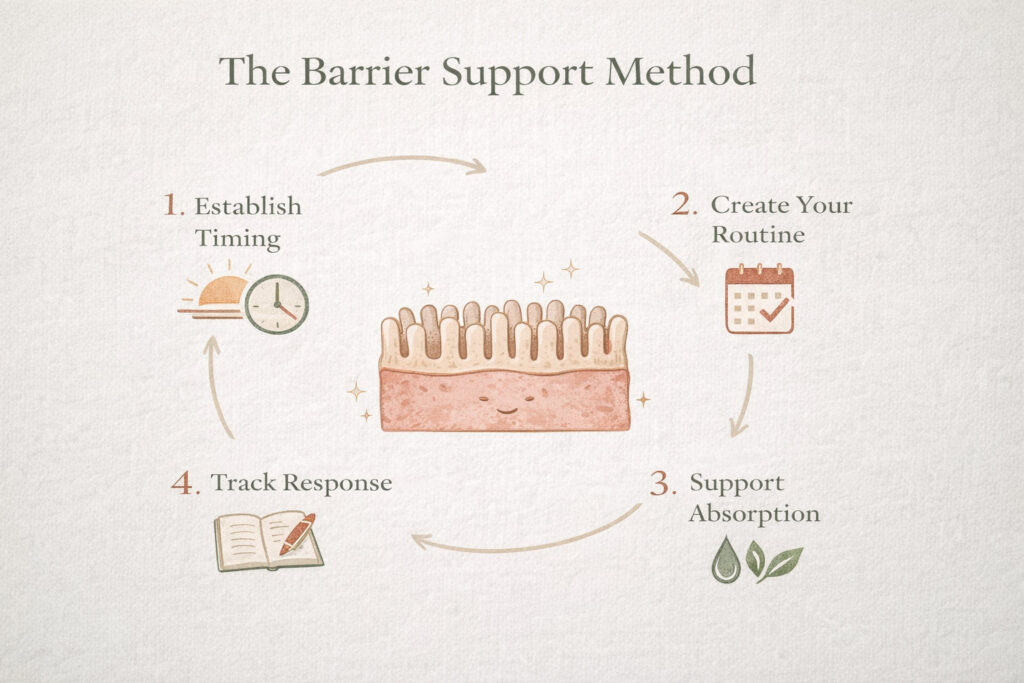
Creating a structured approach to l-glutamine supplementation helps ensure consistency and maximizes potential benefits. The Barrier Support Method offers a practical framework.
Step one: Establish your baseline timing. Choose either morning or split dosing based on your schedule. Morning dosing means taking glutamine immediately upon waking, at least 30 minutes before breakfast. Split dosing means taking half your daily amount in the morning and half before bed.
Step two: Create your routine. Prepare your glutamine the same way each day. Keep your supplement near your water glass or coffee maker so you remember before your morning routine pulls you in other directions. Consistency becomes easier when the habit has a physical anchor.
Step three: Support absorption with complementary practices. Stay well hydrated throughout the day. Eat a fiber-rich diet that feeds beneficial gut bacteria. Include natural probiotic sources when possible. These practices create an environment where glutamine can do its best work.
Step four: Track your response. Keep simple notes about digestive comfort, bloating, and bowel regularity. After four to six weeks, review your observations. Meaningful changes often happen gradually enough that they go unnoticed without some form of tracking.
Who Benefits Most from L-Glutamine
L-glutamine becomes conditionally essential during times of significant physical stress. Under normal circumstances, healthy adults produce adequate amounts. But certain situations increase demand beyond what the body can supply.
People experiencing high stress levels may benefit from supplementation. Chronic stress affects gut barrier function and can deplete glutamine stores faster than the body replenishes them.
Those recovering from illness or injury often have elevated glutamine needs. The immune system uses glutamine as fuel, and significant illness can substantially reduce circulating levels.
Athletes and highly active individuals experience increased intestinal permeability during intense exercise, especially in hot conditions. Research has shown that glutamine supplementation can reduce markers of gut permeability during exercise in a dose-dependent manner.
Older adults naturally produce less glutamine as they age. This reduction can affect both digestive function and immune response. Supplementation may help address this age-related decline.
People with digestive conditions such as IBS may find glutamine supportive, though results vary by individual and condition type.
Who Should Exercise Caution
L-glutamine is generally well-tolerated by most healthy adults when taken at recommended doses. However, some groups should consult healthcare providers before starting supplementation.
Those with kidney or liver conditions need professional guidance. These organs process amino acids, and compromised function may affect how the body handles supplementation.
People with a history of seizures should discuss glutamine with their doctors, as glutamine converts to glutamate in the body, which affects neurological function.
Anyone taking medications for seizures, cancer treatments, or other serious conditions should verify there are no interactions before adding glutamine.
Pregnant and breastfeeding women should consult healthcare providers before starting any new supplement.
If you experience nausea, headaches, or digestive discomfort after starting glutamine, reduce your dose or discontinue use and consult a healthcare professional.
Common Myths About L-Glutamine Timing
Myth: You must take l-glutamine immediately after workouts for gut benefits.
The reality is that post-workout timing matters most for muscle recovery purposes. For gut health specifically, consistent daily supplementation matters more than timing around exercise. Taking glutamine away from protein-rich post-workout meals actually improves absorption for digestive support.
Myth: More is always better with l-glutamine dosing.
The reality is that research shows benefits plateau at certain doses. While the meta-analysis found effects at doses over 30 grams, most gut health studies demonstrate meaningful results with 5 to 15 grams daily. Higher doses may increase the likelihood of side effects without proportional benefits.
Myth: L-glutamine works immediately for digestive symptoms.
The reality is that intestinal cells turn over every few days, but meaningful changes to gut barrier function require consistent support over weeks. Expecting immediate results leads to premature discontinuation. Most studies examine outcomes after four to eight weeks of daily use.
What to Realistically Expect
The first week or two of supplementation rarely produces dramatic changes. Some people notice subtle improvements in digestive comfort, while others perceive no difference initially. This is normal.
Between weeks two and four, people with genuine glutamine insufficiency often begin noticing shifts. Bloating may decrease. Bowel movements may become more regular. Overall digestive comfort may improve.
By weeks four through eight, the cumulative effect of consistent supplementation typically becomes more apparent. The intestinal barrier has had time to strengthen. Enterocytes have received sustained nutritional support.
Long-term supplementation appears safe for most healthy adults when following appropriate dosing guidelines. However, periodic breaks may be worthwhile to assess your baseline and determine whether continued supplementation provides ongoing benefit.
Combining L-Glutamine with Other Gut Support Strategies
L-glutamine works best as part of a comprehensive approach to digestive health rather than a standalone solution.
Fiber intake remains fundamental to gut health. Dietary fiber feeds beneficial bacteria and supports overall digestive function. L-glutamine complements this by directly supporting intestinal cells.
Probiotic-rich foods or supplements introduce beneficial bacteria that work synergistically with glutamine. The gut lining that glutamine supports provides the habitat where these bacteria thrive. L-glutamine can help create an environment that favors the growth of beneficial microbes while supporting overall digestive function.
Adequate hydration ensures nutrients move efficiently through your digestive system and supports all cellular functions, including those of enterocytes.
Stress management matters because chronic stress directly affects gut barrier function. No supplement can fully compensate for persistently elevated stress levels.
Quality sleep allows the body’s natural repair processes to function optimally. The restoration that occurs during sleep may be enhanced when adequate glutamine is available.
Frequently Asked Questions About When to Take L-Glutamine for Gut Health
What is the best time of day to take l-glutamine for gut health?
The best time is first thing in the morning on an empty stomach, about 30 minutes before breakfast. This timing optimizes absorption and starts your day with digestive support. Alternatively, taking it at bedtime works well since it supports overnight repair processes while your stomach is empty.
Can I take l-glutamine with food?
Taking l-glutamine with protein-rich foods reduces absorption because other amino acids compete for uptake. For gut health purposes, take it at least one hour before meals or one to two hours after eating. If you prefer taking it closer to meals, choose low-protein foods.
How long does l-glutamine take to work for gut health?
Most people need four to eight weeks of consistent daily use before noticing meaningful improvements in digestive comfort. Some experience subtle benefits within two weeks. The intestinal lining requires sustained support to strengthen, so patience and consistency matter more than hoping for quick results.
Should I take l-glutamine in powder or capsule form?
Powder form offers flexibility in dosing and typically absorbs faster since it dissolves in liquid. Capsules provide convenience for travel and for those who dislike the taste. Both forms can be effective. For higher doses commonly used in gut health research, powder is more practical since it requires fewer capsules.
Can I take l-glutamine every day long-term?
Daily supplementation appears safe for most healthy adults at recommended doses. However, consulting with a healthcare provider for personalized guidance makes sense, especially if you have underlying health conditions or take medications. Some practitioners suggest periodic breaks to assess your baseline response.
You May Also Like
L-glutamine is just one piece of the digestive support puzzle. If you want to explore other options that can complement your gut health routine, our complete guide walks you through enzymes, probiotics, and herbal remedies to help you find what works best for your body.
How to Choose the Right Supplement for Digestion: A Complete Guide
The Bottom Line
The Barrier Support Method comes down to one core principle: consistent timing on an empty stomach gives l-glutamine the best chance to support your intestinal lining.
This week, establish your routine by choosing morning or bedtime dosing and taking your glutamine at the same time each day. Keep your supplement visible where you will remember it before meals pull you in other directions.
Over the following month, maintain daily consistency and track your digestive comfort with simple notes. After four to six weeks, review your observations to determine whether continued supplementation makes sense for your situation.
Small, steady actions build meaningful results. Your digestive system will thank you for the patience.
References
- Cleveland Clinic. Glutamine: What It Is, Benefits & Side Effects.
- Abbasi F, et al. A systematic review and meta-analysis of clinical trials on the effects of glutamine supplementation on gut permeability in adults. Amino Acids. 2024.
- Canadian Digestive Health Foundation. Glutamine for Digestive Health.
- Healthline. L-Glutamine for IBS: Benefits, Research, and Side Effects.
- Pugh JN, et al. Glutamine supplementation reduces markers of intestinal permeability during running in the heat in a dose-dependent manner. Eur J Appl Physiol. 2017.
- Aime. When should you take glutamine to maximize its effects?
- Naked Nutrition. When to Take L-Glutamine for Gut Health?
- The Beauty Chef. L-Glutamine For Gut Health.