
If you have spent any time in longevity circles or looked at an IV drip menu, you have seen NAD and glutathione mentioned side by side, often as if you have to pick one. They get lumped together, confused for each other, and marketed as rival miracle molecules.
The reality is calmer and more interesting. The two are different molecules that do two different jobs, and rather than competing, they actually support each other inside your cells.
This guide explains what each one is, how they work together, where the real evidence stands, and how to think about them without the hype.
The Short Answer
NAD and glutathione are two distinct molecules with different roles. NAD is a coenzyme central to cellular energy production and DNA repair, while glutathione is the body’s master antioxidant, defending cells from oxidative stress. They are not rivals. The NAD system actually helps regenerate glutathione, so the two work as a pair. Both tend to decline with age.
What NAD Is
NAD, short for nicotinamide adenine dinucleotide, is a coenzyme found in every living cell, and it is one of the busiest molecules in your body.
Its headline job is energy. NAD shuttles electrons through the reactions that turn food into ATP – the fuel your cells run on – which is why it is often described as a cellular battery. Beyond energy, NAD is a required partner for enzymes involved in DNA repair and for sirtuins, the proteins that act as sensors of your cells’ nutrient and stress state.
A systematic review of NAD research notes that NAD levels decline with age across body tissues, a drop linked to many age-related changes, though it also cautions that human clinical evidence for reversing this is still developing.
Your body makes NAD from precursors, including a form of vitamin B3 called nicotinamide riboside, or NR. That precursor relationship is why most NAD supplements do not contain NAD itself, but rather the building blocks your cells use to make more of it.
What Glutathione Is
Glutathione is a completely different kind of molecule with a completely different purpose. It is a small protein, a tripeptide made of three amino acids, cysteine, glycine, and glutamate. Its job is defense.
Glutathione is widely called the body’s master antioxidant, and a detailed review of glutathione describes how it neutralizes reactive oxygen species, supports the liver in detoxifying harmful compounds, and helps keep the immune system working. It cycles between a reduced, active form and an oxidized, spent form, and the ratio between them is a useful marker of a cell’s oxidative balance. Like NAD, glutathione levels tend to fall with age and under chronic stress.
So, where NAD is about running and repairing the cellular machinery, glutathione is about protecting it from damage. Same goal of cellular health, two very different tools.
The Power-and-Protection Pair
Here is the simplest way to hold both in your head – NAD is the power, and glutathione is the protection.
NAD powers the machinery, generating energy and driving repair. Glutathione protects that machinery, mopping up the oxidative damage that comes with running any engine hard. Framed this way, the question of NAD versus glutathione mostly dissolves, because you would not ask whether a car needs an engine or brakes. It needs both, and they do different things.
This pairing is not just a tidy metaphor. The two molecules are genuinely linked inside your cells, which is the part most comparisons miss. It also reframes the marketing you see. When a clinic or brand frames one as superior to the other, it is often simplifying the biology to support a product. In reality, these systems work together inside the cell, and neither can function optimally for long without the other. Once you see them as a power-and-protection pair rather than competitors, the whole topic gets much easier to reason about, including what, if anything, is worth supplementing.
How NAD and Glutathione Work Together
The connection between them is real biochemistry, and it is elegant. Your cells make a phosphorylated version of NAD called NADP, and its active form, NADPH, is the currency that recharges spent antioxidants.
When glutathione does its job and neutralizes a free radical, it becomes oxidized and inactive. To be useful again, it has to be regenerated back to its active form, and the enzyme that does this relies on NADPH to supply the energy. In other words, the NAD system directly powers the recycling of glutathione. The glutathione review above notes this coupling as central to how cells sustain their antioxidant defenses over time.
This is why treating them as rivals misses the point so badly. A cell low on the NAD system has a harder time keeping its glutathione active, so the power side and the protection side rise and fall together. They are teammates by design.
NAD vs Glutathione: The Key Differences
Even though they work together, it helps to see clearly how they differ, since that tells you which one maps to which goal.
NAD is a coenzyme whose main roles are energy production, DNA repair, and activating longevity-related enzymes, and it is typically supported with precursors like nicotinamide riboside. Glutathione is an antioxidant whose main roles are neutralizing free radicals, supporting detoxification, and protecting the immune system, and it is supported either by taking it directly or by supplying building blocks like the amino acid cysteine.
If your interest is cellular energy, metabolism, and repair, NAD is the relevant molecule. If your interest is antioxidant defense, detox, and oxidative stress, glutathione is the one. Most people who care about healthy aging are interested in both, and there is nothing contradictory about that. Wanting steady energy and strong antioxidant defense is simply wanting your cells to run well and stay protected while they do.
Should You Take NAD or Glutathione?
Because they do different jobs, the honest answer is that it is not really an either-or choice, and neither is a magic bullet.
If you are drawn to the energy, metabolism, and repair side, an NAD precursor is the logical target. If you are focused on antioxidant protection and detox, glutathione or its building blocks make more sense. Many longevity-minded people consider both, precisely because the pair covers both power and protection. What matters more than choosing sides is being realistic about the evidence, which is stronger for some approaches than others and still maturing across the board.
The Supplement Reality
This is where honesty matters most, because the marketing runs well ahead of the science.
On the NAD side, the evidence for precursors is the more developed of the two. A randomized controlled trial found that nicotinamide riboside was well tolerated and raised NAD levels by roughly sixty percent in healthy middle-aged and older adults, and a review of nicotinamide riboside research confirms it is orally bioavailable and generally well tolerated. Raising NAD is one thing, though, and proving downstream health benefits is another, which remains an active area of study.
On the glutathione side, oral absorption was long doubted, since digestive enzymes break the molecule down. That view softened when a six-month randomized trial found that daily oral glutathione did raise body stores over time, though the effect built slowly and delivery form appears to matter. Because supplements are not reviewed for safety or effectiveness before sale, a point the Food and Drug Administration makes clearly – quality and dosing vary widely – and a conversation with your doctor beats guessing.
Common Myths About These Two Molecules
A few myths cause most of the confusion here.
The first is that the two are basically the same thing. They are not, since one is an energy coenzyme and the other is an antioxidant, with entirely different structures and jobs.
The second is that one can replace the other. It cannot, because covering energy does nothing for antioxidant defense and vice versa.
The third is that more is always better. It is not, and pushing any supplement past sensible doses tends to add cost and risk rather than benefit.
The fourth is that an IV is the only way to get either. It is not, and while clinics favor IVs, oral precursors and supplements are what most research on everyday use has actually studied.
Who Should Be Careful
These are generally low-risk molecules, but supplements are not risk-free, and a few points deserve care.
If you take prescription medication, have a chronic health condition, or are pregnant or breastfeeding, talk to your doctor before starting an NAD precursor or glutathione supplement, since interactions and unknowns exist. Intravenous forms belong under medical supervision, not as a casual purchase. And no supplement is a treatment for a disease, so anyone using these to manage a medical condition should do so with professional guidance. If you notice unusual symptoms after starting any supplement, stop and seek advice.
NAD and Glutathione: Your Questions Answered
Are these two molecules the same thing?
No, they are entirely different molecules. NAD is a coenzyme central to energy production, DNA repair, and cellular signaling, while glutathione is the body’s master antioxidant, built from three amino acids, that protects cells from oxidative damage and supports detoxification. They are often mentioned together because both are important for cellular health and both decline with age, but they have different structures and different jobs.
Do the two actually work together?
Yes, quite directly. The NAD system produces NADPH, the active molecule your cells use to regenerate glutathione after it neutralizes a free radical. Without enough NADPH, spent glutathione cannot be efficiently returned to its active form. So rather than competing, the two are biochemically linked, with the NAD side helping to sustain the glutathione side. This is why many people interested in healthy aging pay attention to both.
Which is better, NAD or glutathione?
Neither is better, because they do different jobs. NAD supports cellular energy, metabolism, and repair, while glutathione provides antioxidant defense and detoxification. The right one depends entirely on your goal, and since the two work as a pair, many people consider both. A more useful question than which is better is which need you are trying to address, energy and repair, or antioxidant protection.
Can you take both together?
Generally yes, and because they support different functions, some people do combine an NAD precursor with glutathione or its building blocks. There is no well-known harmful interaction between them for healthy adults, though evidence on the combination specifically is limited. As with any stack, start conservatively, choose reputable products, and check with your doctor first, especially if you take medication or have a health condition.
Do these molecules help with aging?
Both are involved in processes tied to aging, and both decline as we get older, which is why they attract so much longevity interest. Research suggests supporting these molecules may help maintain cellular energy and antioxidant defense, but human evidence that supplements meaningfully slow aging is still early and mixed. They are best seen as part of a broader healthy-aging approach, not as anti-aging cures on their own.
Where Goli Fits for the NAD Side
If the power side of the pair is what interests you, supporting your NAD levels is the practical starting point, and it does not require an IV.
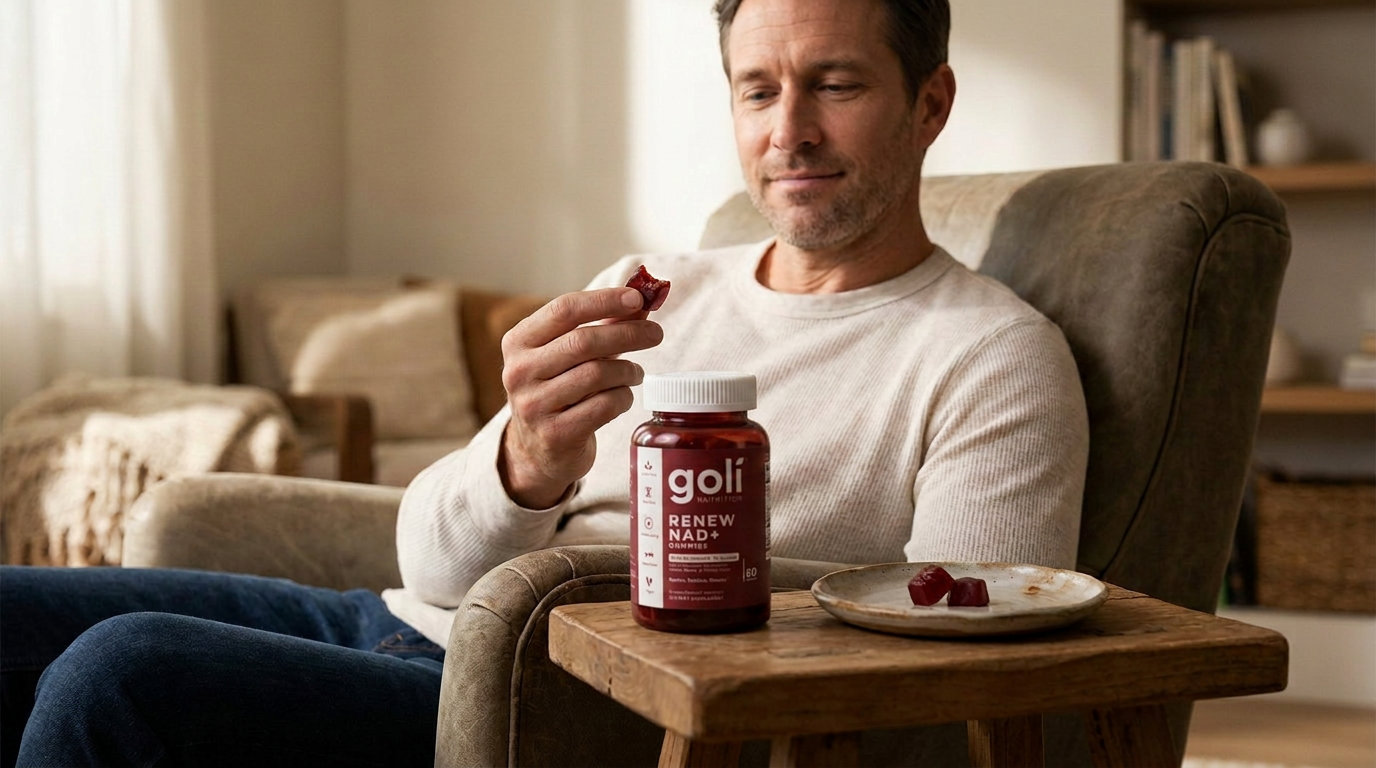
That is where the Goli Renew NAD+ Gummies fit, on the NAD side specifically. Rather than containing NAD itself, they provide Nicotinamide Riboside, the well-studied NAD precursor, along with Vitamin B3 and Vitamin C. The Vitamin C is worth noting here, since it is an antioxidant that plays in the same defense network glutathione supports, though these are an NAD-precursor gummy and not a glutathione supplement.
They are Gluten-Free, Non-GMO, Vegan, Gelatin-Free, Physician Owned, and made with Science-Backed Ingredients. As with any gummy they contain a little added sugar, so keep your overall daily total modest, since the American Heart Association recommends limits.
Across more than 200 days of TikTok Live, the longevity question I hear most is whether people should chase NAD or glutathione. My honest answer is that they are a pair, not a contest, and that for the NAD side an easy daily gummy beats an intimidating IV for most people. One viewer told me she liked that a simple gummy let her support the energy side of the equation without overthinking the whole longevity rabbit hole. If the NAD side is where you want to start, you can grab the current reader discount.
You May Also Like
Since gut health is part of the same cellular-health picture, you might also like our honest guide to whether kombucha helps with bloating and how to drink it without the gas.
The Bottom Line
So, NAD and glutathione are not rivals to choose between, they are a power-and-protection pair: NAD runs your cellular energy and repair, glutathione defends against oxidative damage, and the NAD system even helps recycle glutathione. Both decline with age, and both attract more marketing than settled evidence.
Today, get clear on your goal. If it is energy, metabolism, and repair, the NAD side is your target, and an NAD precursor like nicotinamide riboside is the studied route. If it is antioxidant defense and detox, glutathione or its building blocks are the relevant option.
Whichever you explore, keep your expectations grounded, favor reputable products, and check with your doctor if you take medication or have a condition. Goli has sold more than 10 billion gummies worldwide – a sign of how many people want simple daily support. Think of them as partners, support the side you care about, and let the science keep catching up.
References
- Martens CR, Denman BA, Mazzo MR, et al. Chronic Nicotinamide Riboside Supplementation Is Well-Tolerated and Elevates NAD+ in Healthy Middle-Aged and Older Adults. Nature Communications (2018);9:1286.
- Sharma C, Donu D, Cen Y. Emerging Role of Nicotinamide Riboside in Health and Diseases. Nutrients, MDPI (2022);14(19):3889.
- Labarrere CA, Kassab GS. Glutathione: A Samsonian Life-Sustaining Small Molecule That Protects Against Oxidative Stress, Ageing and Damaging Inflammation. Frontiers in Nutrition (2022).
- Richie JP, Nichenametla S, Neidig W, et al. Randomized Controlled Trial of Oral Glutathione Supplementation on Body Stores of Glutathione. European Journal of Nutrition, Springer (2015);54(2):251-263.
- Radenkovic D, Reason, Verdin E. Clinical Evidence for Targeting NAD Therapeutically. Pharmaceuticals (Basel), MDPI (2020);13(9):247.
- Added Sugars. American Heart Association.
- FDA 101: Dietary Supplements. U.S. Food and Drug Administration.