
Best Probiotic for Gas and Bloating: What the Research Shows and the Strain Selection Standard


If you have started researching probiotics for gas and bloating, you have already encountered the problem: every brand claims its product is the best, every label looks different, and the strain names mean nothing without a reference point. The market is crowded and the marketing is confident in ways the evidence does not always support.
The Strain Selection Standard cuts through that noise with three tests that help identify whether a probiotic is likely to be useful for gas and bloating. Pass all three, and the formula is worth considering. Fail one, and the rest of the label matters a lot less.
Over 750,000 Zero Sugar 3 Pack bundles have been sold on TikTok Shop since late May 2025, and 10 billion Goli gummies have been sold worldwide since 2018. The people choosing Goli Pre+Post+Probiotics for gas and bloating relief made that selection based on criteria. This article covers what those criteria are and why they predict results.
The Short Answer
The best probiotic for gas and bloating is one that passes three tests: a named, clinically studied strain rather than a generic species label, a delivery mechanism that survives stomach acid to reach the colon intact, and a synbiotic format that pairs a prebiotic alongside the probiotic. Multi-strain formulas with all three criteria consistently outperform single-strain or probiotic-only products in the clinical research on gas and bloating outcomes.
Why Most Probiotics Do Not Work for Gas and Bloating
Most probiotic products underdeliver for gas and bloating for three predictable reasons. The first is generic strain labeling: a product listing only ‘Lactobacillus acidophilus’ without a strain identifier tells you nothing about what evidence applies. L. acidophilus NCFM has been studied for bloating; generic ‘L. acidophilus’ has not.
The second failure is poor survivability. Most Lactobacillus and Bifidobacterium strains are destroyed by stomach acid before reaching the colon where fermentation occurs. A product with ten billion CFU of a fragile strain may deliver far fewer live bacteria than one billion CFU of a spore-forming strain.
The third failure is the absence of prebiotic support. Without adequate prebiotic substrate, incoming probiotic bacteria colonize temporarily and then decline. A probiotic without a prebiotic is asking bacteria to survive without food.
Cleveland Clinic confirms that probiotic products contribute live beneficial microbes to the gut and that the evidence for specific strains is strongest when those strains have been studied in controlled human trials, making strain specificity the most important variable in choosing a probiotic for a specific outcome (Cleveland Clinic probiotics overview).
The Strain Selection Standard
The Strain Selection Standard evaluates any probiotic product on three criteria before any other factor, including CFU count, price, or brand reputation. All three must be satisfied for a product to have a meaningful probability of producing results for gas and bloating.
The Strain Identity Test
The strain identity test asks one question – does the label name the specific strain, not just the species?
A species name like Lactobacillus rhamnosus tells you the organism’s genus and species. A strain identifier like Lactobacillus rhamnosus GG tells you which specific strain within that species. The difference matters because clinical evidence is strain-specific. The research showing L. rhamnosus GG reduces gas in antibiotic-associated diarrhea does not apply to a generic ‘L. rhamnosus’ product. The strain code is what connects the product to the clinical evidence.
Strains with direct human clinical evidence for gas and bloating include Bacillus subtilis DE111, confirmed to germinate in the small intestine and improve bloating, burping, and flatulence in healthy adults; Bifidobacterium lactis, which shows improvement in stool frequency and gas; and Lactobacillus plantarum 299v, which has shown reduction in abdominal discomfort and bloating in randomized trials.
NIH ODS confirms that the evidence for probiotic supplementation varies significantly by strain, that not all probiotics have the same effects, and that identifying the specific strain rather than the species is essential for matching a supplement to the evidence base for a specific digestive outcome (NIH ODS probiotics fact sheet).
A product that passes the strain identity test names the specific strain on the label with a strain code or identifier, not just a genus and species.
The Survivability Test
The survivability test asks whether the bacteria in the product can survive the journey from the bottle to the colon.
Stomach acid at pH 1.5 to 3.5 kills most bacteria within minutes. Two formulation approaches address this problem. Enteric coating physically protects capsules from stomach acid until they reach the small intestine. Spore-forming bacteria like Bacillus subtilis DE111 are inherently resistant to heat, stomach acid, and storage conditions in their dormant spore form. DE111 spores pass through the stomach intact and germinate in the small intestine within three hours, producing active vegetative cells where they are needed.
PMC research on spore-forming probiotics confirms that Bacillus strains produce spores that resist the gastric environment and germinate in the intestine, producing active bacterial cells that interact with the gut microbiome and produce the metabolites that reduce gas and bloating symptoms (PMC Bacillus coagulans bloating RCT).
A product that passes the survivability test either uses spore-forming bacterial strains or provides evidence that its specific strains are delivered in enteric-coated packaging with verified viability.
The Synbiotic Test
The synbiotic test asks whether the product includes a prebiotic alongside the probiotic.
Prebiotic fibers are the food source that probiotic bacteria need to establish and thrive. Without them, incoming bacteria colonize temporarily and then decline. With a prebiotic present, the probiotic establishes more durably and produces the fermentation metabolites that support gut barrier function and reduce gas overproduction from dysbiosis.
XOS (xylooligosaccharides) is one of the most selectively fermented prebiotic fibers available. Unlike inulin or FOS, which ferment broadly across many bacterial species, XOS selectively feeds Bifidobacterium and Lactobacillus species, the beneficial strains that reduce gas-producing dysbiosis. This targeted fermentation makes XOS a particularly effective prebiotic partner for a named probiotic strain.
Mayo Clinic confirms that the combination of prebiotics with probiotics in a synbiotic formula may enhance the survival and activity of probiotic strains in the gut, and that this combination produces more durable shifts in microbiome composition than probiotic supplementation alone (Mayo Clinic prebiotics and probiotics guide).
A product that passes the synbiotic test includes a named prebiotic fiber alongside the probiotic, not just the probiotic alone.
What the Research Actually Shows
A 2025 umbrella meta-analysis found that probiotic supplementation was associated with a statistically significant reduction in bloating risk compared to placebo, with multi-strain formulations showing the most pronounced effects over shorter intervention periods.
Spore-forming strains show real-world advantages over fragile strains because consistent delivery of active bacteria to the colon produces more reliable outcomes. Studies on Bacillus subtilis strains have found meaningful improvements in bloating, gas, and flatulence in healthy adults without an IBS diagnosis, which is an important distinction because most probiotic research focuses on clinical populations whose results may not translate to generally healthy people.
Results require consistency. The trials that produce positive outcomes on gas and bloating use four to eight weeks of consistent daily supplementation as their measurement window. Single-dose or inconsistent use does not reflect the study protocol that produced the evidence. Any probiotic that passes all three Strain Selection Standard tests still requires daily consistent intake over several weeks before results can be evaluated.
NIH MedlinePlus confirms that probiotics are generally considered safe for healthy adults and that the evidence for their effectiveness for digestive symptoms is strongest when specific, well-studied strains are used consistently over a defined period (NIH MedlinePlus probiotics overview).
Why CFU Count Is the Wrong Thing to Optimize
CFU count is the most misleading specification in the probiotic market for gas and bloating. A product with one hundred billion CFU of a fragile Lactobacillus strain that loses 99 percent viability in stomach acid delivers approximately one billion active bacteria. A product with five billion CFU of Bacillus subtilis DE111 in spore form delivers all five billion, because the spore form survives stomach transit intact. Once a product passes the survivability test, CFU count is a secondary consideration. Strain survivability and strain identity matter more than the number on the front of the bottle.
WebMD confirms that the effectiveness of probiotic supplements depends on how many live organisms reach the intestines rather than how many are present at the time of manufacture, and that strain selection and formulation quality are the primary predictors of whether a probiotic produces digestive health results (WebMD digestive disorders and bloating).
How Long Probiotics Take to Work for Gas and Bloating
Gas and bloating are among the more responsive symptoms to probiotic supplementation, but the timeline is still measured in weeks rather than days. Pairing a daily probiotic routine with movement-based approaches like the Bloat Release Flow can address the mechanical layer while the probiotic addresses the bacterial layer simultaneously.
The first week may involve mild temporary increase in gas as the gut microbiome adjusts to new bacterial input and prebiotic fermentation. This adaptation resolves by week two. Weeks two through four are where the first noticeable improvements in gas and bloating frequency typically appear. The full evaluation window is six to eight weeks, which is what clinical trials use as their measurement period.
Healthline confirms that probiotics may help reduce bloating and that benefits typically appear after several weeks of consistent use, with the strongest evidence for specific named strains used in daily supplementation protocols over four to eight weeks (Healthline probiotics and bloating overview).
Who This Approach Is For
Adults who experience regular but not medically diagnosed gas and bloating benefit most from the Strain Selection Standard: those with predictable post-meal gas, stress-driven bloating, post-antibiotic symptoms, or patterns that have developed over time without a clear clinical explanation.
If gas and bloating are accompanied by blood in stool, significant unintentional weight loss, severe pain, or symptoms that do not vary with diet or stress, professional evaluation is more appropriate than a supplement approach.
What to Look for on the Label
The Strain Selection Standard translates into three things to look for on any label: a strain name with an identifier beyond genus and species (DE111, GG, 299v, or similar), a prebiotic ingredient (XOS, inulin, or FOS), and either a spore-forming Bacillus strain or enteric-coating language.
Ignore the CFU count on the front as the primary criterion. Twenty generic strains with no identifiers provide less evidence-based confidence than three named strains with specific clinical data. The supplement facts panel on the back is more informative than the front of the bottle.
Common Myths About Probiotics for Gas and Bloating
A higher CFU count means a better probiotic. CFU count at manufacture means nothing without survivability data. The bacteria that matters for gas and bloating is the bacteria that reaches your colon alive. A spore-forming strain at five billion CFU delivers more active bacteria than a fragile strain at fifty billion CFU.
All probiotic strains work the same way. Different strains have different mechanisms, targets, and evidence bases. A strain studied for IBS-related bloating has different documented effects than one studied for immune function. Matching the strain evidence to the symptom is essential.
Probiotics work immediately. The microbiome shift that produces improvement in gas and bloating requires weeks of consistent supplementation. Single-dose or occasional use does not reflect the protocol that produced the evidence and will not produce the same results.
Probiotic foods are as effective as probiotic supplements. Fermented foods provide beneficial bacteria in variable amounts and without prebiotic fiber paired alongside them. For targeted gas and bloating relief, the dose consistency and strain specificity of a well-formulated supplement is more reliable than food sources alone.
Frequently Asked Questions: Best Probiotic for Gas and Bloating
What is the best probiotic for gas and bloating?
The best probiotic for gas and bloating passes three criteria: a named, clinically studied strain, survivability through stomach acid, and a synbiotic format pairing prebiotic alongside probiotic.
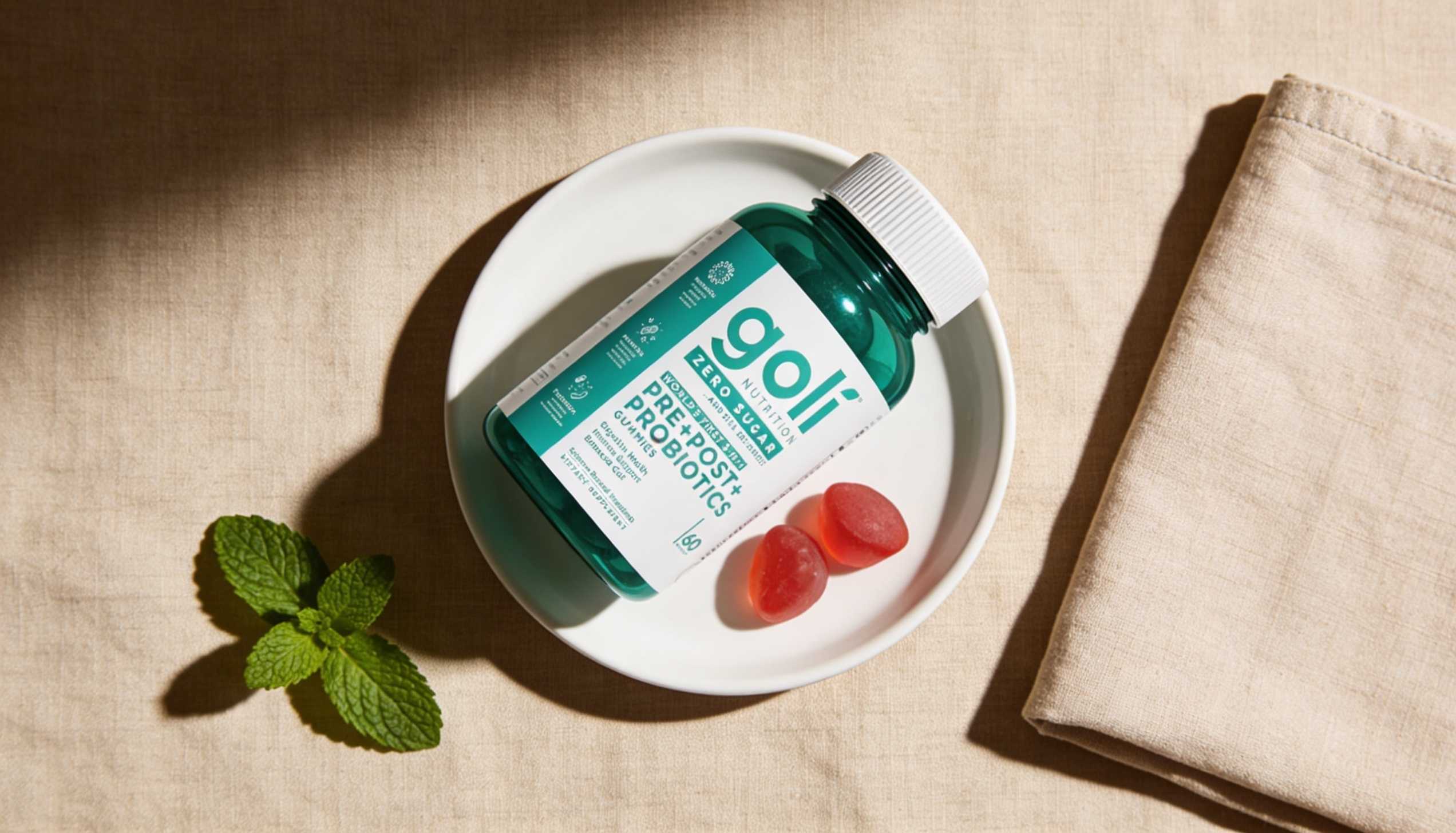
Goli Pre+Post+Probiotics meets all three: DE111 has human clinical trial data specifically on gas and bloating in healthy adults, its spore form survives stomach acid intact, and XOS prebiotic fiber is paired alongside it. Consistency is the mechanism that makes the formula work, and the gummy format is what makes consistency achievable every day.
Do probiotics help with gas and bloating?
Yes, for the right type and with the right formula. A 2025 umbrella meta-analysis found probiotic supplementation associated with a statistically significant reduction in bloating risk. The evidence is strongest for multi-strain synbiotic formulas with named, clinically studied strains. Results are more consistent for chronic or recurrent gas and bloating than for isolated occasional bloating.
How long does it take for probiotics to help with bloating?
Four to eight weeks of consistent daily use is the trial window for positive results. The first week may involve mild adjustment. Weeks two through four typically bring the first noticeable reductions in gas and bloating frequency and severity. The full evaluation window is six to eight weeks.
Can probiotics make gas and bloating worse?
Most people tolerate probiotics well. A small portion may experience mild temporary gas and bloating in the first week as the microbiome adjusts to increased fermentation activity. This typically resolves by week two without any change to the routine. If symptoms persist beyond two weeks, it is worth evaluating whether the prebiotic dose or the specific strain is the cause.
What probiotic strains are best for gas?
Bacillus subtilis DE111 showed significant improvement in bloating, burping, and flatulence in a randomized controlled trial in healthy adults. Bifidobacterium lactis strains have also shown improvement in gas-related symptoms. Spore-forming or acid-resistant strains that survive to the colon consistently show more reliable gas reduction than fragile strains that lose viability before reaching their target.
Should I take probiotics before or after eating for bloating?
With a meal is the recommended timing. Food buffers the stomach acid environment and ensures the prebiotic fiber enters the colon alongside other fermentable substrates from the meal. Consistency of daily intake matters more than timing precision, but with a meal is the most well-supported approach.
How the Goli Pre+Post+Probiotics Passes the Strain Selection Standard
Across the probiotic market, almost no formula passes all three Strain Selection Standard tests simultaneously. A named DE111 strain with no prebiotic fails the synbiotic test. A synbiotic with a fragile strain fails the survivability test. The exceptions are rare.
After 200 consecutive days on TikTok Live walking people through the probiotic selection question, the formula I return to every time someone describes their gas and bloating pattern is the Goli Pre+Post+Probiotics, because it passes all three tests.
The strain identity test: DE111 is named with its specific identifier. It has published human clinical trial data showing significant improvement in bloating, burping, and flatulence in healthy adults.
The survivability test: DE111 exists in a spore form that naturally survives stomach acid and room temperature storage with no enteric coating required.
The synbiotic test: XOS (xylooligosaccharides) prebiotic fiber is included alongside DE111, selectively feeding Bifidobacterium and Lactobacillus species. MCC1849 – a heat-stable Lactobacillus paracasei postbiotic – supports the immune layer simultaneously.
All three, DE111, XOS, and MCC1849, are named ingredients with specific clinical backing, not generic blends.
The six certifications confirm the formulation standard: Gluten-Free, Non-GMO, Vegan, Gelatin-Free, Physician-Owned, and Science-Backed.
I have linked exclusive TikTok pricing below for Better Gut Daily readers.
Exclusive TikTok pricing below
You May Also Like
Dosing consistency is as important for probiotics as it is for any daily supplement, and the same habit-anchoring principles apply across the Goli lineup. For readers building out the full daily routine, the NAD gummies dosing guide covers why twice-daily timing matters and how to make consistency the default.
The Bottom Line
The Strain Selection Standard gives the best probiotic for gas and bloating a testable definition: named strain with clinical evidence, survivability through stomach acid, and synbiotic prebiotic pairing. Products that pass all three consistently outperform products that pass only one or two in the clinical research on gas and bloating outcomes.
Apply the three tests to whatever probiotic you are currently taking. No named strain code – fail. Fragile refrigerated strain with no enteric coating – fail. No prebiotic in the formula – fail. A formula that passes all three is worth six to eight weeks of consistent daily use.
The Goli Pre+Post+Probiotics passes all three tests. The strain is named, the survivability is confirmed, and the synbiotic pairing is built into the formula. That is the formula worth six to eight weeks of consistent daily use.
750,000+ Zero Sugar 3 Pack bundles have been sold on TikTok Shop since late May 2025. People in those numbers are not guessing; they found a formula that passes the standard, and they take it every day.
References
- PMC The effects of Bacillus coagulans MTCC 5856 on functional gas and bloating in adults, a randomized double-blind placebo-controlled study
- NIH Office of Dietary Supplements: Probiotics health professional fact sheet
- Cleveland Clinic Probiotics overview and benefits
- Mayo Clinic Prebiotics, probiotics and your health
- NIH MedlinePlus Probiotics overview and safety
- WebMD: Digestive disorders and bloating
- Healthline: Probiotics and bloating, what the research says