

If your stomach feels uncomfortably full after meals and you are wondering whether a simple cup of tea could help, you are not alone. Bloating is one of the most common digestive complaints, and it often leaves people searching for something gentle and natural. Peppermint tea for bloating has been a go-to remedy for centuries, and modern research is starting to explain why it works so well.
The good news is that this is not a complicated fix. Understanding how peppermint interacts with your digestive system, when to drink it, and what to pair it with can make the difference between occasional relief and a consistent improvement in comfort. This guide walks you through everything you need to know.
The Short Answer
Peppermint tea for bloating works primarily because the menthol in peppermint leaves relaxes the smooth muscles of your digestive tract. This helps trapped gas move through more easily and reduces the cramping that often accompanies bloating. Drinking one to two cups after meals is the most effective approach for most people.
Why Peppermint Helps With Bloating
Bloating happens when gas builds up in your stomach or intestines, often from swallowed air, food fermentation, or sluggish digestion. That tight, stretched feeling is your gut struggling to move things along efficiently. Peppermint addresses this at the muscular level.
The key compound is menthol, the essential oil that gives peppermint its cooling, refreshing flavor. Menthol acts as a natural antispasmodic, meaning it calms the involuntary contractions of your intestinal walls. When those muscles relax, trapped gas can pass through rather than sitting in one place and causing pressure and discomfort.
A comprehensive review published in Phytotherapy Research examined the bioactivity of peppermint tea and found significant evidence for its relaxation effect on gastrointestinal tissue. The researchers noted that peppermint contains rosmarinic acid and flavonoids like eriocitrin, luteolin, and hesperidin, all of which contribute to its anti-inflammatory and antioxidant activity.
Peppermint also contains compounds that may help calm the bacteria in your digestive tract. Flavonoids in peppermint leaves can inhibit the activity of mast cells, which are immune cells found in large numbers in your gut. By reducing mast cell activity, peppermint may help ease inflammation that contributes to bloating.
It is worth noting that most clinical research has focused on concentrated peppermint oil rather than tea. However, the same active compounds are present in brewed peppermint leaves, just in lower concentrations. This actually makes tea a gentler option for everyday use. Research has also documented peppermint’s broader digestive benefits, including relief from gas and indigestion, which often accompany bloating.
The Sip and Settle Method
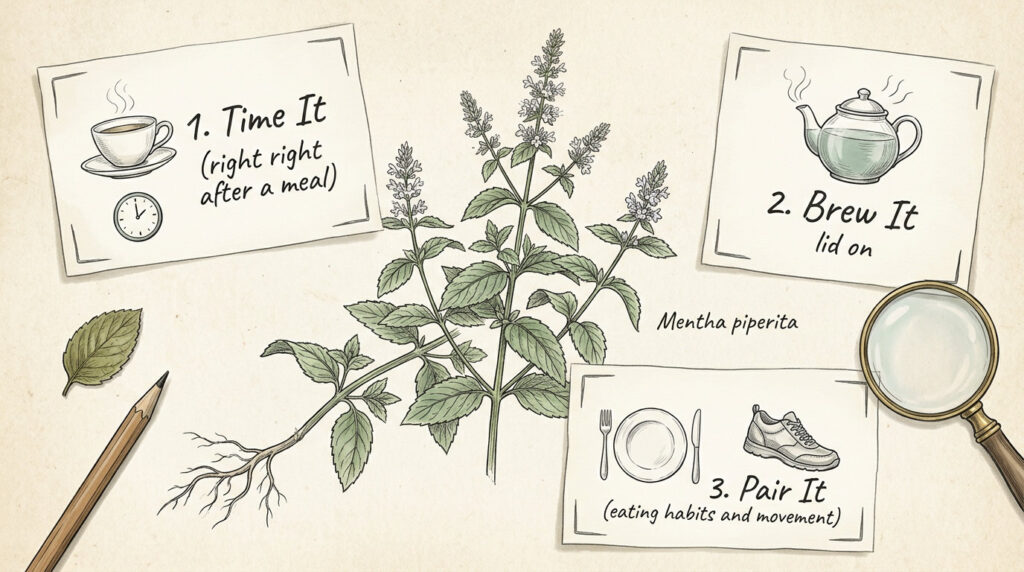
The Sip and Settle Method is a simple framework for using peppermint tea consistently enough to see real results with bloating. It focuses on three principles: timing, brewing, and pairing.
Rather than treating peppermint tea as something you reach for only when bloating strikes, this method builds it into your routine so your digestive system gets steady, gentle support. The idea is that consistency matters more than intensity. One well-timed cup of properly brewed tea does more than three hastily made cups gulped down in a panic.
The framework works because it combines what research tells us about menthol absorption with practical habits that are easy to maintain. Instead of chasing relief after the fact, you create conditions where bloating is less likely to develop in the first place.
Step-by-Step: Using Peppermint Tea for Bloating Relief
Step one: Time your cup around meals
The most effective time to drink peppermint tea is about 20 to 30 minutes after eating. This gives your stomach time to begin its initial breakdown of food before the menthol arrives to help relax the intestinal muscles. Drinking it too early during a meal may actually slow the initial phase of digestion. If you tend to experience morning bloating, a cup on an empty stomach can also help get your digestive system moving gently.
Step two: Brew it properly for maximum benefit
The volatile oils in peppermint, including menthol, are released during steeping but can also evaporate quickly. To get the most from your cup, always steep in a covered container. Use one to two teaspoons of dried peppermint leaves or one tea bag per eight ounces of freshly boiled water. Steep for five to seven minutes with a lid on. This traps the essential oils that would otherwise escape as steam. Skipping the lid is one of the most common reasons people feel peppermint tea does not work as well as they expected.
Step three: Pair it with complementary habits
Peppermint tea works best when it is part of a broader pattern of digestive support. Eating slowly and chewing thoroughly reduces the amount of air you swallow. A short walk after meals encourages gut motility. Staying hydrated between meals supports the mucus lining that protects your intestinal walls. These small habits amplify what peppermint tea does on its own. Research from the National Center for Complementary and Integrative Health notes that peppermint works through several mechanisms, including smooth muscle relaxation and modulation of gut sensitivity, which means supporting your digestive system from multiple angles gives you the best chance of consistent relief.
Myths and Misconceptions About Peppermint Tea and Bloating
Myth: More cups means faster relief
Drinking large quantities of peppermint tea will not speed up the debloating process. Two to three cups per day is the commonly recommended range. Excessive consumption can actually lead to heartburn in some people because the same muscle-relaxing effect that helps your intestines can also relax the valve between your stomach and esophagus.
Myth: Peppermint tea works the same as peppermint oil capsules
While both contain menthol, the concentration is very different. Enteric-coated peppermint oil capsules deliver a concentrated dose directly to the intestines and are often used for conditions like irritable bowel syndrome. Tea provides a gentler, more gradual release of menthol that works well for everyday bloating but may not be strong enough for clinical digestive conditions.
Myth: All mint teas are the same
Peppermint and spearmint are different plants with different chemical profiles. Peppermint contains significantly more menthol than spearmint, which is why it is more effective for digestive issues. When shopping for tea, look specifically for peppermint (Mentha piperita) on the label rather than generic “mint tea” blends.
Myth: Peppermint tea is safe for everyone with bloating
People who experience acid reflux or gastroesophageal reflux disease should use caution with peppermint tea. The muscle relaxation that helps with bloating can also relax the lower esophageal sphincter, potentially worsening reflux symptoms. If you have GERD, a hiatal hernia, or frequent heartburn, it is best to discuss peppermint tea with your healthcare provider before making it a regular habit.
What Realistic Improvements Look Like
People who use peppermint tea for bloating consistently tend to notice patterns rather than dramatic overnight changes. The first thing most people report is a reduction in the intensity of post-meal fullness. Your stomach may still feel slightly full after eating, but the uncomfortable pressure and tightness often decreases.
Over the first week or two, many people find that the episodes of bloating become shorter. Instead of lasting for hours after a meal, the discomfort passes more quickly. This is likely because the menthol is helping gas move through your digestive tract more efficiently.
By the third or fourth week of regular use, some people notice that bloating episodes become less frequent overall. This does not mean bloating disappears entirely. It means your digestive system is spending more time in a comfortable state and less time in a bloated one.
It is important to keep expectations grounded. Peppermint tea is a supportive tool, not a cure. If your bloating is related to food intolerances, hormonal shifts, or an underlying digestive condition, the tea may reduce symptoms but will not address the root cause.
Who This Approach Is For
The Sip and Settle Method works well for people who experience occasional bloating after meals, especially when it is related to overeating, eating too quickly, or gas-producing foods. It is also a good fit for anyone looking for a caffeine-free, calorie-free way to support everyday digestive comfort.
This approach may be especially helpful if you have already tried basic dietary changes but still experience mild to moderate bloating. Adding peppermint tea as a consistent daily habit can provide that extra layer of support.
This approach is not a substitute for medical evaluation if you experience severe or persistent bloating, unexplained weight changes, blood in your stool, or bloating that wakes you up at night. Those symptoms deserve professional attention. If symptoms are persistent or severe, professional evaluation is appropriate.
Timeline for Results
The first few days are about establishing the habit. You may notice subtle changes in comfort, especially after meals, but these can be easy to miss. Most people report that the tea feels soothing in the moment even before measurable bloating improvements appear.
By the end of the first week, the pattern becomes clearer. The post-meal heaviness may feel lighter, and you might notice less abdominal distension in the evenings. This is when the antispasmodic effects of consistent menthol exposure start to build.
Weeks two through four are where most people feel the real difference. If you are brewing your tea correctly, timing it around meals, and supporting it with good eating habits, this is when bloating episodes typically become noticeably shorter and less intense.
After a month, you will have a good sense of how effective peppermint tea is for your specific digestive pattern. Some people find it becomes a permanent part of their routine. Others use it seasonally or during periods when their diet is less controlled. There is no wrong approach as long as you are consistent during the periods when you use it.
Frequently Asked Questions About Peppermint Tea for Bloating
How many cups of peppermint tea should I drink per day for bloating?
Most sources recommend two to three cups daily. One cup after your largest meal is a good starting point. You can add a second cup after another meal or in the evening. There is no strict clinical guideline, but staying within this range provides consistent support without risking side effects like heartburn.
Can I drink peppermint tea on an empty stomach?
Yes. Many people find that a cup of peppermint tea first thing in the morning helps gently wake up the digestive system. It can be especially helpful if you tend to feel bloated before eating. Since peppermint tea has essentially zero calories and no caffeine, it is a gentle way to start the day.
Does iced peppermint tea work as well as hot?
Cold peppermint tea still contains menthol, so it can still help. However, warm beverages generally stimulate blood flow to the digestive organs and may provide faster relief. If you prefer iced tea, steep it hot first with a covered lid, then cool it to preserve the volatile oils.
Can I combine peppermint tea with other herbal teas for bloating?
Absolutely. Ginger and fennel are both well-studied companions for digestive comfort. Ginger helps stimulate digestive enzymes and speeds gastric emptying, while fennel has its own carminative properties that help expel trapped gas. A blend of peppermint and ginger can be particularly effective.
Is peppermint tea safe during pregnancy?
Peppermint tea in moderate amounts is generally considered safe during pregnancy and may even help with morning sickness. However, the research is limited, so it is best to discuss regular consumption with your healthcare provider if you are pregnant or breastfeeding.
A Simple Addition to Your Daily Routine
If you are already working on digestive comfort through better eating habits, peppermint tea can be a natural companion that supports those efforts. Goli Pre+Post+Probiotic Gummies are designed to work alongside daily habits like these by providing a combination of prebiotics, probiotics, and postbiotics in one convenient gummy. For people exploring apple cider vinegar as part of their wellness routine, Goli ACV Gummies offer the benefits of apple cider vinegar without the harsh taste or acidity that can sometimes aggravate a sensitive stomach.
Neither product replaces the fundamentals of good digestion, but both can complement a routine that already includes things like mindful eating, staying hydrated, and enjoying a warm cup of peppermint tea after dinner.
You May Also Like
Bloating and hydration are more connected than most people realize. Dehydration can slow digestion, contribute to constipation, and increase the likelihood of gas buildup. Learn how the two are related and what you can do about it in our guide: Can Dehydration Cause Bloating? Understanding the Connection and Finding Relief.
The Bottom Line
The Sip and Settle Method gives you a simple framework for using peppermint tea for bloating effectively: time it around meals, brew it properly with a covered lid, and pair it with habits that support digestion from multiple angles.
Start today by picking up a box of pure peppermint tea and drinking one cup after your largest meal. Cover the cup while it steeps and give it a full five to seven minutes. Notice how your stomach feels in the hour afterward.
Each week, build the habit by adding a second cup and paying attention to how your eating pace and hydration affect your comfort. Small adjustments compound into meaningful changes over time.
Your digestive system responds well to consistency and gentle support. A warm cup of peppermint tea is one of the simplest, most accessible ways to give it both.
References
- Healthline. 12 Science-Backed Benefits of Peppermint Tea and Extracts.
- McKay DL, Blumberg JB. A review of the bioactivity and potential health benefits of peppermint tea (Mentha piperita L.). Phytotherapy Research. 2006;20(8):619-633.
- Cafe Du Monde. Best Tea for Bloating.
- BBC Good Food. Health Benefits of Peppermint Tea.
- St. Vincent’s Medical Center. 5 Health Benefits of Peppermint.
- Health Shots. Drink Peppermint Tea Daily to Reduce Belly Bloating.
- National Center for Complementary and Integrative Health. Peppermint Oil.