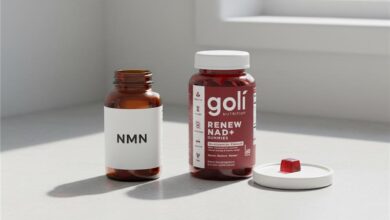

If you have started looking into NAD supplementation, you have probably encountered the same basic claim: NAD levels fall as you age, and restoring them matters for energy, cellular repair, and healthy aging. What most articles skip is the actual mechanism, why NAD declines, what is driving the fall, and why the decline accelerates rather than proceeding gradually and evenly throughout your life.
The NAD Decline Triangle identifies the three simultaneous processes that explain why NAD declines with age. Together, they produce the compounding deficit that explains why NAD levels fall by 40 to 50 percent by midlife and why the decline speeds up rather than plateaus. More than ten billion Goli gummies have been sold worldwide since 2018. The people building daily NAD support routines understand the mechanism behind why the need for that support grows with every passing year.
The Short Answer
NAD declines with age because three processes compound simultaneously. CD38, an enzyme that destroys NAD, rises progressively with age. NAMPT, the enzyme that drives NAD production through the salvage pathway, declines. The result is falling supply and rising demand, a deficit that widens every year and cannot be corrected through diet alone.
What NAD Actually Does Before Exploring Why It Falls
NAD is a coenzyme that carries electrons in the mitochondrial energy production chain, converting food into ATP. But it is also the substrate that two critical protein families consume to do their jobs. Sirtuins, which regulate gene expression and cellular stress response, require NAD to function. PARP enzymes, which repair DNA damage, consume NAD every time they act. Without adequate NAD, both families operate below capacity.
The reason NAD decline is directly linked to how you age is that these three functions, cellular energy production, sirtuin activity, and DNA repair, are all foundational to how well your body maintains itself at the cellular level. When NAD falls, all three suffer simultaneously.
Nature research confirms that NAD metabolism is central to mitochondrial function, that the age-related decline in NAD is driven by multiple compounding mechanisms, and that consistent NAD precursor supplementation is the most evidence-backed oral approach to restoring the declining baseline (Nature NAD metabolism and mitochondria).
Step-by-Step: The NAD Decline Triangle
The NAD Decline Triangle maps the three simultaneous causes of age-related NAD decline. Each operates through a different mechanism, each compounds the others, and together they produce a deficit that accelerates rather than stabilizes as you age.
The Production Decline
Your body produces NAD primarily through the salvage pathway. The rate-limiting enzyme that determines how quickly this production line runs is NAMPT.
NAMPT activity declines with age. Research has documented NAMPT reductions in multiple tissue types including skeletal muscle and white adipose tissue in aging animals, with corresponding reductions in NAD production. The production line does not shut down, but it slows. The rate-limiting enzyme becomes more of a rate-limiting bottleneck.
What makes this significant is the word rate-limiting. NAMPT sits at the beginning of the salvage pathway. When NAMPT slows down, every downstream step that depends on its output also slows. The decline in NAMPT does not just reduce one step of NAD production, it reduces the ceiling of the entire pathway.
NIH ODS confirms that NAD is primarily produced from niacin derivatives including NR and NMN through the salvage pathway, that this pathway is the primary route for cellular NAD synthesis in most tissues, and that the rate-limiting efficiency of this pathway determines how effectively the body maintains NAD levels as it ages (NIH ODS niacin fact sheet).
The Consumption Surge
While production slows, consumption accelerates. The primary driver is an enzyme called CD38.
CD38 is a membrane-bound NADase that hydrolyzes NAD into nicotinamide as part of its normal function. Its protein levels rise progressively across multiple tissue types with age. The landmark 2016 Cell Metabolism study demonstrated CD38 as the primary driver of age-related NAD decline: in mice lacking CD38, NAD remained elevated throughout aging. In normal aging mice, CD38 rose predictably while NAD fell correspondingly. More CD38 means less NAD.
And CD38 is not acting alone. Chronic low-grade inflammation (inflammaging) directly activates CD38. This creates a compounding loop: age increases inflammation, inflammation activates CD38, CD38 destroys more NAD, and lower NAD impairs the sirtuin-driven mechanisms that would otherwise suppress the inflammation. The consumption surge self-reinforces.
PMC research confirms that CD38 is one of the main NAD-degrading enzymes in mammalian tissues, that CD38 protein levels increase progressively across multiple tissues during aging, that CD38 enzymatic activity increases correspondingly, and that these increases are directly responsible for the measured NAD decline observed in aged tissue (PMC CD38 dictates age-related NAD decline).
The Recycling Breakdown
The third vertex of the NAD Decline Triangle is the failure of the recycling system. NAD is not a one-use molecule. When sirtuin enzymes consume NAD as part of their deacylation reaction, they split it into component parts. Nicotinamide, one of those parts, can be fed back into the salvage pathway and converted back into NAD, completing a recycling loop that normally helps maintain NAD levels even under conditions of elevated consumption.
But the efficiency of this recycling system also declines with age. Because NAMPT is the rate-limiting enzyme for the entire salvage pathway, including the recycling branch, the NAMPT decline described above affects both fresh NAD production and the efficiency of NAD recycling simultaneously.
The result is that the cells not only produce less new NAD, they also recover less of the NAD that has already been used. The recycling efficiency that would partially buffer the production decline and partially offset the consumption surge is also compromised. All three legs of the decline are operating simultaneously rather than sequentially.
Mayo Clinic confirms that NAD levels decline progressively with age and that the research interest in NAD supplementation is based on the understanding that this decline impairs fundamental cellular processes, energy production, DNA repair, and regulatory protein function, that determine how well the body maintains itself as it ages (Mayo Clinic NAD supplements).
Why the Decline Accelerates After 40
The three mechanisms of the NAD Decline Triangle do not operate at the same rate across life. They compound rather than add linearly, which is why the measured rate of NAD decline is not constant.
In your twenties and thirties, NAMPT is functioning near full capacity, CD38 levels are lower, and the recycling system is reasonably efficient. NAD levels begin falling from the late twenties, but the three mechanisms are not yet all in full negative interaction.
By the late thirties and forties, the interaction effects begin. NAMPT has declined enough to meaningfully reduce both production and recycling. CD38 has risen enough to meaningfully increase consumption. Inflammaging is compounding the CD38 activation. The production-consumption gap that was narrow at 30 is widening faster at 45 because all three mechanisms are now reinforcing each other rather than acting independently.
By the mid-fifties and sixties, the compounding is well advanced. Research documents NAD declines of 40 to 50 percent by midlife and further declines into the sixties and beyond. The acceleration is not a linear progression of a single cause, it is the consequence of three simultaneously worsening mechanisms that each amplify the others.
What the Research Actually Shows
The CD38 mechanism is the most precisely characterized: the 2016 Cell Metabolism study established CD38 as the primary NADase driving age-related NAD decline. The NAMPT evidence is the mechanistic basis for NR supplementation: providing precursors that bypass NAMPT’s bottleneck is the most direct intervention, and multiple human trials confirm NR raises blood NAD in a dose-dependent manner (WebMD NR overview).
NIH NIA confirms that as people age, their cells become less efficient at producing and maintaining the coenzymes and energy substrates that cellular function depends on, and that understanding the specific mechanisms of this decline is central to identifying which supplementation approaches have genuine biological rationale (NIH NIA dietary supplements).
Why This Explains Why Oral NAD Does Not Work
The NAD Decline Triangle also explains one of the more confusing questions in NAD supplementation: if NAD is the molecule you want more of, why not just take NAD directly?
The answer is in the cell entry problem. NAD is a large molecule. It cannot cross cell membranes efficiently, which means the NAD you swallow is largely broken down in digestion before it reaches cells. Even the fraction that survives digestion cannot enter cells in meaningful amounts because the transporters that move molecules across cell membranes are sized for smaller molecules.
But NR can enter cells. NR uses the same nucleoside transporter family that moves ribosides across cell membranes, a confirmed, well-characterized mechanism. Once inside the cell, NR converts to NMN and then to NAD through enzymatic steps that the cell performs routinely. The result is that NR provides the building blocks for cellular NAD production from inside the cell, bypassing both the digestion problem and the membrane-crossing problem that make oral NAD ineffective.
This is also why NR targets the NAD Decline Triangle more precisely than oral NAD. NR does not simply add NAD, it provides substrate to the salvage pathway, supporting the production mechanism that NAMPT decline has weakened. It gives the recycling system more material to work with. And it raises the NAD pool from which sirtuin activity can draw, partially countering the depletion that CD38’s elevated consumption causes.
NIH MedlinePlus confirms that NR is a vitamin B3 derivative used by the body to produce NAD, that it has an established profile for supporting cellular functions that become less efficient with age, and that daily supplementation raises blood NAD levels (NIH MedlinePlus NR overview).
How Long the Decline Has Been Happening Before You Notice It
NAD decline begins in the late twenties, but symptoms typically appear a decade or more later. Healthy cells in the late twenties can partially compensate for the declining baseline. As the three mechanisms compound through the thirties, that compensation is gradually exhausted. The deficit at 35 is meaningfully smaller than the deficit at 50, which is the prevention-curve argument for starting NR supplementation before 40.
What Lifestyle Factors Make NAD Decline Faster
The NAD Decline Triangle describes the baseline biological mechanisms. But several lifestyle factors accelerate each vertex of the triangle beyond the baseline rate.
Chronic stress activates PARP enzymes directly, the body treats sustained psychological stress as a source of cellular damage, triggering DNA-repair-associated PARP activity that consumes NAD. This is one pathway through which chronic stress accelerates cellular aging.
Chronic alcohol consumption reduces NAMPT expression in multiple tissues, accelerating the production decline beyond the age-related baseline. Regular alcohol exposure is one of the clearest documented non-aging factors that reproduces the NAMPT decline pattern.
Sleep deprivation disrupts the circadian rhythm of NAD metabolism. NAD levels and NAD-consuming enzyme activity follow a 24-hour cycle tied to the circadian clock. Chronic sleep disruption desynchronizes this cycle, reducing NAD availability during the daytime hours when mitochondrial demand is highest.
Poor diet compounds the production decline. The salvage pathway requires niacin derivatives as raw material. Diets low in niacin-containing foods reduce the raw material available to a pathway that is already running at reduced efficiency due to NAMPT decline.
Common Myths About Why NAD Declines
“NAD declines because of poor diet.” Diet affects NAD levels at the margins, niacin-rich foods provide more raw material for the salvage pathway. But the primary drivers of age-related NAD decline are NAMPT reduction and CD38 elevation, neither of which is caused by diet. People with nutritionally complete diets experience the same fundamental NAD Decline Triangle as anyone else.
“NAD declines because of stress alone.” Stress accelerates NAD decline through PARP activation and cortisol effects on mitochondrial function. But the underlying age-related mechanisms of CD38 elevation and NAMPT decline occur independently of stress. Stress is a compounding factor, not the root cause.
“You can fix NAD decline by eating more B vitamins.” B vitamins including niacin provide raw material for the salvage pathway. Correcting a niacin deficiency will raise NAD levels in someone who is deficient. But the age-related decline caused by NAMPT reduction and CD38 elevation cannot be corrected by dietary B vitamins alone, because the problem is not raw material shortage, it is salvage pathway inefficiency and elevated consumption.
“Oral NAD supplements address the decline directly.” Oral NAD cannot cross cell membranes efficiently and is largely broken down before reaching cells. Taking oral NAD is not the same as raising cellular NAD. The most direct intervention for the NAD Decline Triangle is providing NR as a precursor that enters cells through confirmed transporters and converts to NAD intracellularly.
Frequently Asked Questions: Why NAD Declines With Age
Why does NAD decline with age?
Three simultaneous mechanisms: NAMPT declines and slows NAD production, CD38 rises and consumes NAD at an accelerating rate, and the salvage pathway recycling system becomes less efficient. Together they create a widening supply-demand gap. The decline begins in the late twenties and accelerates in the forties as all three compound rather than operate independently.
At what age does NAD start to decline?
NAD decline begins in the late twenties. Research documents measurable reductions in blood and tissue NAD levels that begin in the late twenties and continue progressively. The rate of decline is not linear, it accelerates through the thirties and forties as the three mechanisms of the NAD Decline Triangle compound each other. By midlife, research documents NAD declines of 40 to 50 percent compared to young adult baselines. The felt effects of this decline typically appear a decade or more after the decline begins, which is why the measurable deficit at 35 is already significant even when symptoms are not yet prominent.
What happens when NAD levels are low?
Three cellular systems are simultaneously impaired: mitochondrial energy production becomes less efficient (explaining afternoon energy decline), sirtuin activity falls because sirtuins require NAD as their substrate, and PARP-mediated DNA repair slows, allowing accumulated damage to compound. All three are concurrent rather than sequential.
Can you reverse NAD decline with age?
The research is clear that NAD levels can be meaningfully raised through supplementation with precursors, primarily NR. Multiple human randomized controlled trials confirm that NR supplementation raises blood and tissue NAD in a dose-dependent manner, and that the elevated NAD is associated with improved sirtuin activity and mitochondrial function markers. What the research does not confirm is whether raising NAD levels reverses the upstream causes of decline, CD38 levels remain elevated and NAMPT activity remains reduced even with supplementation. The more accurate framing is that NR supplementation corrects the consequences of the NAD Decline Triangle rather than eliminating the causes.
Does NR actually raise NAD levels?
Yes. Multiple randomized, double-blind, placebo-controlled human trials confirm NR raises blood and tissue NAD in a dose-dependent manner. NR works because it enters cells through confirmed nucleoside transporters, bypassing the cell membrane problem, and converts to NAD intracellularly. Blood NAD begins rising within hours of the first dose and reaches a stable elevated baseline within two weeks. The Goli NAD+ formula delivers NR in a daily format built for the consistency that NAD elevation requires. The molecule rises quickly; the cellular adaptation takes weeks of sustained intake. Consistency at the cellular level is the mechanism, and the gummy format is what makes that consistency achievable daily. For a detailed breakdown of how NR compares to NMN and oral NAD against these criteria, the Precursor Selection Standard guide covers all three options.
How long does it take to raise NAD levels?
Blood NAD begins rising within hours of the first NR dose and reaches a stable elevated baseline within two weeks. Functional changes, more consistent afternoon energy, faster recovery, more sustained cognitive endurance, build over four to six weeks as cellular systems adapt. The molecule rises quickly; the cellular response takes longer to consolidate.
Why Goli Renew NAD+ Is Built on This Mechanism
After 190 consecutive days on TikTok Live answering questions about energy, recovery, and aging, the same pattern shows up across thousands of conversations. People in their forties and fifties describing afternoon fatigue, slower recovery, and a body that does not bounce back the way it used to. The NAD Decline Triangle is what they are describing without the vocabulary for it. The question that follows is always the same: if the decline is happening at three levels simultaneously, what does a supplement need to do? The mechanism points to a precursor that enters cells directly and provides substrate downstream of NAMPT’s bottleneck. That is what NR does, and it is why the Goli NAD+ formula is built on NR rather than oral NAD.
A note worth making: NR has more than ten years of published human clinical research. Goli Renew NAD+ is a new product, but the ingredient is not new. The clinical record belongs to NR as a molecule, not to the brand on the bottle.
Goli Renew NAD+ Gummies deliver NR alongside Vitamin B3 and Vitamin C, addressing the energy decline layer from three complementary angles. All six certifications confirm the formulation standard: Gluten-Free, Non-GMO, Vegan, Gelatin-Free, Physician-Owned, and Science-Backed.
You May Also Like
Understanding why NAD declines is one layer of the healthy aging picture. Understanding how that decline fits alongside the other biological processes that determine how you age at the cellular level is the next step. For readers who want the complete three-layer framework, the Cellular Aging Foundation guide covers the energy decline layer, the gut decline layer, and the stress accumulation layer together and explains why addressing all three simultaneously produces more durable outcomes.
The Bottom Line
Goli Renew NAD+ Gummies address why NAD declines with age at the most fundamental level: by providing NR as a precursor that enters cells directly and raises the NAD pool that NAMPT decline and CD38 elevation have depleted. The NAD Decline Triangle, falling production, rising consumption, failing recycling, cannot be corrected through diet, but it can be meaningfully addressed through consistent NR supplementation that targets the right point in the pathway.
Anchor two NAD+ gummies to your morning meal and two to your evening meal. Blood NAD rises within hours, and the cellular adaptation that produces felt results builds over four to six weeks.
10 billion Goli gummies have been sold worldwide since 2018. The people building daily NAD routines based on the mechanism are the ones who stay consistent long enough for that understanding to produce results.
References
- PMC CD38 dictates age-related NAD decline and mitochondrial dysfunction through an SIRT3-dependent mechanism
- Nature The role of NAD+ metabolism and its modulation of mitochondria in aging and disease
- Mayo Clinic: NAD supplements, are they safe and effective
- NIH Office of Dietary Supplements: Niacin health professional fact sheet
- NIH MedlinePlus: Nicotinamide riboside overview and safety
- WebMD Nicotinamide riboside overview, uses and side effects