

Every list of probiotic foods includes yogurt, kefir, kimchi, sauerkraut, miso, and kombucha. What those lists rarely tell you is that not all of these foods reliably deliver live bacteria to your gut. Whether a probiotic food actually delivers viable bacteria at a meaningful dose depends on how it was processed, how it was stored, and which bacteria it contains, variables that are rarely on the label.
The Probiotic Food Spectrum maps probiotic foods into three tiers by their likelihood of delivering viable bacteria at a dose that produces a measurable effect. Three quarters of a million Goli Zero Sugar 3 Pack bundles have been sold on TikTok Shop since late May 2025. People who build gut health routines that produce meaningful results typically use food sources strategically and supplement where dietary intake consistently falls short.
The Short Answer
Probiotic foods vary widely in their reliability for delivering live bacteria to the gut. Raw, unpasteurized fermented foods like kefir, raw sauerkraut, and kimchi sit at the high-reliability end. Pasteurized fermented foods, sourdough, and most kombucha sit at the low-reliability end. For consistent daily probiotic delivery at a clinically studied dose, dietary sources are an inconsistent foundation and a dedicated supplement fills the gaps they leave.
Why “Probiotic Food” Does Not Always Mean Live Bacteria Reaching Your Gut
The term “probiotic food” covers a wider range than it appears. Technically, the definition of a probiotic requires a live microorganism present in sufficient quantities to confer a health benefit. By this standard, many foods commonly labeled probiotic do not qualify.
Pasteurization eliminates most of the bacterial content that fermentation produces. Many shelf-stable fermented foods are pasteurized for extended shelf life, making them fermented foods in flavor only, not in live bacterial delivery. Even in unpasteurized fermented foods, bacterial survival through digestion varies: stomach acid (pH 1.5 to 3.5) kills many Lactobacillus and Bifidobacterium strains before they reach the small intestine. Dairy-based kefir and yogurt buffer the stomach acid environment, protecting their bacterial cargo. Non-dairy fermented foods without this buffering deliver fewer viable bacteria than their production-time CFU count suggests. Finally, probiotic foods rarely state CFU counts at the time of consumption, making dose evaluation difficult.
PMC research confirms that the health benefits attributed to probiotic foods depend on the viability of bacteria at the point of consumption, their survival through gastric transit, and their colonization in the intestinal environment, with significant variability in all three factors across different food sources and preparation methods (PMC probiotics in food sources).
Step-by-Step: The Probiotic Food Spectrum
The Probiotic Food Spectrum applies three evaluation criteria – bacterial viability at purchase, stomach acid survivability, and dose consistency – to map commonly recommended probiotic foods into three reliability tiers.
The High-Reliability Tier
The high-reliability tier contains probiotic foods that consistently deliver live bacteria across all three criteria: they are produced and sold with live bacteria intact, their food matrix helps bacteria survive gastric transit, and they produce relatively consistent bacterial concentrations across batches.
Kefir (dairy): the highest-reliability single probiotic food available. Dairy kefir contains a diverse community of lactic acid bacteria and beneficial yeasts, typically 12 to 15 strains, at concentrations ranging from 10 billion to 100 billion CFU per cup. The milk matrix buffers stomach acid, significantly improving bacterial survival through the gastric environment. Kefir’s strain diversity is among the widest of any food source, and its bacterial content is consistently high even in commercial products because kefir grains regenerate through each fermentation cycle.
Raw, unpasteurized sauerkraut and kimchi (refrigerated): when purchased refrigerated rather than shelf-stable, and labeled raw or unpasteurized, sauerkraut and kimchi contain meaningful concentrations of live Lactobacillus species. The key label check: refrigerated and unpasteurized. Shelf-stable sauerkraut in a jar at room temperature has almost certainly been heat-processed to extend shelf life, destroying the bacteria. Raw kimchi contains Lactobacillus kimchi and related species at concentrations of 100 million to 1 billion CFU per serving, lower than kefir but consistent when properly sourced.
Yogurt with live and active cultures: yogurt earns its reputation as a probiotic food when purchased with a “live and active cultures” label. Commercial yogurt typically contains Lactobacillus acidophilus and Bifidobacterium species at 90 billion to 500 billion CFU per serving, making it a potent bacterial source when the cultures are intact. The dairy matrix provides gastric buffering similar to kefir. The primary variable: flavored yogurts often contain added sugar at levels that create a less favorable gut environment for the introduced bacteria.
Cleveland Clinic confirms that kefir, raw sauerkraut, kimchi, and yogurt with live and active cultures are among the most reliable dietary sources of live probiotic bacteria, with the key differentiating factors being whether the food is pasteurized and whether the food matrix supports bacterial survival through digestion (Cleveland Clinic probiotic foods).
The Variable-Reliability Tier
The variable-reliability tier contains probiotic foods where bacterial viability depends substantially on brand, storage, preparation method, or individual product, making generalized “eat this for probiotics” guidance unreliable without more specific label evaluation.
Miso: unpasteurized miso contains live Aspergillus oryzae cultures and Lactobacillus species from the fermentation process. However, most commercial miso is pasteurized for extended shelf life. The critical variable: unpasteurized miso sold refrigerated contains live cultures; pasteurized miso does not. Even for unpasteurized miso, using it in hot soup kills the bacteria. Miso paste added to finished, cooled dishes retains its bacterial content.
Tempeh: tempeh’s fermentation by Rhizopus oligosporus produces a firm protein-rich product, but the probiotic activity of tempeh is primarily attributed to fermentation byproducts rather than live bacteria at the point of consumption. Most commercial tempeh is steamed or cooked before eating, which eliminates live cultures. Tempeh’s health benefits are real but derive more from its high protein, fiber, and bioactive compound content than from probiotic bacteria delivery.
Kombucha: kombucha contains beneficial yeasts and bacteria from its SCOBY (symbiotic culture of bacteria and yeast), but bacterial concentration and strain type vary enormously by brand, brew time, and storage. Some commercial kombuchas are heat-treated after fermentation to control carbonation, eliminating live cultures. CFU counts in kombucha typically range from a few million to a few hundred million, placing it at the lower end of the spectrum compared to kefir or yogurt. The acid environment of kombucha itself (pH 2.5 to 3.5) can reduce viability during storage.
Aged cheeses: some aged cheeses including Gouda, cheddar, and Swiss contain Lactobacillus species that survive the aging process. The cheese matrix is highly protective for bacteria during gastric transit. However, bacterial concentrations in cheese are generally lower than in kefir or yogurt, and not all aged cheeses contain meaningful live culture populations.
NIH ODS confirms that the probiotic content of food sources is highly variable and that the strain, concentration, and viability of bacteria in a given food depends on production methods, storage conditions, and preparation, making it difficult to make consistent recommendations about probiotic food sources without label-level evaluation (NIH ODS probiotics fact sheet).
The Low-Reliability Tier
The low-reliability tier contains foods frequently listed as probiotic sources that either do not contain meaningful live bacteria at the point of consumption or where the bacterial contribution to health is minimal and indirect.
Sourdough bread: baking kills the bacteria and yeasts from the fermentation starter. Sourdough’s benefits come from fermentation byproducts: acids, modified gluten structure, improved mineral bioavailability, not from live bacterial delivery.
Vinegar (including ACV): raw ACV with the mother contains acetic acid bacteria, but at lower concentrations than dairy or vegetable ferments, and vinegar’s own acidity (pH 2 to 3) reduces viability during storage. ACV’s health benefits are primarily attributed to acetic acid content rather than live probiotic bacteria.
Commercial vinegar-pickled pickles: vinegar brine does not produce lacto-fermentation. No live bacteria. Only naturally fermented pickles using salt brine (refrigerated, specialty stores) may contain Lactobacillus species.
Cottage cheese: only some cottage cheeses contain live active cultures, and concentrations are lower than yogurt or kefir. Label check (“live and active cultures”) is required.
Mayo Clinic confirms that not all fermented foods contain probiotic bacteria and that the distinction between fermented foods and probiotic foods is the presence of live microorganisms in sufficient quantities to confer a health benefit, a condition that depends on production and handling methods (Mayo Clinic probiotics overview).
Why Dietary Probiotic Sources Alone Are Often Insufficient
Understanding the Probiotic Food Spectrum makes it clear why even a diet rich in fermented foods may not deliver consistent, clinically relevant probiotic doses.
The fundamental challenge is dose consistency. Clinical probiotic research that documents health benefits uses specific strains at defined doses, typically 1 billion to 10 billion CFU per day of named strains for maintenance, with some clinical applications requiring higher doses. Probiotic food sources do not work this way: their bacterial content varies by batch, storage time, and preparation, and they rarely specify CFU counts at the point of consumption.
A serving of kefir may contain 10 billion CFU of diverse bacteria on a good day and significantly fewer after two weeks of refrigeration. A container of yogurt labeled “live and active cultures” may contain 100 billion CFU per serving or 10 billion, depending on the brand and how recently it was produced. Raw sauerkraut bacterial populations decline significantly over weeks in the refrigerator as the acidic brine environment slowly reduces bacterial viability.
For readers who want to understand how the three criteria – strain identification, dose specification at expiration, and additive profile – apply to probiotic supplement labels, the Probiotic Gummy Label Decoder guide explains what to look for on any probiotic supplement label.
The Practical Probiotic Food Routine
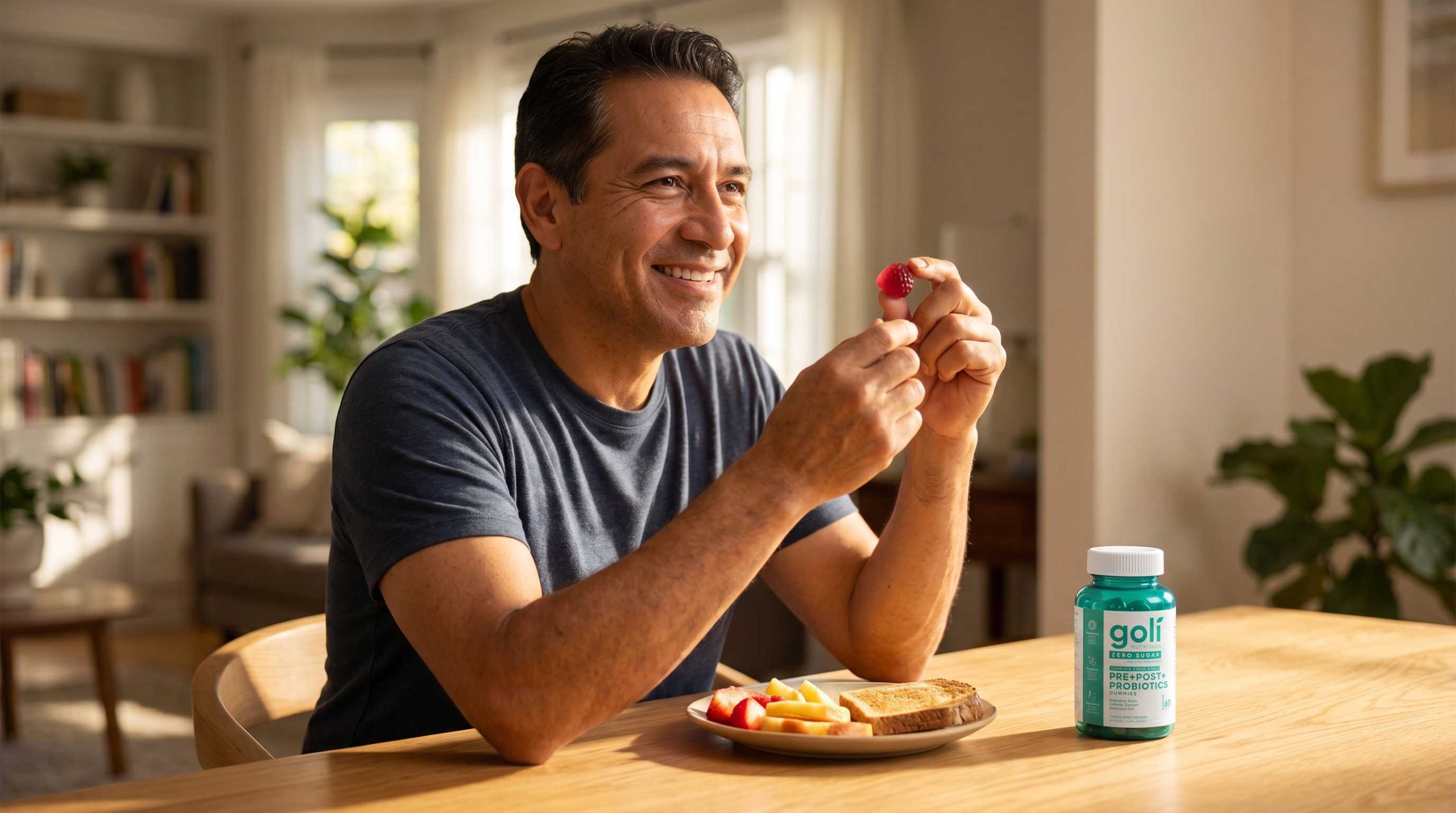
Understanding the Probiotic Food Spectrum does not mean abandoning probiotic foods. It means using them strategically for what they reliably provide: a diverse, enjoyable, nutritious contribution to gut microbiome health, rather than expecting them to function as a clinical supplement equivalent.
A practical probiotic food routine builds around the high-reliability tier as daily anchors. Daily kefir or yogurt with live and active cultures provides a consistent, buffered bacterial delivery with genuine CFU counts. Raw sauerkraut or kimchi adds fermented vegetable diversity. Different bacterial strains and fermentation compounds that complement dairy sources. Variable-reliability foods like miso and kombucha add enjoyment and additional fermentation byproducts; they are worthwhile dietary additions but should not be counted as core probiotic delivery.
The gap that dietary sources consistently create is dose consistency and strain specificity. No probiotic food reliably delivers DE111 (Bacillus subtilis), a spore-forming strain that survives stomach acid through its natural spore structure and colonizes the small intestine, where it competes with gas-producing bacteria. No probiotic food delivers XOS prebiotic fiber in a specified dose alongside the bacteria. No probiotic food delivers MCC1849, a postbiotic component that activates gut-associated lymphoid tissue through a mechanism that does not require live bacterial colonization.
These gaps are where Goli Pre+Post+Probiotics fills in. Not as a replacement for dietary probiotic sources but as the daily clinical baseline that makes the bacterial delivery from food sources more impactful.
NIH NCCIH confirms that dietary probiotic sources and supplement probiotics serve complementary roles, with dietary sources contributing strain diversity and nutrient synergy, and supplement probiotics providing dose consistency and strain specificity that food sources cannot reliably achieve (NIH NCCIH probiotics overview).
How to Read Probiotic Food Labels
Even within the high-reliability tier, label reading separates effective choices from marketing. Three label elements distinguish a probiotic food that delivers from one that does not.
The pasteurization signal: raw, unpasteurized, or refrigerated in the labeling suggests live cultures are intact. “Shelf-stable” or “pasteurized” indicates heat processing that has killed bacteria. For sauerkraut and kimchi, refrigeration is the clearest proxy. Genuinely live culture products require refrigeration; heat-processed products do not.
The live and active cultures claim: for yogurt and kefir, the “live and active cultures” designation (used by the National Yogurt Association) indicates the product meets a minimum bacterial threshold. Products without this designation may have been heat-treated after fermentation.
The added sugar content: for yogurt and kefir, high added sugar content counteracts the probiotic benefit by selectively feeding the harmful gut bacteria the probiotic bacteria are trying to suppress. Unsweetened or low-sugar varieties produce a more favorable gut environment for the introduced bacteria.
NIH NIA confirms that for dietary supplements and functional foods including probiotic sources, consistent daily use at appropriate doses in formats that maintain active compound viability produces the most consistent health outcomes.
Building Gut Health Through Food and Supplement Together
WebMD confirms that the most commonly recommended probiotic foods include yogurt, kefir, kimchi, sauerkraut, and kombucha, and that choosing varieties with live and active cultures is the critical label distinction for ensuring bacterial content (WebMD probiotic foods overview). The most effective approach to probiotic-supported gut health uses dietary sources and a targeted supplement as complementary inputs rather than alternatives.
High-reliability probiotic foods – such as kefir, raw kimchi or sauerkraut, and live-culture yogurt – can contribute meaningful bacterial diversity to the gut microbiome. Different fermented foods contain different bacterial strains, and microbiome research consistently suggests that strain diversity correlates with better gut resilience than any single strain in isolation. Eating diverse fermented foods builds a richer microbial ecosystem than any supplement can alone.
A targeted supplement fills the dose consistency and strain specificity gaps that food sources cannot reliably cover. Goli Pre+Post+Probiotics delivers DE111 spore-forming probiotic, XOS prebiotic fiber for colonization support, and MCC1849 postbiotic for immune activation, a three-component synbiotic formula that works alongside dietary probiotic sources rather than competing with them.
A dietary-plus-supplement probiotic routine might combine morning kefir or live-culture yogurt with breakfast for microbial diversity and Goli Pre+Post+Probiotics gummies for a more consistent supplemental dose. In this approach, each component contributes its own strengths – food sources provide diversity, while supplementation can offer greater dose consistency.
The Supplement Gap: What Probiotic Foods Cannot Provide
Even a diet consistently rich in high-reliability probiotic foods leaves three gaps that a targeted supplement fills.
Spore-forming strain access: no common dietary probiotic source contains spore-forming bacteria like Bacillus subtilis DE111. The high-reliability tier foods all contain Lactobacillus and Bifidobacterium species, which are fragile vegetative bacteria that require the dairy matrix for significant gastric acid survival. DE111 forms heat-stable, acid-resistant spores that survive stomach acid through their natural structure and germinate in the small intestine, a survival mechanism no food source currently delivers.
Prebiotic fiber pairing at a specified dose: probiotic foods do not pair a specified dose of prebiotic fiber with the probiotic bacteria they deliver. XOS (xylooligosaccharides) prebiotic fiber, added at a specified dose alongside the probiotic bacteria, selectively feeds the introduced strains and improves their colonization outcomes. You could eat a probiotic food and a prebiotic food in the same meal, but you cannot control the doses or the pairing specificity the way a synbiotic supplement does.
Postbiotic GALT activation: no dietary probiotic source delivers MCC1849, the heat-treated Lactobacillus postbiotic that activates gut-associated lymphoid tissue through its bacterial cell wall components. Dietary fermented foods produce fermentation byproducts that interact with the gut immune environment, but the targeted GALT activation mechanism of a heat-treated postbiotic is not replicated through food.
Common Myths About Probiotic Foods
“Fermented food is the same as probiotic food.” Fermented foods include sourdough bread, wine, vinegar, and chocolate, where fermentation produces flavor but no live bacterial delivery. Only fermented foods containing live bacteria in sufficient quantities qualify as probiotic foods.
“More fermented foods means a better gut.” Diversity matters more than volume. Introducing large quantities of a single strain does not proportionally increase health outcomes.
“Cooking kills probiotics, so cooked fermented food is worthless.” Fermentation byproducts – acids, enzymes, bioactive peptides – survive cooking. Miso soup and cooked tempeh have genuine nutritional value from their fermentation process even without live bacterial delivery.
“Probiotic supplements are always better than probiotic foods.” Supplements provide dose consistency and strain specificity; foods provide strain diversity and whole-food nutrient synergy. The most effective approach uses both.
Frequently Asked Questions: Probiotic Foods
What foods are highest in probiotics?
Dairy kefir is typically highest in both CFU count and strain diversity, with well-made kefir reaching 10 to 100 billion CFU per cup across 12 or more bacterial strains. Raw, unpasteurized kimchi and sauerkraut follow in CFU concentration. Live culture yogurt is consistently reliable though less diverse than kefir. For a supplement approach that delivers a specific spore-forming strain at a clinical dose regardless of what you ate that day, Goli Pre+Post+Probiotics delivers DE111, XOS prebiotic fiber, and MCC1849 postbiotic in a zero-sugar daily gummy. Consistency is the mechanism.
Are probiotic foods as effective as supplements?
For different goals, yes and no. Probiotic foods provide strain diversity and whole-food nutritional synergy that supplements cannot replicate. Supplements provide dose consistency, named strain specificity, and formulation precision that food sources cannot deliver reliably. The most consistent evidence for specific health outcomes: blood sugar, gut motility, immune response, comes from supplement studies using defined strains at defined doses. Probiotic foods are an excellent complementary input; they are not a substitute for a targeted supplement when dose consistency is the goal.
Can you get enough probiotics from food alone?
For many people, yes. A diet rich in high-reliability probiotic foods – daily kefir, regular raw fermented vegetables, live culture yogurt – provides meaningful bacterial input. For targeting specific gut health outcomes (reducing bloating, supporting immunity, managing post-antibiotic recovery), the dose consistency and strain specificity of a targeted supplement are difficult to achieve through food sources alone, because no probiotic food consistently delivers a named strain at a confirmed dose to the gut.
What probiotic foods are best for gut health?
For overall gut microbiome support, the most evidence-backed dietary probiotic sources are kefir (highest CFU and strain diversity, buffered gastric transit), raw kimchi and sauerkraut (Lactobacillus diversity from lacto-fermentation), and live culture yogurt (consistent, widely available, dairy-buffered). The limitation of all three: they do not deliver spore-forming strains like DE111, which survive stomach acid through a different mechanism and colonize the small intestine more reliably than standard Lactobacillus strains.
Do probiotic foods survive digestion?
Yes, partially, with meaningful variation. Dairy-based fermented foods benefit from the milk matrix buffering stomach acid, improving bacterial survival through the gastric environment. Non-dairy fermented foods without a buffering matrix see higher bacterial attrition through the stomach. Spore-forming bacteria like Bacillus subtilis DE111 in supplements survive stomach acid through their spore structure regardless of the food matrix, a survivability advantage that no dietary probiotic source can replicate.
How often should you eat probiotic foods?
Daily consumption of at least one high-reliability probiotic food produces the most consistent microbiome benefit, based on the research showing that gut bacteria populations require ongoing reinforcement to maintain their populations against competition from other gut species. Daily kefir or yogurt as a baseline, with raw fermented vegetables several times per week, represents an evidence-aligned probiotic food routine. The consistency principle applies to dietary sources just as it does to supplements: daily intake produces better outcomes than sporadic high-dose consumption.
How Goli Pre+Post+Probiotics Fits the Probiotic Food Spectrum
After many consecutive days on TikTok Live answering questions about probiotic foods from thousands of people, the most common scenario is someone who eats yogurt every morning and kimchi a few times a week, has made significant effort to incorporate fermented foods, and still experiences bloating, irregular digestion, or inconsistent results. When you trace their routine through the Probiotic Food Spectrum, the dietary sources are in the right tier, but the dose consistency and strain specificity gaps are not filled.
Goli Pre+Post+Probiotics fills those gaps specifically. DE111 (Bacillus subtilis) is a spore-forming strain that survives gastric transit without the dairy-buffering advantage that makes kefir the most reliable food source. XOS prebiotic fiber feeds the introduced bacteria, creating a competitive advantage for colonization that dietary fermented foods cannot provide at a consistent dose. MCC1849 activates gut-associated lymphoid tissue through a postbiotic mechanism that dietary probiotic sources do not address.
Two gummies daily alongside a probiotic-food-rich diet is the complete approach.
All six certifications confirm the formulation standard: Gluten-Free, Non-GMO, Vegan, Gelatin-Free, Physician-Owned, and Science-Backed.
Probiotic Food Spectrum pricing
You May Also Like
Building a complete dietary supplement picture means knowing which foods serve which purpose. For readers also evaluating when apple cider vinegar outperforms white vinegar for health applications and why the gummy format solves liquid ACV’s consistency problem, the Vinegar Application Guide maps exactly when each vinegar is the right tool.
The Bottom Line
The Probiotic Food Spectrum confirms that not all probiotic foods deliver equally. Kefir, raw sauerkraut, kimchi, and live culture yogurt sit at the high-reliability end. Pasteurized fermented foods, sourdough, and commercial kombucha sit at the low-reliability end. No dietary source reliably delivers spore-forming strains at a consistent clinical dose. Goli Pre+Post+Probiotics fills the dose consistency and strain specificity gap that probiotic foods leave open.
Eat daily kefir or live culture yogurt for strain diversity and whole-food gut support. Take two Goli Pre+Post+Probiotics gummies with breakfast for the DE111, XOS, and MCC1849 clinical baseline. More than 750,000 Zero Sugar 3 Pack bundles have been sold on TikTok Shop since late May 2025. People who got consistent results combined the right dietary sources with the right supplement format.
References
- PMC: Functional properties of probiotics in food sources and their health bioactivities 2024
- NIH Office of Dietary Supplements: Probiotics health professional fact sheet on strain viability and dosing
- Cleveland Clinic: Probiotic foods list and evaluation for gut health
- Mayo Clinic: Probiotics questions and answers on dietary sources and supplementation
- NIH National Center for Complementary and Integrative Health: Probiotics what you need to know
- WebMD: Probiotic foods overview and top dietary sources for gut health