
Maybe a recipe calls for it, or a wellness video swears by it, and now you are eyeing that cloudy bottle wondering what you are about to put in your mouth. So what does apple cider vinegar taste like? It is a fair thing to want to know before the first sip, because the smell alone can serve as a warning.
The honest answer is that apple cider vinegar is bold. It is sharp, sour, and tangy, with only a faint hint of the apples it came from. It can catch you off guard the first time you try it. Picture the tang of a pickle brine, then sharpen it and strip away most of the salt, and you are in the right neighborhood.
This guide breaks down exactly what to expect, why it tastes that way, how the raw and filtered versions differ, and a few easy ways to enjoy it without the pucker.
The Short Answer
What does apple cider vinegar taste like? It tastes sharp, sour, and tangy, with a strong, pungent aroma and only a faint apple sweetness behind the acidity. The bold sourness comes from acetic acid, the compound created during fermentation. Raw, unfiltered versions add a slightly earthy, cloudy note from the mother. Most people find it quite intense on its own.
Why Apple Cider Vinegar Tastes the Way It Does
That signature sourness is not an accident; it is chemistry. Apple cider vinegar is made in two fermentation steps. First, yeast turns the natural sugars in apple juice into alcohol. Then bacteria convert that alcohol into acetic acid. A United Nations food fermentation guide explains that the acetic acid produced when alcohol ferments is what gives vinegar its characteristic sour taste.
By the end of fermentation, most of the original apple sugar is gone, which is why the sweetness you might expect barely shows up. West Virginia University Extension puts it plainly: the bacteria that turn cider into vinegar create acetic acid, and that is what gives vinegar its sharp, sour taste. A typical bottle sits around five percent acidity, the standard strength Penn State Extension describes for cider and white vinegar alike. Research on vinegar’s acids adds that while acetic acid dominates the flavor, smaller amounts of malic and other organic acids round it into a slightly more complex, less one-dimensional sourness than plain white vinegar. The acidity itself is no small thing, since apple cider vinegar sits at a low pH of roughly two to three, which is part of why that first hit feels so sharp.
The Three-Note Profile

Here is a simple way to map the flavor, a mental model worth calling the Three-Note Profile. Three distinct notes tend to land in sequence, with a fourth layer in raw versions.
Note one: the sour punch
Note two: the pungent tang
Close behind comes a pungent, almost nose-tingling tang – the part that hits your sinuses as much as your tongue. That bracing quality is why a straight sniff can make you pull back. It reads as sharp and acidic rather than smooth or mellow, and it lingers for a moment after you swallow. If you have ever caught a whiff while opening the bottle and felt it at the back of your nose, that is this note announcing itself before you even taste it.
Note three: the apple whisper
Last, and faintest, is the apple itself. An analysis of fruit vinegars found that acetic acid makes up the large majority of the acids in apple vinegar, which is exactly why the fruit takes a back seat. You may catch a thin, tart fruitiness underneath the sour, but it is more suggestion than statement. Do not expect anything like apple juice or fresh cider. Think of it less as eating an apple and more as a distant memory of one – a faint sweetness that softens the edges of the sour without ever taking center stage.
The earthy layer in raw, unfiltered ACV
Raw, unfiltered ACV adds one more dimension. The cloudy strands floating in the bottle are the mother – a natural byproduct of fermentation. It gives raw versions a slightly thicker feel and an earthier, more savory edge. Some people love that depth, while others find it a little funky at first. Give it a gentle swirl before pouring and those strands disperse through the liquid, which is exactly what you want, since the mother is prized by raw-vinegar fans rather than something to strain out.
Filtered Versus Raw: How the Taste Changes
The two main styles on the shelf taste noticeably different. Filtered, pasteurized ACV is clear, with a cleaner and more straightforward sour bite. Raw, unfiltered ACV keeps the mother, so it carries that earthy depth and a fuller mouthfeel. A study on ACV flavor describes how the fermentation process and its byproducts shape the final sensory profile, including subtle fruity and floral aromas. If you are brand new to it, the filtered kind is the gentler introduction, while raw is the one most wellness fans reach for. In a glass of water the difference narrows, but in a spoonful straight from the bottle it is obvious. Filtered ACV reads as clean and tart, while raw reads as rounder and more rustic. Neither is wrong, it comes down to whether you want a crisp sour or a fuller, fermented character.
How It Compares to Other Vinegars
Placing apple cider vinegar next to its shelf mates makes its flavor easier to picture. Distilled white vinegar is the harshest and most one-dimensional – a pure, biting sour with no fruit at all. Balsamic vinegar sits at the opposite end – dark, syrupy, and almost sweet from long aging. Rice vinegar is the mildest and softest of the common types – gently tangy and a touch sweet. Red and white wine vinegars are sharp and bright with a faint grape character.
Apple cider vinegar lands in the middle of that map. It is bolder and more pungent than rice vinegar, softer and fruitier than distilled white, and far less sweet than balsamic. If you already know any of those tastes, you can triangulate ACV as a sharp, tangy sour with a thin apple thread running through it.
Common Myths About How Apple Cider Vinegar Tastes
A few assumptions trip people up before the first taste.
The first is that it tastes like apples. It does not, at least not much. The fruit shows up only as a faint background note, because fermentation converts nearly all the apple sugar into acid.
The second is that all vinegars taste identical. They do not. Apple cider vinegar is generally softer and fruitier than the harsh, one-dimensional bite of distilled white vinegar, thanks to its apple base and, in raw types, the mother.
The third is that the cloudy sediment means the bottle has spoiled. It has not. That haze is the mother, and it is a normal, harmless sign of a raw, unfiltered product.
How to Make It Easier to Enjoy
You do not need to drink it straight, and in most cases, it is better not to. The simplest solution is dilution. One to two tablespoons stirred into a tall glass of water tames the sharpness and is gentler on your throat and teeth. A spoonful of honey, a squeeze of lemon, or a cinnamon stick softens it even further.
Many people skip drinking it altogether and use it where it shines: in salad dressings, marinades, and sauces. There, the acidity brightens other flavors instead of dominating them, and the harshness all but disappears. If you do sip it as a drink, a straw helps keep the acid off your teeth. Sparkling water and a touch of fruit juice can turn it into a homemade vinegar soda, and a small pour into a smoothie disappears into the other flavors entirely. Cooking with it is the most foolproof route of all, because heat and other ingredients mellow the bite while keeping the bright, tangy lift it adds to a dish. The goal is the same in every case – surround the acid with something so it stops standing alone.
Is the Taste an Acquired One?
For most people, apple cider vinegar is an acquired taste. That first undiluted sip can be a genuine shock, but diluted and used in food, it grows on many people within a few tries. Your palate adjusts faster than you might think.
That said, if the sourness simply is not for you, that is completely normal. It is the single most common reason people abandon a daily ACV habit. The encouraging part is that the taste no longer has to be the price of admission for the routine. It helps to remember that almost every bold fermented food – from kombucha to strong cheese to black coffee – tends to divide people at first and win many of them over with repetition. Apple cider vinegar follows the same arc, so give it a handful of diluted tries before you decide it is not for you.
What Does Apple Cider Vinegar Taste Like? Your Questions Answered
Does apple cider vinegar taste like apples?
Only faintly. While it is made from apples, the two rounds of fermentation convert almost all of the fruit’s natural sugar into acetic acid. What is left is mostly sharp and sour, with a thin, tart apple note hiding in the background. If you are expecting the sweetness of apple juice or cider, it will surprise you, because the apple is more of a whisper than the main event.
What does apple cider vinegar taste like in water?
Much friendlier. Diluting one to two tablespoons in a full glass of water turns the aggressive sourness into a mild, almost lemonade-like tartness, especially if you add a little honey. The burn and the pungency fade, leaving a refreshing tang. This is how most people who drink ACV actually take it, and it is by far the easiest way to enjoy the flavor.
Why does apple cider vinegar taste so strong?
The intensity comes from acetic acid, which makes up roughly five percent of the liquid and gives it a low pH of about two to three. That high acidity is what creates the sharp sourness and the pungent, nose-tingling aroma. Raw, unfiltered versions taste even bolder because the mother adds an earthy, savory layer on top of the acid.
Can you drink apple cider vinegar straight?
It is not recommended. Undiluted ACV is harsh enough to irritate your throat and stomach, and its acidity can wear on tooth enamel over time. Always dilute it in plenty of water first, and never take it on an empty stomach. If the goal is a daily routine, gentler formats make far more sense than shots of straight vinegar.
Does apple cider vinegar taste bad?
That is subjective. On its own it is undeniably intense, sharp, and sour, which many people dislike at first. But diluted, sweetened, or folded into food, it becomes pleasantly tangy and even craveable for some. Calling it bad is unfair, it is just bold, and bold flavors usually need a little taming to shine.
Where Goli ACV Gummies Fit
If the sour bite is the only thing standing between you and an apple cider vinegar habit, the obvious move is to keep the vinegar and lose the pucker.
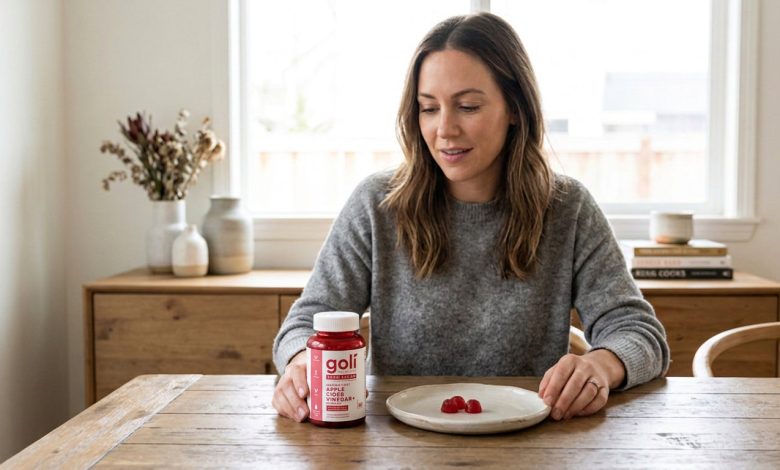
That is the whole idea behind Goli ACV Gummies. They pack real apple cider vinegar into a soft, apple-flavored chewed gummy, so you get the routine without the harsh sip, the throat burn, or the acid sitting on your teeth. Each one carries supporting nutrients like vitamins B9 and B12, with a touch of beetroot and pomegranate for flavor and color. Because they actually taste good, the daily habit is easy to keep, and consistency is what makes any routine worth starting in the first place. That last point matters more than it sounds, because the benefit of any vinegar routine comes from sticking with it, not from gritting your teeth through a single sour shot.
I made the switch from sipping diluted vinegar myself, and across more than 200 days of TikTok Live the comment I hear most is relief that ACV no longer has to taste like a dare. One viewer told me she had poured three different bottles down the drain before trying the gummies. If skipping the sour shot sounds good, you can grab the current reader discount and taste the difference.
You May Also Like
If you are weighing how different supplements taste and fit into a daily routine, you might also like our guide to whether ashwagandha makes you sleepy, which clears up another common wellness question.
The Bottom Line
So, what does apple cider vinegar taste like? Sharp, sour, and pungent, with a faint apple whisper and, in raw versions, an earthy edge from the mother. The Three-Note Profile is the quick map: a sour punch, a pungent tang, and a trace of fruit. On its own it is bold and acidic, which is why almost everyone dilutes it or cooks with it.
Today, you can do two easy things. If you want to drink it, start with one tablespoon in a big glass of water and adjust from there. If the taste is your sticking point, pick a format you will actually look forward to.
That is why so many people reach for the easier option. Goli has sold more than 10 billion gummies worldwide, a sign of how many folks would rather keep the habit than fight the flavor. The best version of any healthy routine is the one you will happily repeat tomorrow.
References
- Fermented Fruits and Vegetables: A Global Perspective (Vinegar). Food and Agriculture Organization of the United Nations.
- Characterization of Fruit Vinegars via Bioactive and Organic Acid Profile Using Chemometrics. Foods, MDPI (2023).
- Lactic Acid Bacteria in Vinegar Fermentation: Diversity, Functionality and Health Benefits. Foods, MDPI / National Library of Medicine (2025).
- Metabolomic Analysis of the Effects of a Mixed Culture on the Physicochemical and Quality Characteristics of Apple Cider Vinegar. Frontiers in Nutrition (2023).
- Apple Cider Vinegar Myths and Facts. West Virginia University Extension.
- Advice About Vinegar. Penn State Extension.