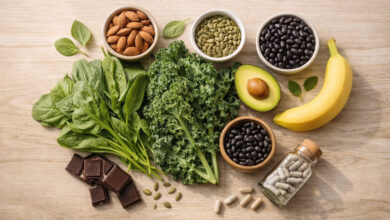

The spirulina and chlorella benefits conversation usually treats these two algae as if they were interchangeable green powders. They are not. Spirulina is a cyanobacterium commonly sold as a blue-green algae supplement, while chlorella is a true green microalga with a different cell structure, nutrient profile, and research record.
That difference matters.
Across Goli’s catalog, worldwide gummy sales have passed 10 billion units since 2018, but commercial scale cannot tell you whether a greens ingredient has been studied at the dose sitting in your product. The human evidence for spirulina and chlorella is strongest when you separate the two first, then compare where their results actually overlap.
The Short Answer
Spirulina and chlorella benefits overlap most around cardiometabolic markers, but the evidence is not identical. Spirulina has the stronger recent signal for blood pressure and several lipid or glucose outcomes. Chlorella has human data for cholesterol and other metabolic markers, though results vary by review. Neither replaces vegetables, and studied doses are usually measured in grams, not tiny blend amounts.
Why Spirulina and Chlorella Get Lumped Together
They are both green.
They are both sold as powders, tablets, capsules, and ingredients inside greens formulas.
They both contain protein, pigments, minerals, and other compounds that make a nutrition label look impressive.
And both have been studied for blood lipids, glucose control, blood pressure, body weight, and antioxidant-related outcomes.
That surface similarity is enough for most marketing.
It is not enough for a useful evidence review.
A 2025 systematic review and meta-analysis looked at randomized controlled trials of both chlorella and spirulina for cardiovascular risk factors. The authors found 12 chlorella studies and nine spirulina studies, but the pooled results were not the same. Chlorella showed neutral effects on blood pressure and lipemia in that analysis, while spirulina produced a statistically significant reduction in diastolic blood pressure, although the magnitude was small and of uncertain clinical importance. The Nutrients review makes the central point well: putting both algae in one category does not make their evidence interchangeable.
That is the starting point.
Same aisle.
Different evidence.
The Two-Lane Algae Map
I use a framework I call The Two-Lane Algae Map.
One lane is spirulina.
The other is chlorella.
You only merge the lanes when the human evidence actually reaches the same destination.
For each claim, ask three questions.
Was the trial on spirulina, chlorella, or both?
What dose did people actually take?
What endpoint changed?
That keeps a cholesterol study on chlorella from becoming a general “greens powder” claim.
It also stops a spirulina blood-pressure result from being borrowed by every blue-green ingredient on the shelf.
The map is simple.
Keep each ingredient in its own lane until the data justify merging them.
Step-by-Step: The Two-Lane Algae Map for Spirulina and Chlorella Benefits
Step One: Start With Spirulina’s Strongest Recent Signal
Blood pressure is one of the more consistent modern spirulina findings.
A 2024 GRADE-assessed systematic review and meta-analysis of randomized clinical trials found that spirulina supplementation reduced systolic blood pressure by about 4.4 mmHg and diastolic pressure by about 2.8 mmHg overall. The effect appeared stronger in people with elevated baseline pressure, people over 50, and interventions lasting more than eight weeks. The Wiley review rated the blood-pressure evidence as moderate quality while also noting the limited number of studies and participants.
That sounds promising.
It still needs context.
A separate 2025 review that pooled both spirulina and chlorella trials found a much smaller spirulina effect on diastolic pressure and no clear effect on the lipid outcomes it assessed.
Different inclusion criteria can change the pooled answer.
That is normal in meta-analysis.
It is also why one headline number should not be treated as the permanent truth.
The reasonable takeaway is that spirulina has a meaningful blood-pressure signal, especially in higher-risk groups, but it is an adjunct question rather than a replacement for medical treatment.
And the research uses gram-level doses.
That part will matter later.
Step Two: Put Spirulina’s Lipid and Glucose Results in the Same Lane
The cardiometabolic story gets broader when more trials are pooled.
A 2025 systematic meta-analysis of 35 randomized trials reported that spirulina supplementation improved fasting glucose, insulin resistance, triglycerides, total cholesterol, LDL cholesterol, HDL cholesterol, systolic and diastolic blood pressure, body weight, BMI, and several inflammatory markers. The Complementary Therapies in Medicine review also graded some outcomes as moderate quality and others lower, which is important because not every statistically significant result carries the same certainty.
That is a lot of endpoints.
Do not turn it into “spirulina fixes metabolism.”
The average weight change was modest.
The blood-pressure changes were modest.
And the included studies covered different populations, doses, and durations.
This is where the evidence is useful without becoming magical.
Spirulina may improve several cardiometabolic markers in some groups.
That is a fair sentence.
“Spirulina detoxes your body and boosts everything” is not.
The human data are more specific than the marketing.
Step Three: Give Chlorella Its Own Evidence Instead of Borrowing Spirulina’s
Chlorella has a real research record.
It just does not always line up with spirulina.
A double-blind randomized placebo-controlled trial in 63 adults with mildly elevated cholesterol tested 5 grams of chlorella per day for four weeks. Compared with placebo, the chlorella group showed favorable changes in total cholesterol, triglycerides, several lipoprotein measures, and carotenoid concentrations. The Nutrition Journal trial directly studied the ingredient at a gram-level daily dose.
That is a useful trial.
It is also one trial.
A 2022 meta-analysis of 10 randomized trials with 539 adults found chlorella reduced total cholesterol and LDL cholesterol, while effects on triglycerides and HDL cholesterol were not significant. The Complementary Therapies in Medicine analysis also noted that only two included studies had actually characterized supplement purity, potency, and contamination.
That quality detail matters.
Algae products come from biological cultivation systems.
What is in the jar depends partly on how well that system was controlled. ANSES guidance on spirulina supplements specifically emphasizes trustworthy sourcing because contamination can be a practical safety issue.
You cannot separate efficacy from sourcing completely.
Step Four: Notice When New Chlorella Reviews Change the Picture
The chlorella literature is a good example of why research summaries age.
A 2026 GRADE-assessed systematic review and dose-response meta-analysis included 33 studies and reported significant reductions in body fat, BMI, body weight, insulin resistance, insulin, LDL cholesterol, total cholesterol, and several liver-related laboratory markers, along with a small increase in HDL cholesterol. The 2026 review concluded that chlorella showed promise for cardiometabolic health but also emphasized differences by species, dose, and participant characteristics and the need for more long-term research.
That looks stronger than the 2025 combined algae review, which found chlorella neutral for blood pressure and lipemia.
The two papers are not necessarily contradictory.
They included different studies.
They pooled different endpoints.
They used different analytical choices.
And the newer review included a much larger evidence base.
This is what an honest update looks like.
The chlorella lane has become more interesting.
It has not become settled.
If a supplement article cannot tolerate new evidence changing the strength of a conclusion, it was written too confidently in the first place.
Step Five: Compare the Studied Dose With the Product in Your Hand
This is the step that matters most at the shelf.
Spirulina trials frequently use grams per day.
Chlorella trials frequently use grams per day.
Five grams is 5,000 milligrams.
That is very different from a proprietary blend where individual ingredient amounts are not disclosed.
This is why ingredient-list recognition is not enough.
Seeing “spirulina” in a formula does not mean you are taking the amount used in a trial.
Seeing “chlorella” does not mean the cholesterol data apply.
And seeing both on the same label does not create a combined benefit that has never been studied.
The amount has to be visible.
The form has to make sense.
The source has to be trustworthy.
Then you can ask whether the evidence is relevant.
That sequence saves a lot of money.
The Myth: Taking Spirulina and Chlorella Together Must Be Better
This sounds logical.
Two algae.
Two nutrient profiles.
Two research records.
Surely the combination should cover more ground.
Maybe nutritionally.
Not automatically clinically.
Most of the human evidence evaluates spirulina or chlorella as separate interventions.
The fact that each has some positive results does not prove the pair produces an additive effect.
That would need a trial on the pair.
This is the same mistake people make with supplement stacks everywhere.
Benefit A plus benefit B becomes “A and B together must be better.”
Biology does not promise that.
Dose can change.
Absorption can change.
The total serving can become too small for either ingredient to match its studied amount.
And a blend can make it harder to tell what you are actually taking.
The combination is not a problem.
The assumption is.
Treat a spirulina-chlorella blend as its own formula until evidence shows otherwise.
What a Useful Algae Result Should Look Like

A useful result is specific.
If you are taking spirulina because of cardiometabolic evidence, the measurable outcome is something like blood pressure or a laboratory value.
If you are taking chlorella for cholesterol support, the outcome is a lipid panel.
If you are taking either because you want a small nutritional addition, then the goal is simply consistency and dietary support.
Those are different standards.
Do not judge a cholesterol supplement by whether you “feel” it.
You probably will not.
And do not judge a nutrition top-up as if it should reproduce the effect of a gram-level clinical trial.
That is not what the serving was built to do.
For greens products in general, how to get more greens makes the same distinction from the food side: supplements can add something, but they do not replace the fiber, water, volume, and food structure of actual vegetables.
That rule still applies here.
Who This Is For
This article is for someone who keeps seeing spirulina and chlorella listed next to each other and wants to know whether the pair really earns the health halo around it.
Maybe you are choosing a greens powder.
Maybe you are looking at tablets.
Maybe the front label says “superfoods” and the back label contains a dozen algae, grasses, and vegetable extracts.
The question is not whether those ingredients sound healthy.
The question is what each one contributes at the amount actually supplied.
This is also for people who read about spirulina benefits already and assumed chlorella was basically the same thing.
It is not.
The current research overlaps around cardiometabolic health, but the strength and direction of the evidence differ.
That is worth knowing before you shop.
How Long to Judge Spirulina or Chlorella
The trials are not one-week experiments.
The spirulina blood-pressure literature often becomes more convincing after eight weeks or longer.
Chlorella lipid trials range from several weeks upward.
The 2014 cholesterol study used four weeks at 5 grams per day.
So I would not judge either ingredient by how you feel after breakfast.
Give the outcome the timeline used in the research.
And use the same outcome.
If your goal is blood pressure, measure blood pressure.
If your goal is cholesterol, use a lipid panel with your clinician.
If your goal is simply a greens top-up, consistency is the measure.
This sounds obvious.
It is not how supplement marketing usually works.
Marketing asks whether you feel healthier.
Research asks whether a defined endpoint changed.
Stick with the second one.
Spirulina and Chlorella Benefits: Common Questions
Is spirulina better than chlorella?
Not across every outcome. Spirulina currently has a stronger recent signal for blood pressure and several cardiometabolic markers, while chlorella has its own evidence for cholesterol, weight, insulin-related markers, and other outcomes. The better choice depends on the endpoint and the studied dose.
Can you take spirulina and chlorella together?
Many products combine them, but human evidence for the pair as a unique intervention is much thinner than the evidence for each ingredient separately. Taking both does not automatically make the result stronger.
Which is better for cholesterol, spirulina or chlorella?
Both have studies suggesting lipid benefits. Chlorella has randomized trials and meta-analyses showing reductions in total and LDL cholesterol, while spirulina meta-analyses also report favorable lipid changes. Neither should replace prescribed cholesterol treatment.
How much spirulina or chlorella was used in studies?
Many human studies used gram-level daily amounts. A chlorella cholesterol trial used 5 grams per day, while spirulina trials often fall in a several-gram range. That is why small proprietary blends should not be equated with clinical doses.
Does Goli Supergreens contain a clinical dose of spirulina or chlorella?
Goli Supergreens uses a proprietary Supergreens and Probiotics Blend rather than disclosing gram-level amounts for each individual plant or algae ingredient. I would treat it as a daily nutrition top-up, not as a way to recreate the spirulina or chlorella trials discussed here.
Positioning Goli Supergreens as a Top-Up, Not an Algae Trial
This is where the label has to stay honest.
Goli Supergreens Gummies combine a proprietary Supergreens and Probiotics Blend with vitamins and minerals, and Vitamin B12 is one of the prominent nutrients.
The formula is Vegan, Gluten-Free, Non-GMO, Gelatin-Free, and Kosher.
What it does not give you is a transparent gram-level dose for every individual greens ingredient that can be lined up against the spirulina and chlorella trials in this article.
That changes the claim.
I would use Goli Supergreens as a simple daily nutrition top-up.
I would not use it as proof that I am getting 5 grams of chlorella or a clinically studied spirulina dose.
Those are different jobs.
I also keep two practical cautions visible.
The formula contains iron, so medication interactions can matter.
Greens formulas can contain Vitamin K, which is especially relevant if you use warfarin.
During my past TikTok Lives, one viewer asked whether greens gummies could “count as the vegetables I missed.”
I told her no.
They can add nutrients.
They do not replace the food group.
That remains the standard.
Goli’s global gummy count is now above 10 billion units, but that adoption says more about a repeatable format than it does about algae efficacy. The reason I would choose the product is convenience and a defined daily nutrition role, not because a proprietary blend can borrow the dose-specific trial results above.
You May Also Like
The previous BGD article, Nicotinamide Riboside Benefits, uses the same evidence discipline in another category: a biochemical or ingredient-level effect only earns the outcome the human trial actually measured.
The Bottom Line
Goli Supergreens fits this topic as a small daily nutrition top-up, not as a substitute for gram-level spirulina or chlorella interventions. That distinction is what keeps the product useful without borrowing claims from research on much larger doses.
Today, check the amount. If a product discloses spirulina or chlorella in grams, compare that amount with the human studies. If it hides individual amounts inside a blend, treat the formula as a general greens supplement rather than a clinical algae dose.
Ten billion-plus gummies across the Goli brand show that people will stick with a convenient format. They do not establish the spirulina and chlorella benefits you will personally get from any blend. Dose, sourcing, and the measured endpoint still decide that.
References
- Pinto-Leite M, Martins D, Ferreira AC, et al. “The Role of Chlorella and Spirulina as Adjuvants of Cardiovascular Risk Factor Control: A Systematic Review and Meta-Analysis of Randomised Controlled Trials.” Nutrients. 2025;17(6):943.
- Shiri H, et al. “Spirulina’s impacts on cardiovascular health: Insights from a systematic meta-analysis of randomized controlled trials.” Complementary Therapies in Medicine. 2025.
- Shiri H, et al. “The Effect of Spirulina Supplementation on Blood Pressure in Adults: A GRADE-Assessed Systematic Review and Meta-Analysis of Randomized Clinical Trials.” Phytotherapy Research. 2025;39:397-412.
- Ryu NH, Lim Y, Park JE, et al. “Impact of daily Chlorella consumption on serum lipid and carotenoid profiles in mildly hypercholesterolemic adults: a double-blinded, randomized, placebo-controlled study.” Nutrition Journal. 2014;13:57.
- Sherafati N, et al. “Effect of supplementation with Chlorella vulgaris on lipid profile in adults: A systematic review and dose-response meta-analysis of randomized controlled trials.” Complementary Therapies in Medicine. 2022;66:102822.
- French Agency for Food, Environmental and Occupational Health & Safety. “Food supplements containing spirulina: the importance of choosing trustworthy supply channels.”
- Jafari A, Mardani H, Rasaei N, et al. “Chlorella for health: evidence from a GRADE-assessed systematic review and dose-response meta-analysis.” Systematic Reviews. 2026.