
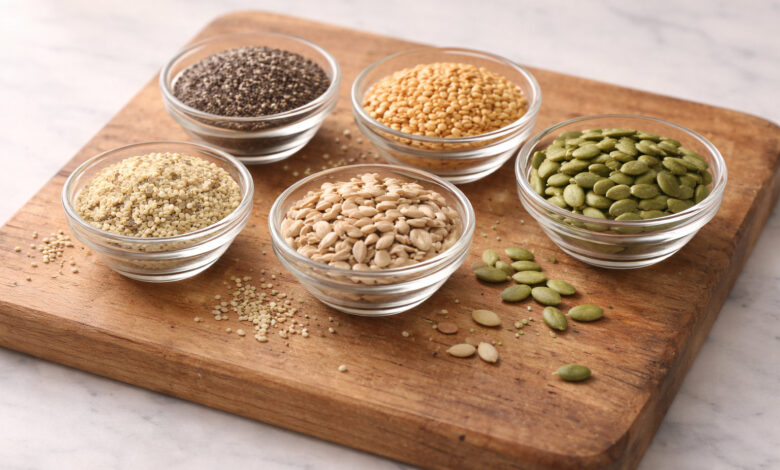
You’ve probably heard seeds are good for you. But understanding seed gut health can feel overwhelming when every source says something different about chia, flax, and other varieties.
The truth is simpler than you might think. Seeds contain special types of fiber that feed beneficial gut bacteria, reduce inflammation, and help maintain digestive balance. Some seeds work through mucilage that forms a gel-like coating. Others provide lignans that convert into anti-inflammatory compounds. A few deliver both soluble and insoluble fiber to keep everything moving smoothly.
The Short Answer
Seed gut health improves through prebiotic fibers that feed beneficial bacteria, mucilage that soothes the digestive tract, and omega-3s that reduce inflammation. Chia and flax offer the most research-backed seed gut health benefits while pumpkin and sunflower seeds add mineral support. Rotating different seed types weekly maximizes microbiome diversity.
What Makes Seeds Different for Gut Health
Seeds aren’t just another source of fiber. They contain unique compounds that interact with your gut microbiome in specific ways.
The outer coating of many seeds produces mucilage when mixed with water. This gel-like substance creates a protective layer in your digestive tract. It slows digestion, helps food move smoothly, and gives beneficial bacteria time to extract nutrients.
Inside seeds, you’ll find both soluble and insoluble fiber. Soluble fiber dissolves in water and feeds gut bacteria. Insoluble fiber adds bulk and keeps waste moving. Most foods contain one or the other. Seeds often contain both in meaningful amounts.
Seeds also deliver lignans and polyphenols. Your gut bacteria convert these compounds into metabolites that reduce inflammation and protect the gut lining. This process happens only in the colon, where your microbiome is most concentrated.
Unlike processed fiber supplements, seeds come with omega-3 fatty acids, minerals, and antioxidants. These work together to support not just digestion but whole-body health through the gut-brain axis.
The Seed Rotation Method
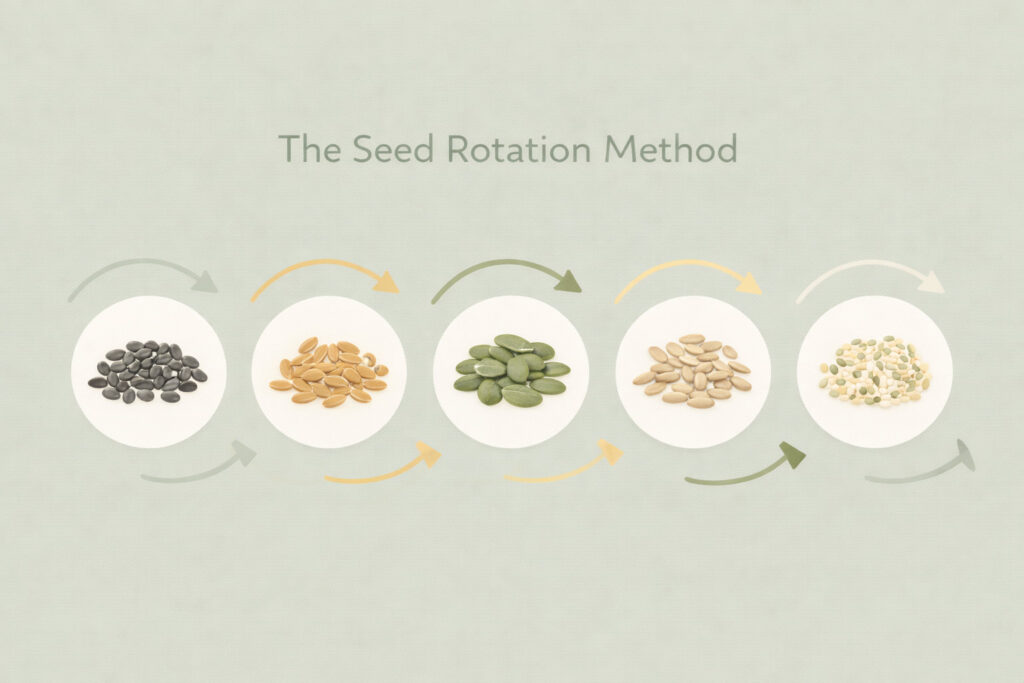
This framework helps you get the most benefit from seeds without the guesswork. Instead of sticking to one type, you rotate different seeds throughout the week to maximize fiber diversity and microbial support.
The method is simple. You choose three to four seed types and alternate them across the week. Monday might be chia. Wednesday could be ground flax. Friday brings pumpkin seeds. This rotation exposes your gut bacteria to different fiber structures, giving various microbial species the fuel they prefer.
Research shows that fiber diversity matters more than total fiber intake for microbiome health. Different bacterial species thrive on different types of fiber. By rotating seeds, you support a wider range of beneficial bacteria rather than feeding just one or two dominant strains.
The Seed Rotation Method also prevents adaptation. When you eat the same fiber source daily, your gut bacteria adjust. The initial benefits may plateau. Rotating keeps the stimulus fresh and maintains consistent results over time.
How Different Seeds Support Your Gut
Chia Seeds
Chia forms a thick gel when soaked. This mucilage coats the digestive tract and slows food passage. The slower transit gives bacteria more time to ferment fiber into short-chain fatty acids like butyrate.
Studies show chia increases production of acetate, propionate, and butyrate in the colon. These fatty acids strengthen the gut barrier, reduce inflammation, and signal fullness to the brain. Chia also enhances growth of Lactobacillus and Bifidobacterium, two beneficial bacterial groups.
One tablespoon of chia provides about 5 grams of fiber. You can eat chia seeds whole. The outer coating softens easily in liquid, releasing the gel and nutrients without grinding.
Chia works well for constipation because the gel adds moisture to stool. It also helps with blood sugar balance by slowing carbohydrate absorption. The high calcium content supports digestive enzyme function.
Flax Seeds
Flax delivers the highest lignan content of any seed. Gut bacteria convert these lignans into enterolignans, which reduce intestinal inflammation and protect the gut lining. This anti-inflammatory effect may support healing in people with digestive sensitivity.
Flax contains about 3 grams of fiber per tablespoon, split between soluble and insoluble types. The soluble fiber feeds bacteria. The insoluble fiber adds bulk and speeds transit time. This combination makes flax effective for both constipation and loose stools.
You must grind flax seeds before eating. Whole flax passes through the digestive tract intact. Grinding breaks the outer shell and releases omega-3s and lignans. Ground flax should be stored in the refrigerator and used within a few weeks.
Flax may be especially helpful during hormonal transitions because enterolignans influence estrogen metabolism. The omega-3 content also supports the gut-brain connection and reduces systemic inflammation.
Pumpkin Seeds
Pumpkin seeds provide zinc and magnesium that activate digestive enzymes and support intestinal muscle contractions. They contain prebiotic fibers that increase Bifidobacterium and Lactobacillus populations.
The fiber content is lower than chia or flax, but pumpkin seeds add protein and healthy fats that slow digestion. They work well as toppings and don’t require grinding.
Sunflower Seeds
Sunflower seeds bring vitamin E and selenium that protect the gut lining from damage. They contain moderate fiber including resistant starch when eaten raw, which bacteria ferment in the colon.
Sunflower seeds support microbiome diversity without dramatically shifting bacterial populations. They work well as maintenance food and don’t require grinding.
Hemp Seeds
Hemp seeds stand out for complete protein and balanced omega-3 to omega-6 ratio. The fiber content is lower but includes soluble fiber that feeds bacteria without causing gas in most people.
The soft texture makes hemp easy to digest for sensitive stomachs. Anti-inflammatory fats support the gut barrier and may help with leaky gut or food sensitivities.
How to Use Seeds for Specific Gut Issues
For Constipation: Start with chia seeds. Mix one to two tablespoons in water or smoothies and drink immediately. The mucilage adds moisture to stool. Ground flax works similarly with a gentler effect. Always soak seeds or mix into liquid, never eat dry.
For Bloating: Hemp seeds are the best starting point due to lower fiber content. Begin with one tablespoon daily. If chia or flax causes bloating, start with one teaspoon and increase slowly over weeks. Grinding seeds reduces gas.
For Microbiome Diversity: Use the Seed Rotation Method with three seed types. Alternate chia, ground flax, and pumpkin or sunflower throughout the week. Aim for two tablespoons total daily split between different seeds.
For Inflammation: Prioritize flax and hemp seeds. Combine one tablespoon ground flax with one tablespoon hemp seeds daily. Add to smoothies or oatmeal. Consider soaking chia overnight for upper GI protection.
Step-by-Step Guide to Starting with Seeds
Step 1: Choose Your Foundation – Pick chia and ground flax to start. Buy whole seeds and grind flax just before use. Store ground flax refrigerated. Chia stays fresh at room temperature.
Step 2: Start Small – Begin with one teaspoon of each seed daily. Mix chia into water or smoothies. Sprinkle ground flax on oatmeal or yogurt. Monitor digestion for three to five days.
Step 3: Increase Gradually – After the first week, increase to one tablespoon of each seed daily if tolerated well. Continue monitoring. Some people feel best at one tablespoon total, others handle two to three tablespoons across different types.
Step 4: Add Rotation – Once you tolerate chia and flax, introduce a third seed. Pumpkin or sunflower seeds work well. Use them two to three times weekly in place of one serving of chia or flax.
Step 5: Maintain Consistency – Stick with your routine for four weeks. Track changes in bowel regularity, bloating, energy, or skin. Adjust rotation based on your experience.
Common Myths About Seeds and Gut Health
Seeds Get Stuck in Intestines – Outdated advice about diverticulitis led to this myth. Research found no link between seed consumption and flare-ups. Seeds pass through safely. If you have active diverticulitis, follow your doctor’s guidance during flare-ups, but long-term avoidance isn’t necessary.
Lectins Damage Your Gut – Some claim lectins cause leaky gut. Humans have eaten lectin-containing foods for thousands of years without widespread damage. Stomach acid, enzymes, and cooking neutralize most lectins. Healthy guts handle remaining amounts fine. Soaking or sprouting reduces lectins further if preferred.
All Seeds Need Soaking – Soaking chia activates gel-forming and aids digestion but isn’t required. Flax should be ground, not soaked. Pumpkin, sunflower, and hemp don’t need soaking or grinding. Eat based on preference.
Seeds Cause More Problems – Initial gas or bloating happens because bacteria adjust to new fiber. This is temporary. If seeds consistently cause problems, reduce the amount and increase slowly, choose lower-fiber options like hemp, or try grinding. True seed allergies exist but are uncommon.
All Seeds Are the Same – Each seed contains different fiber structures, fats, and compounds. Chia excels at gel formation. Flax provides lignans. Pumpkin and sunflower add minerals. Rotating seed types feeds more bacterial species than eating one type.
What to Expect When Adding Seeds to Your Routine
Early Changes: Days 1-7
Most people notice changes in stool consistency within the first few days. Stools may become softer or more regular as fiber adds bulk and moisture.
You might experience mild gas or bloating as bacteria adjust. This typically peaks around day three to five and subsides. Drinking extra water and starting small helps minimize discomfort.
Some people feel fuller between meals. The fiber and healthy fats slow digestion and stabilize blood sugar, reducing cravings and improving energy.
Building Momentum: Weeks 2-4
By week two, gut bacteria have adapted. Bloating often decreases and bowel movements become more predictable.
Energy levels may improve as your gut produces more short-chain fatty acids. These compounds fuel intestinal cells and influence metabolism.
Some people see skin improvements around week three. Clearer complexion or reduced breakouts indicate decreasing gut inflammation and improved nutrient absorption.
Long-Term Benefits: Months 2-3
After two months, your microbiome composition has shifted with increased beneficial bacteria and improved diversity from rotating seed types.
Digestive issues that once felt unpredictable may stabilize. Seeds have become part of a foundation that makes your gut more resilient.
Long-term seed consumption is linked to improved metabolic markers, better immune function, and lower systemic inflammation. These benefits compound over time.
Who Should Be Careful with Seeds
People taking blood thinners should discuss flax and chia with their doctor, as omega-3s have mild blood-thinning effects. Those with hormone-sensitive conditions may want guidance on flax consumption due to its lignan content.
If you have active IBD, Crohn’s, or ulcerative colitis during flare-ups, ground seeds may work better than whole seeds. Work with a gastroenterologist or dietitian. Children under three should only have ground seeds mixed into food to prevent choking risk.
Combining Seeds with Other Gut Health Practices
Seeds and Probiotics
Seeds act as prebiotics, feeding beneficial bacteria. Probiotics add new strains. Together, they work synergistically. The probiotics you take have better survival and colonization when you provide prebiotic fiber.
Take probiotics and seeds at the same meal for maximum benefit. The fiber gives arriving bacteria immediate fuel. You can also pair seeds with fermented foods like yogurt, kefir, or sauerkraut for combined probiotic-prebiotic support.
Seeds and Fermented Foods
Combining seeds with fermented foods creates a complete prebiotic-probiotic ecosystem. Sprinkle ground flax on yogurt, add chia to kefir smoothies, or mix pumpkin seeds into sauerkraut.
The bacteria in fermented foods immediately ferment the seed fiber, producing short-chain fatty acids faster. This may reduce adaptation time and minimize gas compared to seeds alone.
Seeds and Whole Foods
Seeds work best as part of a varied diet with vegetables, fruits, whole grains, and legumes. Aim for 30 different plant foods per week. Seeds count as three to five depending on rotation. This diversity feeds the widest range of gut bacteria.
FAQ About Seed Gut Health
Can seeds improve hormonal bloating?
Seeds may help through multiple pathways. Flax lignans support estrogen metabolism. Omega-3s in flax and chia reduce inflammation during hormonal shifts. Fiber maintains regularity which changes with cycles. Start with one tablespoon ground flax daily during the luteal phase.
Do I need to refrigerate seeds?
Whole chia, pumpkin, and sunflower seeds store at room temperature in airtight containers for months. Whole flax is shelf-stable but grind just before eating. Ground flax and hemp seeds must be refrigerated and used within three to four weeks.
Can I eat seeds with IBS?
Many with IBS tolerate seeds well but responses vary. Start with small amounts of hemp or ground flax. Avoid during active flares. IBS-C often improves with chia. IBS-D may do better with ground flax. Work with a dietitian to personalize.
How much is too much?
Most people tolerate two to three tablespoons total daily. Above this may cause gas, bloating, or loose stools. Start with one to two tablespoons and increase only if tolerated. Consistency at moderate levels beats large sporadic doses.
Can seeds replace vegetables for fiber?
Seeds provide excellent fiber but shouldn’t replace vegetables. Vegetables offer different fiber types, phytonutrients, vitamins, and minerals. Your gut bacteria need variety. Aim for three to five vegetable servings daily plus one to two tablespoons of seeds.
Supporting Your Gut Health Beyond Seeds
While seeds provide excellent prebiotic fiber, stress can undermine even the best dietary habits. Chronic stress triggers cortisol release, which slows digestion, reduces beneficial bacteria populations, and increases gut permeability.
Managing stress supports the gut environment where seeds do their work. Adaptogenic herbs like ashwagandha have been shown to help the body respond to stress more effectively. By supporting a calmer stress response, adaptogens create conditions where prebiotic fibers from seeds can have maximum impact.
Goli Ashwagandha Gummies offer a convenient way to include adaptogenic support alongside your seed routine. The combination of prebiotic fiber from seeds and stress-management support addresses gut health from multiple angles. Seeds feed your bacteria while adaptogens help maintain the calm internal environment your microbiome needs to thrive.
The Bottom Line
The Seed Rotation Method gives your gut bacteria diverse fiber sources by alternating chia, flax, pumpkin, sunflower, and hemp seeds throughout the week.
This week, start with chia and ground flax. Add one teaspoon of chia to your morning water or smoothie. Sprinkle one teaspoon of ground flax on yogurt or oatmeal. Buy whole seeds and grind flax at home, storing it in the refrigerator.
Each week going forward, increase to one tablespoon of each seed if tolerated, then introduce a third seed type. Create a simple rotation schedule and track which combinations work best for your digestion.
Your gut bacteria adapt to the fuel you provide. Seeds give them the fiber, compounds, and nutrients they need to thrive. The benefits compound when you make seeds a consistent part of your routine rather than an occasional addition.
References