
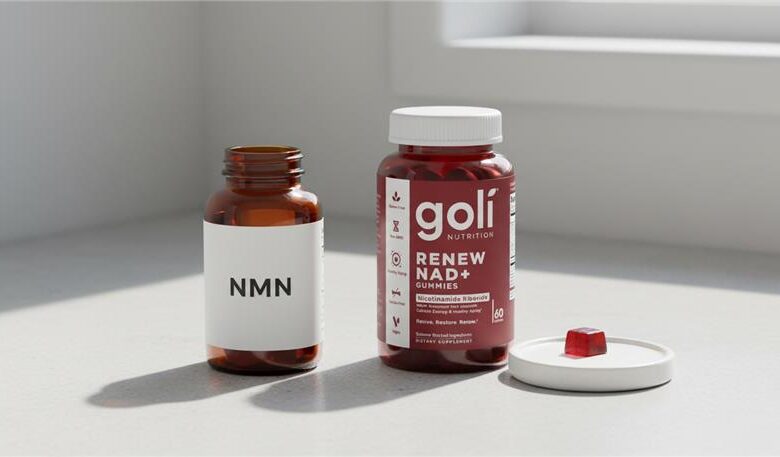
The NAD vs NMN debate has been running in longevity and biohacking circles for years. NMN advocates argue it is more direct. NR advocates point to the longer human trial record. Most comparison articles are written by brands selling one or the other, which means the framing is almost always self-serving. This article is not that. It covers what the research actually shows, including a 2026 randomized controlled trial that provides the most direct human head-to-head data published to date.
The short version: both NMN and NR are NAD precursors, meaning both are converted into NAD by the body. The question of which is better comes down to the quality of the evidence behind each, not the theoretical chemistry. And on that measure, the research tells a more nuanced story than most comparison articles admit.
Over 700,000 Goli Zero Sugar 3 Pack bundles have sold on TikTok Shop in under a year, and 10 billion Goli gummies have been sold worldwide since 2018. The product behind that track record uses NR. Here is why that matters for this comparison.
The Short Answer
Both NMN and NR convert into NAD inside the body, and a 2026 randomized trial in Nature Metabolism found they do it comparably, producing comparable NAD+ increases in healthy adults after 14 days. NR has the longer published human trial record. For the NAD vs NMN decision, what matters most is not the precursor name on the label but the formulation quality protecting it before it reaches the cell.
What NAD, NMN, and NR Actually Are
Before choosing between these two precursors, it helps to understand what each molecule is and where it sits in the same biochemical chain.
NAD (Nicotinamide Adenine Dinucleotide) is the end-product molecule your cells actually use. It powers mitochondrial energy production, activates sirtuins that regulate cellular repair, and drives the AMPK signaling axis. NAD is what your cells need. The problem is that NAD itself does not efficiently cross cell membranes when taken orally, which limits how much reaches the cells that need it most.
NMN (Nicotinamide Mononucleotide) is one step closer to NAD in the biosynthesis pathway. The body converts NMN into NAD through a process that involves a specific enzyme called NMNAT. NMN has a dedicated transporter (SLC12A8) that allows it to enter certain cell types directly, which is why some researchers describe it as the more direct precursor. Human clinical trials on NMN are growing but are still relatively recent, with most published data from the last five years (NMN supplement research overview).
NR (Nicotinamide Riboside) is two steps from NAD in the biosynthesis chain. It is first converted to NMN, then to NAD. NR has been studied in human clinical trials since the mid-2010s, giving it a longer published record than NMN. Multiple randomized controlled trials have documented that oral NR supplementation raises blood NAD+ levels measurably (NR and NAD elevation in humans). The additional conversion step does not appear to meaningfully reduce NR’s effectiveness at raising NAD levels in clinical research.
The Precursor Comparison Method

The Precursor Comparison Method is a three-step framework for cutting through the marketing noise and evaluating any NAD precursor supplement on the evidence that actually matters.
Step One: Check the Human Trial Record
Theoretical biochemistry is not the same as clinical evidence. The relevant question is not which molecule is closer to NAD on a diagram. It is how many well-designed human trials have been completed and what they found.
NR has been the subject of randomized, placebo-controlled trials in humans since 2016. The published data covers blood NAD+ elevation, tolerability, and safety across multiple populations. NMN has fewer completed human trials but the evidence is growing (NMN human trial data). For anyone making a supplementation decision based on evidence depth rather than theoretical superiority, NR’s longer track record remains the more conservative choice.
Step Two: Evaluate the Head-to-Head Data
Until recently, there was no direct human comparison between NR and NMN in a single study. That changed in January 2026. A randomized, open-label, placebo-controlled trial published in Nature Metabolism directly compared NR, NMN, and nicotinamide (Nam) in 65 healthy adults over 14 days (NR vs NMN 2026 Nature trial). The finding was clear: both NR and NMN produced comparable increases in circulatory NAD+ concentrations. Neither precursor meaningfully outperformed the other on the primary endpoint.
This matters because it removes the theoretical advantage NMN advocates have claimed. If NMN were meaningfully more efficient at raising NAD due to its extra phosphate group and dedicated transporter, the head-to-head trial would have shown a significant difference. It did not. The 2026 data suggests both work, and the choice comes down to evidence depth and product quality.
Step Three: Evaluate the Product, Not Just the Ingredient
Knowing which precursor to prioritize is only part of the decision. The other is whether the product delivers it at a dose aligned with research, in a format that protects potency through manufacturing and delivery.
NR degrades when exposed to air, moisture, and heat. A product that uses standard gummy or capsule manufacturing without protecting the NR through the process delivers a degraded ingredient regardless of what the label says. Goli Renew uses a liquid-core gummy format specifically designed to protect the NR from degradation until the moment of consumption. The dose per serving aligns with the amounts studied in published NR clinical trials, reviewed by Goli’s Scientific and Medical Advisory Board which includes physicians from Harvard, Stanford, and Duke (Goli Renew NAD+ product page). The product formulation is the bridge between the research and the result.
What the 2026 Nature Metabolism Trial Actually Found
The January 2026 Nature Metabolism RCT is the most important evidence in this comparison, and it is worth understanding what it measured and concluded.
The study enrolled 65 healthy adults and randomized them to receive NR, NMN, or nicotinamide (Nam) for 14 days. The primary endpoint was circulatory NAD+ concentration. Both NR and NMN produced comparable increases in blood NAD+ levels. Nicotinamide did not produce the same sustained increase, despite being the least expensive and most widely available NAD precursor.
The study also found that NR and NMN both gave rise to nicotinic acid through microbial conversion, which may contribute to their NAD-boosting effects. This highlights why the gut health context matters for anyone supplementing with NAD precursors (NAD decline and aging research).
The practical conclusion: the 2026 data does not support choosing NMN over NR on efficacy grounds. Both raise NAD comparably. The decision returns to the depth of the clinical record, product quality, and formulation protecting the ingredient.
What Actually Matters More Than the Precursor Debate
This comparison consumes attention better directed at two other variables: consistency and formulation quality.
Consistency matters because neither NR nor NMN produces meaningful results from occasional use. Both work by gradually raising and maintaining NAD levels over time. The Nature Metabolism trial measured outcomes at 14 days. Most of the longer NR trials use six to eight weeks as the primary measurement window because that is when the cumulative effects on cellular energy and sirtuin activity are most reliably detectable. A person taking NMN three days a week will get fewer results than a person taking NR every day. The precursor choice is secondary to the habit. The NAD cellular energy guide covers the full cellular mechanism.
Formulation quality matters because NAD precursors are sensitive molecules. Shelf stability, manufacturing conditions, and delivery format all affect how much active ingredient actually reaches the cells. A high-purity NR product with a protective delivery mechanism will outperform a lower-quality NMN product regardless of which molecule has the theoretical edge. The Goli Renew liquid-core format was developed specifically to address this stability problem for NR (WebMD NAD supplement overview).
Who This Comparison Is Relevant For
The NAD vs NMN question is most relevant for adults researching longevity and cellular health supplementation who want an evidence-based choice rather than following brand claims.
If you are already taking NMN and seeing results, the 2026 trial suggests you are not making a wrong choice. If you are deciding which to start with, NR’s longer published trial record makes it the more evidence-supported option.
If you are entirely new to NAD supplementation, the primary question is not NR vs NMN. It is whether to be consistent. Both require daily use over weeks to produce the improvements in cellular energy, cognitive clarity, and recovery that the research documents.
Generally appropriate for healthy adults. Those managing metabolic conditions or taking prescription medications should check with a healthcare provider before starting.
How Long Before Either Precursor Produces Changes
Both NR and NMN begin raising blood NAD+ levels within twenty-four to forty-eight hours of the first dose. The molecular change is rapid. The translation into felt experience takes longer because the downstream effects are cumulative.
Most people begin noticing energy quality changes in the first two to three weeks. More consistent afternoon energy and a gradually clearer cognitive baseline are the most commonly reported early signals. By weeks four to six, the changes are typically consistent enough to evaluate clearly.
The 2026 Nature Metabolism trial used fourteen days as its window for measuring blood NAD+ elevation specifically. The functional and subjective changes take longer. Give either precursor six weeks of daily use before drawing conclusions. For a week-by-week breakdown of what to expect, the does Goli NAD work guide covers the user experience timeline in detail.
Frequently Asked Questions: NAD vs NMN
NAD vs NMN: which is better?
Based on the most current head-to-head human data, published in Nature Metabolism in January 2026, NR and NMN produce comparable increases in circulatory NAD+ after 14 days. Neither is meaningfully superior on the primary efficacy endpoint. NR has a longer published human trial record. Evidence depth and product formulation quality matter more than which precursor name is on the label.
Why I stopped taking NMN?
The most common reasons are inconsistent results from inconsistent use, cost relative to perceived benefit, or switching to NR after reviewing the comparative evidence. The 2026 Nature Metabolism RCT suggests NMN does raise NAD comparably to NR, so discontinuation is usually a habit or cost issue rather than an efficacy one.
NMN vs NAD+ for anti aging?
NAD as an oral supplement has poor cellular uptake. NMN and NR both raise NAD levels through the precursor pathway. The 2026 RCT found both increase circulatory NAD+ comparably. The longevity research on both is ongoing, with sirtuin activation and mitochondrial health the primary mechanisms of interest.
NMN vs NR?
NMN and NR are both NAD precursors. NMN is one step closer to NAD in the biosynthesis chain, but the 2026 Nature Metabolism trial found both raise blood NAD+ comparably in humans. NR has over a decade of published human clinical trial data. NMN has a shorter but growing record. NR’s longer evidence base makes it the more conservatively supported option.
NMN supplement vs NAD+ injection?
NAD+ injections deliver NAD directly into the bloodstream and require clinical administration, making them impractical for daily use. NMN and NR as oral supplements raise NAD through the precursor pathway with documented human trial efficacy. For daily wellness use, oral supplementation is the practical route. IV NAD is a clinical intervention with a different use case.
Do NAD gummies actually work?
Yes, based on the clinical evidence. Multiple randomized human trials have documented that NR supplementation raises blood NAD+ levels measurably, with the 2026 Nature Metabolism RCT confirming comparable results for both NR and NMN. The mechanism is real. Individual results vary depending on consistency of use, starting NAD levels, and the quality of the product formulation.
How fast do NAD gummies work?
Blood NAD+ levels begin rising within twenty-four hours of the first dose. The molecular change is fast. Felt changes in energy quality and cognitive clarity typically emerge within two to three weeks of consistent daily use. The clearest and most reliable results appear at four to six weeks, which aligns with how the clinical research measures outcomes.
Is NAD safe to take?
NR is generally well tolerated in healthy adults across multiple published clinical trials. Common side effects when they occur are mild: occasional flushing or nausea, typically at higher doses. Goli Renew is zero sugar, vegan, gluten-free, non-GMO, and manufactured in a cGMP-certified USA facility. If you have existing health conditions, take prescription medications, or are pregnant or breastfeeding, check with your healthcare provider before starting.
How many NAD gummies should I take?
Follow the serving suggestion on the Goli Renew label. The dose was determined based on the range studied in published NR clinical trials and reviewed by Goli’s Scientific and Medical Advisory Board, which includes physicians from Harvard, Stanford, and Duke. Taking more than the recommended amount does not produce proportionally greater results.
Why I Use NR and What I Notice
After everything covered in this article, the decision I made for my own daily routine was NR, specifically Goli Renew NAD+ Gummies. The reasoning: comparable human efficacy data to NMN, a longer published trial record, and a liquid-core formulation that protects NR from degradation before it reaches the cell.
What I notice after five months of consistent daily use is not dramatic. It is steady: more consistent energy through the second half of the day, less of the afternoon cognitive fade, and a physical recovery baseline from training that feels more reliable. The 2026 Nature Metabolism trial confirms the mechanism is real in humans.
The routine: ACV+ and Pre+Post+Probiotics in the morning for gut health and the absorption baseline NAD biosynthesis depends on, the NAD gummies at midday for cellular energy, and Ashwagandha+ in the evening for cortisol management and overnight cellular repair. Three products, three time windows. Over 700,000 TikTok shoppers have built this same system, part of 10 billion Goli gummies sold worldwide since 2018.
I have secured exclusive TikTok pricing for Better Gut Daily readers. Get access here.
You May Also Like
If this comparison has you thinking more broadly about how NAD supplementation fits into a complete daily wellness system, the gut health connection is more significant than most comparison pieces acknowledge.
The Better Gut Daily guide covers the complete Goli daily stack and how gut health support in the morning sets the absorption baseline that NAD biosynthesis depends on. Exclusive TikTok Shop pricing for all Goli products is at the link below.
Goli Complete Daily Stack Guide
The Bottom Line
The NAD vs NMN debate is less settled than either side claims. The 2026 Nature Metabolism RCT found comparable NAD elevation from both precursors in healthy humans. NR has the longer published human trial record. The Precursor Comparison Method gives you the framework to evaluate any NAD supplement on what actually matters: the trial record, the head-to-head evidence, and the formulation protecting the precursor.
Start with NR. Take it daily. Give it six weeks. Track afternoon energy and cognitive availability during demanding tasks. Those are the markers that reflect what NAD precursor supplementation actually produces at the cellular level.
Over 700,000 TikTok shoppers have made this part of their daily routine, and 10 billion Goli gummies have been sold worldwide since 2018. Consistency is the only variable that separates results from none.
References
1. Goli Nutrition: Goli Renew NAD+ official product page:
2. Christen S et al.: The differential impact of three different NAD+ boosters on circulatory NAD and microbial metabolism in humans. Nature Metabolism, 2026:
3. Martens CR et al.: Chronic NR supplementation raises NAD+ in healthy middle-aged adults. PMC, 2018:
4. Yoshino M et al.: Nicotinamide mononucleotide increases muscle insulin sensitivity in prediabetic women. PubMed, 2021:
5. National Institute on Aging: NAD metabolism and aging research:
6. Healthline: NMN supplement overview and research summary:
7. WebMD: NAD supplement overview and uses: