
You found a bottle of apple cider vinegar at the back of the pantry, and the date on it is a blur. Now you are standing there wondering whether it is still safe to use or destined for the trash. It is one of the most common kitchen questions out there: how long is apple cider vinegar good for, and how do you know when it has finally gone off?
Good news up front. Apple cider vinegar is one of the longest-lasting things in your kitchen, and it almost never truly spoils. The date stamped on the label is rarely the full story.
This guide gives you a simple way to judge any bottle. You will learn what that date really means, the rare signs that vinegar has actually gone bad, and how to store it so it stays at its best.
The Short Answer
So how long is apple cider vinegar good for? Unopened, it lasts almost indefinitely, often well past the printed date, because its acidity stops microbes from growing. Opened and stored well, it stays safe for years, though it tastes best within about two years. The date on the bottle marks quality, not safety, so your old bottle is almost certainly fine.
Why Apple Cider Vinegar Barely Ages
Most foods spoil because bacteria, mold, and yeast move in and multiply. Apple cider vinegar makes that almost impossible. It is roughly five percent acetic acid with a pH between 2 and 3, which is far too sour for spoilage microbes to survive.
It helps to know how vinegar is made. Yeast first turns the sugars in apple juice into alcohol, then a second fermentation uses bacteria to convert that alcohol into acetic acid. The end product is essentially a stable acid solution. There is little left for spoilage organisms to feed on, and the low pH keeps the few that try from getting a foothold. Compared with most pantry staples, that puts vinegar in a category of its own for longevity.
Researchers have shown this directly. In a study of apple vinegar, the acidity blocked the growth of common bacteria and fungi, and tests on acetic acid found it kills pathogens like E. coli and Staphylococcus. That same acidity is why so many people ask how long apple cider vinegar stays good and rarely receive an alarming answer. As a university medical center explains, vinegar is itself the product of controlled fermentation. By design, that makes it about as resistant to spoiling as a pantry item gets.
Step-by-Step: The Still-Good Check

The Still-Good Check is three quick moves. Run them on any bottle and you will know in under a minute whether to keep it or bin it.
Step One: Decode the date on the bottle
That printed date is almost never an expiration date in the way most people think of one. According to federal food-safety guidance, labels such as “Best if Used By” indicate quality rather than safety, and – with the exception of infant formula – are generally not required by federal law. Foods that show no signs of spoilage are still fine to use past that date. For vinegar, the number is a flavor guideline, not a deadline. An extension food-safety guide notes that vinegar is self-preserving and lasts almost indefinitely because of its acidity.
It also helps to know the common date phrases. “Best if used by” and “best before” both refer to peak quality rather than product safety. “Sell by” is a stock rotation note for the store, not a message for you. “Use by” is the only phrase aimed at quality decline, and even then, for a shelf-stable item like vinegar, it is about flavor rather than safety.
Step Two: Check for the rare real signs of spoilage
Genuine spoilage in vinegar is uncommon, but here is what to look for. Toss it only if you see fuzzy or black mold on the surface or cap, smell something rotten or off beyond the usual sharp tang, or notice a slimy texture. Those are the real red flags, and they are rare.
What is not a problem is the cloudy, stringy blob some bottles grow. That is the mother, and as Cleveland Clinic explains, it is simply natural bacteria and yeast left from fermentation. Haze, sediment at the bottom, and a slightly darker color are normal aging, not signs your vinegar has gone bad.
Raw, unfiltered vinegar will show more of these harmless changes than filtered, pasteurized vinegar. Because it still carries the living mother, you may notice more sediment, a thicker blob, or a gradual haze over the months. That is the product doing exactly what it is supposed to do. Filtered vinegar stays clearer for longer, but both kinds are safe well past their printed dates.
Step Three: Store it so it keeps its strength
Storage will not make vinegar unsafe, but it does protect flavor and potency. Keep the bottle tightly sealed in a cool, dark spot like a pantry, away from heat and direct sunlight. You do not need the fridge. A cooperative extension guide notes that vinegar is self-preserving and does not need refrigeration. The acidity does its preserving work at room temperature just fine.
Common Myths Worth Clearing Up
A few myths send perfectly good bottles to the trash.
The first is that the printed date is an expiration date. It is not. For almost all foods it is a quality estimate, and vinegar stays safe long after it passes. Throwing a bottle out on the date alone is one of the most common ways perfectly good food gets wasted.
The second is that cloudiness means it spoiled. Wrong again. Cloudiness, sediment, and the floating mother are normal, especially in raw, unfiltered vinegar. They are signs of a living product, not a dangerous one.
The third is that you must refrigerate it to keep it safe. You do not. The acidity already does the job that refrigeration does for other foods.
What Aging Actually Does to It
Realistic expectations help here. Time does not make apple cider vinegar dangerous. It slowly softens the flavor and may dull the sharpness, and very old vinegar can taste flatter than a fresh bottle.
Raw, unfiltered vinegar changes a little faster than filtered, pasteurized vinegar, because the mother keeps doing its slow thing. None of that is spoilage. If an aged bottle still smells and tastes like sharp vinegar, it will still work in your dressing, your marinade, or your morning routine.
For everyday cooking, an older bottle performs just fine. For health uses, a fresher bottle may carry a little more punch, since the acetic acid stays put but some of the delicate compounds in raw vinegar can fade with time and oxygen. The difference is small. You are choosing between good and slightly better, not between safe and unsafe.
When to Keep It and When to Toss It
Keep almost every bottle you find. If it looks cloudy, has sediment, or is simply old, it is still good. Strain it if the look bothers you and carry on.
Throw it out only in the rare cases that fail the Still-Good Check: visible fuzzy mold, a rotten or strange smell, or a slimy feel. As a safety note, never drink apple cider vinegar undiluted, since the acidity can irritate your throat and tooth enamel. If you take medication or have a health condition, check with your doctor before using it regularly.
A good habit is to give any old bottle a ten-second check before you reach for a new one. Look at the surface, give it a sniff, and if nothing seems off, it has earned its place. Most bottles that get thrown out were never actually bad. They were just old, cloudy, or forgotten, and none of those is a reason to waste good vinegar.
How Long It Lasts, Opened Versus Unopened
The honest split is opened versus unopened. When people ask how long apple cider vinegar stays good, an unopened bottle is the simplest case – it lasts for years and stays safe well beyond the printed date, since nothing has disturbed it.
Once you open the bottle, oxygen slowly changes the flavor and look, though it stays safe for a long time. For the best taste and strength, use an opened bottle within about two years. Homemade apple cider vinegar is the exception. It often lasts six months to a year, since it is not produced under commercial conditions, so store it sealed and watch it a little more closely.
Commercial bottles usually carry a best-by date somewhere between two and five years from bottling, and that window is about peak flavor, not safety. Stored sealed in a cool cupboard, most will outlast it comfortably. The simplest rule is to trust your senses over the calendar. A bottle that looks, smells, and tastes like sharp vinegar is a bottle you can use.
How Long Is Apple Cider Vinegar Good For: Quick Answers
Does apple cider vinegar go bad?
Not really. Thanks to its acidity, apple cider vinegar is self-preserving and does not spoil the way most foods do. Over time it may lose some sharpness and develop sediment or a cloudy mother, but those are quality changes, not safety problems. The only true warning signs are fuzzy mold, a rotten smell, or a slimy texture, all of which are uncommon. In almost every case, that old bottle is perfectly safe to use.
Can you use apple cider vinegar after the expiration date?
Yes. The date on the bottle is a best-quality estimate, not a safety cutoff, so vinegar is generally fine to use long after it. The flavor may be a touch milder than a fresh bottle, but it stays safe because the acidity keeps spoilage microbes away. Just give it a quick look and smell first. If there is no mold, off odor, or sliminess, it is good to go.
How do you know if apple cider vinegar has gone bad?
Use your eyes and nose. Real spoilage shows up as fuzzy or black mold, a rotten or strange smell, or a slimy texture, and any of those means toss it. What is normal and harmless is cloudiness, sediment, and the stringy mother floating inside. Those simply mean the vinegar is living and aging, not that it has spoiled. When in doubt, a small taste of normal-smelling vinegar will tell you fast.
Does apple cider vinegar need to be refrigerated?
No. Apple cider vinegar does not need refrigeration, and chilling it does not make it last longer. Its acidity preserves it at room temperature, so a cool, dark pantry shelf is ideal. Refrigerating it will not hurt anything, but it offers no real benefit. The one exception is a homemade dressing made with vinegar plus perishable extras like garlic or fresh herbs, which does belong in the fridge.
How long does apple cider vinegar last once opened?
An opened bottle stays safe for years, but it is at its best within about two years. After you break the seal, oxygen slowly mellows the flavor and may shift the color, though none of that makes it unsafe. Keep the cap tight and the bottle in a cool, dark place to slow those changes. If it still smells and tastes sharp, it is still good to use.
The Easier Way to Actually Use Your ACV
Here is the irony of a vinegar that lasts almost forever: most bottles die of neglect, not spoilage. They sit half-used in the pantry because a daily shot of sharp liquid is hard to keep up, and the taste wears thin fast. That is the exact problem Goli set out to solve.
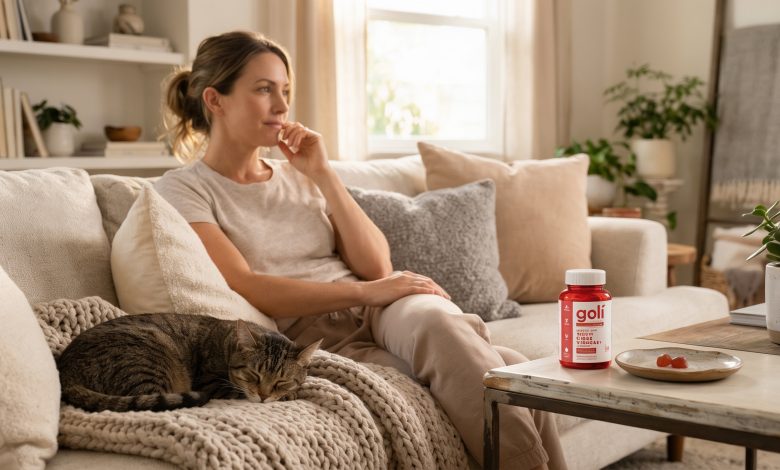
The Goli ACV Gummies deliver apple cider vinegar – acetic acid and all – in a pre-dosed gummy you will actually take every day. No measuring, no harsh shot, no half-empty bottle slowly aging out in the cupboard. Each one is zero sugar, vegan, gluten-free, and gelatin-free, which is what makes the daily habit stick. You also skip the storage puzzle entirely, since a daily gummy never sits around long enough to age, and there is nothing to measure or dilute.
I switched my own routine to the Goli ACV Gummies a long time ago, and across more than 200 days of TikTok Live the most common thing people tell me is that the gummies are the first ACV they ever managed to keep up with. One viewer put it perfectly, telling me her liquid bottle was still half full from years ago. If building a daily habit is the goal, the reader pricing on the ACV Gummies makes starting simple.
You May Also Like
If you are weighing whether apple cider vinegar earns a spot in your routine at all, our look at the Goli gummies evidence breaks down what the research really supports, ingredient by ingredient.
The Bottom Line
The Still-Good Check is your whole answer: read the date as a quality guide, watch for the rare real spoilage signs, and store the bottle cool and sealed. And if keeping up with liquid apple cider vinegar is the part you struggle with, the Goli ACV Gummies turn it into a daily habit you will actually keep.
Today, do two quick things. Check your current bottle against the three signs above, then decide honestly whether it is one you will use or one that will quietly age out in the cupboard.
The scale behind the easier option is hard to ignore. Goli has sold more than 10 billion gummies worldwide, and its Zero Sugar bundles crossed 750,000 sales on TikTok Shop since late May 2025. A vinegar that helps you is the one you actually take.
References
- Food Product Dating. United States Department of Agriculture, Food Safety and Inspection Service (FSIS).
- The Antibacterial Activity of Acetic Acid against Biofilm-Producing Pathogens. PLOS One (2015).
- What Apple Cider Vinegar Can (and Can’t) Do for You. Cleveland Clinic.
- Debunking the Health Benefits of Apple Cider Vinegar. University of Chicago Medicine.
- Vinegar Shelf Life and Safety. Cornell Cooperative Extension.
- Vinegar Shelf Life and Safety. Iowa State University Extension and Outreach.