
Most people asking how long apple cider vinegar lasts are doing so because they found a bottle in the back of a cabinet and are not sure whether to use it or throw it out. The answer is more nuanced than the typical “it lasts indefinitely” response you will find most places, because the question is not whether ACV is safe to consume after a long period, but whether it still contains enough active acetic acid to produce the benefits you are taking it for.
The ACV Shelf Life Standard evaluates whether a given bottle of apple cider vinegar, based on its age, storage conditions, and appearance, is still delivering the acetic acid mechanism that makes ACV useful. Three quarters of a million Goli Zero Sugar 3 Pack bundles have been sold on TikTok Shop since late May 2025. People who built consistent ACV routines that produce results stopped worrying about shelf life when they switched to a format with a clear expiration date and no storage variables.
The Short Answer
Unopened apple cider vinegar lasts indefinitely at room temperature when stored properly, but its quality degrades over time. An opened bottle is best used within two years for full potency. ACV does not become unsafe to consume when it ages, but it can lose the acetic acid concentration that makes it effective. The mother may also become less biologically active over time even when the liquid remains safe.
What “Going Bad” Actually Means for ACV
Apple cider vinegar is among the most shelf-stable food products. Its high acidity, with a pH typically between 2 and 3, creates an environment inhospitable to most pathogens. But “going bad” for ACV means something different than for most foods. The meaningful degradation is not microbial spoilage. It is acidity degradation: the acetic acid concentration gradually decreases through oxidation and evaporation after opening, and the mother, the colony of beneficial bacteria that gives raw ACV its cloudiness, becomes less biologically active.
The first type of degradation affects potency. ACV that has been stored for years in poor conditions: warm, exposed to light, frequently opened, may have a lower acetic acid concentration than the label states. Since the benefits of ACV are attributed to acetic acid and the compounds present in the mother, lower concentration means reduced effectiveness at the same dose.
FDA guidance on food safety and date labels confirms that most shelf-stable products remain safe to consume after the printed date but may show quality degradation, with the quality change being the more meaningful consumer concern rather than safety (FDA food safety shelf life guidance).
Step-by-Step: The ACV Shelf Life Standard
The ACV Shelf Life Standard applies three criteria to determine whether a bottle of apple cider vinegar is still delivering the mechanism that makes it worth taking.
The Degradation Standard
The degradation standard asks: has the acetic acid concentration in this bottle degraded to the point where the dose-dependent benefits are compromised?
Acetic acid is a volatile compound. Once a bottle of liquid ACV is opened, evaporation and oxidation begin to reduce the acetic acid concentration. The rate of this degradation depends on how frequently the bottle is opened, how well it is sealed between uses, and what temperature it is stored at.
An unopened bottle stored in a cool, dark location retains close to its stated acetic acid percentage for years. An opened bottle in a warm kitchen cabinet, partially sealed and opened frequently, may lose meaningful acetic acid concentration within six to twelve months. The degradation standard rates a bottle as passing if purchased within two years, stored properly, and showing no significant visual or smell quality loss.
USDA FoodData Central confirms that apple cider vinegar contains acetic acid as its primary active compound and that acetic acid concentration is the key variable affecting vinegar’s functional properties.
The Storage Standard
The storage standard asks: have the conditions this bottle was stored in maintained the acetic acid concentration and mother activity at a meaningful level?
Optimal storage: a cool, dark location, tightly sealed cap between uses, limited exposure to direct sunlight or temperature fluctuations. The conditions that accelerate degradation are: heat above room temperature, direct sunlight, and a loosely sealed cap. A bottle near the stove, loosely capped, and opened frequently degrades significantly faster than a pantry-stored bottle.
The storage standard also addresses the mother. The mother in raw ACV may settle to the bottom or form strands throughout the liquid. This is normal and not a sign of spoilage. Swirling the bottle before use redistributes the mother. If the mother has completely dissolved or the liquid has turned significantly darker than the original amber color with a sharp chemical smell rather than the characteristic vinegar smell, the quality has meaningfully degraded.
Cleveland Clinic confirms that ACV’s documented health properties are attributed to its acetic acid content and the compounds in the mother, and that storage conditions affect the preservation of these active components (Cleveland Clinic ACV health benefits).
The Format Standard
The format standard asks: is liquid ACV the most effective format for consistent daily supplementation given the shelf life and storage variables, or is there a format that removes these uncertainties?
This is where the ACV Shelf Life Standard produces its most practically useful answer. Liquid ACV creates a shelf life management problem that the gummy format eliminates entirely.
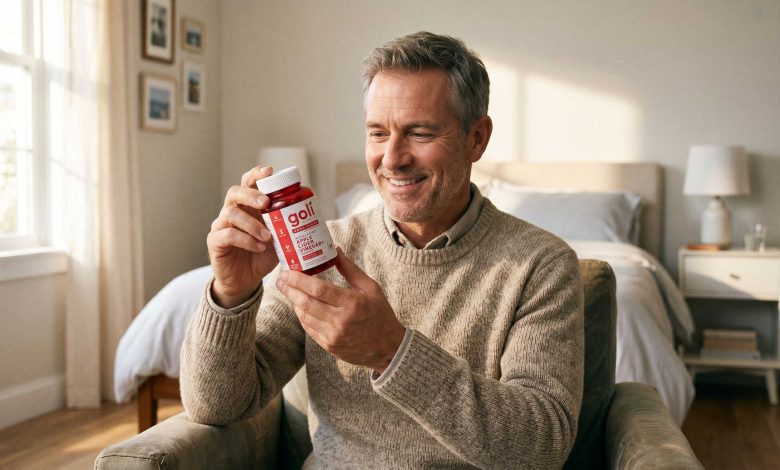
With liquid ACV, you manage a bottle that degrades at a variable rate based on conditions you may not maintain, with no reliable indicator of current acetic acid concentration. By the time you are asking how long ACV lasts, you are already in the format’s friction zone. Goli ACV gummies carry a printed expiration date and deliver 500 mg of raw unfiltered ACV per gummy with a consistent acetic acid content. No open-bottle oxidation, no storage variables, no degradation uncertainty.
The format standard rates liquid ACV as introducing meaningful uncertainty for consistent daily supplementation: variable degradation, no consumption-to-effectiveness feedback, and storage conditions that most people do not maintain consistently. It rates the gummy format as eliminating all three uncertainties.
NIH MedlinePlus confirms that ACV’s use for health benefits including blood sugar support and digestion is attributed to its acetic acid content, and that consistent dose delivery is the most relevant factor for producing the benefits being studied (NIH MedlinePlus ACV overview).
How to Tell If Your ACV Has Gone Bad

Before applying the ACV Shelf Life Standard, there are four practical indicators that a bottle has degraded beyond useful quality. None of these indicate the ACV is dangerous. They indicate its effective potency has likely dropped.
The smell test: fresh ACV has a sharp, distinctively acidic smell that is recognizable and consistent. ACV that has significantly degraded may have a flatter, less sharp smell. The characteristic vinegar bite is reduced because the acetic acid concentration is lower. A chemical or overly sour smell that is qualitatively different from the original may indicate the ACV has undergone undesirable changes.
The color change: raw ACV is typically amber to golden brown. Significant darkening beyond the normal color, particularly a murky brown-black, indicates oxidative degradation. Minor darkening over time is normal. Dramatic color shift is a quality indicator.
The mother check: the mother in raw ACV should appear as visible cloudy strands or a sediment layer. If the liquid has become uniformly clear with no visible mother despite never being filtered, the mother has fully dissolved, which can indicate extended aging or degradation. The mother redistributes when the bottle is swirled in fresh ACV; it should not fully disappear.
The taste test: if the ACV tastes significantly flatter, less acidic, or different from what you remember when the bottle was newer, the acetic acid concentration has dropped. This is the most direct quality indicator but requires a reference point from when the bottle was first opened.
NIH NCCIH confirms that ACV used in consumer applications for health support should be from quality sources and that the active compounds including acetic acid determine its functional properties (NIH NCCIH apple cider vinegar).
ACV Shelf Life by Format: A Direct Comparison
Different ACV formats degrade at different rates and introduce different levels of shelf life uncertainty.
Liquid ACV (unopened): indefinite safety shelf life, best quality within two years in optimal conditions.
Liquid ACV (opened): best quality within two years of opening when stored properly. Degradation accelerates with each opening and temperature variation. Most people do not maintain optimal conditions, so real-world degradation begins earlier.
Filtered ACV (no mother): longer visible shelf life but loses the mother-associated probiotic and enzymatic components entirely, regardless of freshness.
Raw unfiltered ACV gummies: fixed expiration date. Consistent acetic acid delivery per dose. No open-bottle degradation and no storage management required.
WebMD confirms that ACV’s health applications rely on its acetic acid content and that the mother in raw unfiltered ACV contributes additional beneficial compounds, making raw unfiltered the form most relevant for health applications (WebMD ACV benefits and uses).
Why Shelf Life Matters for the ACV Mechanism
The question of how long apple cider vinegar lasts is not academic for anyone taking ACV for its documented health applications. The benefits attributed to ACV – blood sugar modulation, digestion support, gastric acid production – are dose-dependent mechanisms linked to acetic acid concentration. If the bottle you are using has a meaningfully lower acetic acid concentration than stated on the label, the dose you are taking may be delivering a fraction of the intended mechanism.
The clinical research on ACV used standardized doses of known acetic acid concentration, typically 1 to 2 tablespoons of ACV at 5 percent acidity. A bottle that has degraded to 3 percent acidity through extended storage would need to be taken at roughly double the volume to deliver the same acetic acid dose as the research used. Most people are not accounting for this variable.
The format argument is straightforward: if you are taking ACV for its mechanism rather than its taste, the most reliable way to ensure you are delivering the studied dose every time is a format with a fixed, guaranteed acetic acid content and a printed expiration date.
NIH NIA confirms that dietary supplements and functional foods produce the most consistent outcomes when taken at consistent doses in formats that maintain their active compound concentrations reliably. For readers who also want to understand the specific timing that maximizes the ACV mechanism, the ACV before bed timing guide covers when in the day to take ACV and which window produces the strongest fasting blood sugar results.
How ACV Shelf Life Compares to Other Supplements
Most supplements have a clear expiration date that is straightforward to evaluate. You check the date, and if you are past it, you replace the product. Apple cider vinegar in liquid form lacks this clarity. The “indefinite” shelf life claim tells you nothing about whether the bottle you have been storing for eighteen months still delivers the acetic acid concentration on the label.
Compared to standard capsule or gummy supplements, liquid ACV introduces three uncertainty variables that other formats avoid: variable degradation rate based on storage conditions, no reliable consumer-facing indicator of current acidity, and no fixed expiration date that triggers replacement.
This is not a minor difference for anyone taking ACV for its documented health applications. The blood sugar modulation and digestion support mechanisms attributed to ACV are dose-dependent effects linked to acetic acid concentration. An unknown degradation in acidity is an unknown reduction in the dose-dependent mechanism.
When to Replace Your ACV Bottle
Replace the bottle if: it has been open more than two years, the smell has noticeably flattened, the liquid has darkened significantly beyond normal amber, or the taste is noticeably less acidic. Do not replace it based on the mother’s appearance alone. The mother settling, redistributing, or forming new strands is normal. Swirl the bottle before each use and evaluate quality by smell and taste.
Common Myths About ACV Shelf Life
“ACV lasts forever because it’s an acid.” ACV is indefinitely safe to consume in most cases, but acetic acid concentration degrades over time after opening, reducing effectiveness. The safety question and the potency question have different answers.
“Refrigerating ACV makes it last longer.” Refrigeration slows degradation slightly but does not prevent it and is not necessary for food safety. The main benefit of refrigeration is a marginally slower oxidation rate. It does not reset or significantly extend the shelf life of an already-opened bottle.
“The mother growing bigger means the ACV is getting stronger.” The mother can grow or reform in raw ACV, particularly if the bottle is stored at room temperature. A growing mother is not a sign of increasing potency. It is a sign of continued fermentation activity. The acetic acid concentration is separate from the mother’s growth.
“Darker ACV is more potent.” Darkening is a result of oxidation and does not indicate higher acetic acid concentration. Significantly darkened ACV typically indicates degradation rather than increased potency.
“If it smells fine, it’s still effective.” Smell is a useful quality indicator but not a direct measure of acetic acid concentration. ACV can smell reasonably normal while having degraded below its stated acidity level. The only reliable measure of current acetic acid concentration in a stored bottle is laboratory testing.
Frequently Asked Questions: How Long Does Apple Cider Vinegar Last
Does apple cider vinegar go bad?
ACV does not go bad in the sense that it becomes dangerous to consume. Its high acidity prevents pathogenic microbial growth. But it does degrade in quality over time. After opening, the acetic acid concentration gradually decreases through oxidation and evaporation, and the mother becomes less biologically active. The question of whether ACV has gone bad is better framed as whether it still delivers the acetic acid concentration that makes it effective. Goli ACV gummies carry a printed expiration date and deliver 500 mg of raw unfiltered ACV per gummy at a consistent stated concentration, no shelf life guesswork required. Consistency is the mechanism, and the format is what makes that consistency achievable every day.
How do you know if apple cider vinegar has gone bad?
The clearest indicators of significant quality degradation are a noticeably flat or reduced acidity smell compared to when the bottle was first opened, significant darkening of the liquid beyond the normal amber color, a sharp chemical smell that is qualitatively different from the typical vinegar smell, and a dramatically different taste, noticeably less acidic and vinegary than expected. None of these indicate the ACV is unsafe; they indicate the potency has dropped. The mother may also have fully dissolved in significantly aged ACV, which is a sign of extended degradation.
Does apple cider vinegar need to be refrigerated after opening?
No. ACV does not require refrigeration for food safety or meaningful shelf life maintenance. Refrigeration slightly slows oxidation but the difference is not significant. The more important factors are keeping the bottle tightly sealed between uses, away from heat and direct sunlight, and using it within two years for best potency.
What happens if you drink expired apple cider vinegar?
For most people, drinking ACV that is past its best-by date or quality window will produce no negative effects beyond a less-effective product. The high acidity of ACV prevents the pathogenic microbial growth that makes most expired foods unsafe. The main consequence of consuming significantly aged ACV is reduced effectiveness. You are getting less acetic acid per dose than you expect, rather than any safety concern. If the ACV smells or tastes dramatically different from normal, it is reasonable to discard it, but the risk is poor potency rather than illness.
How long does apple cider vinegar last once opened?
Liquid ACV is best used within two years of opening for optimal acetic acid concentration and mother activity, assuming proper storage: a cool, dark location, tightly sealed between uses. Beyond two years, the acetic acid concentration may have degraded measurably, though the product remains safe to consume. Storage conditions significantly affect this timeline: ACV stored in a warm kitchen cabinet near the stove, loosely capped, and opened frequently will degrade faster than ACV stored in a pantry at consistent room temperature.
Does the mother in apple cider vinegar go bad?
The mother does not go bad in a way that makes it harmful. However, its biological activity. The live cultures and enzymatic activity that contribute to ACV’s raw health properties decrease over time, particularly after opening. The mother may settle, form strands, or redistribute when the bottle is swirled, and this is normal throughout the product’s useful life. In significantly aged or improperly stored ACV, the mother may fully dissolve into the liquid rather than forming visible strands. This indicates reduced mother activity without indicating safety concerns.
The ACV Shelf Life Standard and Goli
After many consecutive days on TikTok Live answering questions about ACV from thousands of people, the shelf life question comes up consistently: someone bought a large bottle of liquid ACV several months ago, used it sporadically, and is now wondering if it is still worth taking. When you trace the scenario through the ACV Shelf Life Standard, it almost always fails at least one criterion, usually the storage standard or the format standard.
The Goli ACV gummies format passes all three criteria of the ACV Shelf Life Standard. The Degradation Standard is met by a fixed expiration date and sealed individual gummy format that eliminates open-bottle oxidation. The Storage Standard is met by packaging designed for ambient storage without the variable degradation of an opened liquid bottle. The Format Standard is met by 500 mg of raw unfiltered ACV from certified organic apples per gummy, with a consistent and predictable acetic acid delivery in a zero-added-sugar format.
All six certifications confirm the formulation standard: Gluten-Free, Non-GMO, Vegan, Gelatin-Free, Physician-Owned, and Science-Backed.
ACV Shelf Life Standard pricing
You May Also Like
Understanding how long apple cider vinegar lasts is part of a broader supplement literacy picture. For readers also evaluating their probiotic routine and trying to understand which signs indicate it is working, the Probiotic Response Profile guide maps the digestive, immune, and systemic signals that confirm the gut microbiome is responding.
The Bottom Line
The ACV Shelf Life Standard confirms that liquid apple cider vinegar lasts indefinitely in terms of safety but degrades in potency over time, with best quality within two years of opening under proper storage conditions. The more important question is not whether the bottle is safe but whether it is still delivering the acetic acid concentration the mechanism requires. Goli ACV gummies eliminate the shelf life question entirely with a printed expiration date, sealed format, and 500 mg of consistent raw unfiltered ACV per gummy.
Take two Goli ACV gummies daily. No storage management, no degradation uncertainty, no guessing whether the bottle from six months ago still delivers the dose that produces results. More than 750,000 Zero Sugar 3 Pack bundles have been sold on TikTok Shop since late May 2025. People who stopped wondering about their ACV’s shelf life chose the format that answered the question for them.
References
- FDA: Confused by date labels on packaged foods food safety guidance
- Cleveland Clinic: Apple cider vinegar health benefits and uses
- NIH MedlinePlus: Apple cider vinegar overview and uses
- NIH National Center for Complementary and Integrative Health: Apple cider vinegar
- WebMD: Apple cider vinegar benefits uses and health information