

If you are trying to work out the best time to take probiotics, the most useful answer is less dramatic than the internet makes it sound. Morning can be a very practical choice, especially when it is attached to breakfast, but there is no universal clock time that makes every probiotic work better. Strain, formulation, food, and consistency matter more than whether the bottle comes out at seven in the morning or nine at night.
Since late May 2025, TikTok Shop has rung up more than 750,000 Zero Sugar 3 Pack bundle sales. During my old TikTok Lives, probiotic timing questions came up constantly because people assumed there must be one perfect hour. The real goal is simpler: pick a timing rule that fits the product and is easy enough to repeat every day.
The Short Answer
The best time to take probiotics is the time you can repeat consistently, with morning being a practical default for many people. Some non-spore probiotics may survive better with or shortly before a meal, but timing evidence is product-specific and much of it comes from laboratory digestion models. For Goli Pre+Post+Probiotics, I use the morning because that is the routine the product is built around.
Why the Clock Matters Less Than the Delivery System
Probiotic timing advice often gets written as if all products contain the same organisms in the same form. They do not. A fragile lactic-acid bacterium in a standard capsule and a spore-forming Bacillus strain are solving different survival problems before they ever reach the intestine.
That is why the first timing study people quote needs context. Tompkins and colleagues ran a simulated upper-gut model using a commercial multi-strain capsule and found that the bacterial strains survived best when taken with a meal or 30 minutes before it, while survival was lower when the product was given 30 minutes after the meal. The study was an in vitro model rather than a trial measuring symptom outcomes in people, and the lead author was affiliated with the probiotic manufacturer.
A newer 2025 experiment reached a related conclusion using Lactobacillus rhamnosus GG. Taking the organism with pasta or soy milk improved survival during simulated digestion compared with an empty-stomach condition, and the food matrix changed how much survived. That study was also in vitro, so it is useful for understanding acid exposure without proving that one mealtime schedule produces better health outcomes in real life.
This is the first big distinction. Timing can affect survival in a model, but survival is only one step between swallowing a probiotic and noticing a benefit.
The World Gastroenterology Organisation makes the broader point clearly. Its probiotic guidance emphasizes that effects are strain-specific, dose-specific, and indication-specific. The WGO guideline is a better starting point than treating one timing rule as if it applies to every probiotic.
Step-by-Step: The Timing Priority Ladder
I use a Timing Priority Ladder because probiotic schedules have four levels, and people usually start with the least important one.
At the top is consistency. Below that is following the product-specific directions. Meal timing comes next when the formulation makes it relevant, because food can change the stomach environment and some strains tolerate that environment differently from others. Clock time is last.
That order matters. A theoretically perfect dose at seven in the morning that you forget four days a week is worse than a dose at eight at night that you actually take every day.
The ladder also prevents one study on one strain from becoming a rule for an entire category. That mistake is everywhere in probiotic advice.
How to Use the Timing Priority Ladder
Step One: Choose the Time You Will Actually Remember
Start with your real routine, not an idealized one. If breakfast happens every day, morning is easy to anchor. If mornings are chaos and your evening routine is steady, evening may be the better adherence choice for a product whose label allows it.
Cleveland Clinic’s current guidance puts morning with food forward as a practical strategy while stressing that consistency is the key variable. Its probiotic timing guide makes the same distinction between a useful default and a rigid biological rule.
This part sounds almost too ordinary, but it is where most routines fail. The probiotic you keep taking has a chance to matter. The one that lives forgotten in a cabinet does not.
Step Two: Read the Product Before Importing a Rule From Somewhere Else
The label should tell you the strain, storage instructions, serving size, and any specific directions about food. That information belongs ahead of a generic article about “probiotics” because the category contains organisms with very different acid and bile tolerance.
ISAPP makes strain specificity a central rule. Its consumer guidance explains that different strains can have different benefits, doses, and evidence, and that a product should be chosen for the benefit you actually want. Its probiotic selection guide also recommends checking storage conditions and using a product that can remain viable through the end of shelf life.
The same logic applies to timing. If the manufacturer studied the exact formulation under a particular schedule, that schedule deserves more weight than advice borrowed from another strain.
Step Three: Use Meal Timing as a Modifier, Not the Main Event
Food can temporarily buffer stomach acid, which is one reason meal-aligned dosing sometimes improves survival in laboratory models. But that effect is not identical across organisms, and some products are specifically designed to tolerate the stomach more effectively.
This is where the narrower question “with food or without food?” deserves its own deeper discussion. For the timing decision here, the practical rule is simple: if your product says take it with food, do that. If it gives flexibility, attach it to the meal or routine you can repeat most easily.
If your label permits either option, choose the one that fits your routine instead of importing a stricter rule from a different strain or formulation.
Do not turn meal timing into a ritual that makes the habit harder.
Step Four: Let the Strain Decide How Much Timing Precision Matters
Spore-forming strains are especially relevant here because the spore itself is built to tolerate harsh conditions. Goli Pre+Post+Probiotics uses Bacillus subtilis DE111, a spore-forming probiotic rather than a standard lactobacillus capsule.
In a randomized crossover study of 11 adults with ileostomies, DE111 spores and vegetative cells were detected in small-intestinal effluent after ingestion, with evidence of germination beginning within hours. The DE111 study involved Deerland Probiotics employees and the strain owner, so that commercial relationship matters when weighing the result.
The study does not prove that morning is better than night. It does support the more modest point that this particular strain is designed to survive gastrointestinal transit and germinate in the human small intestine.
That is why I do not treat Goli’s morning routine as a narrow survival window. I treat morning as the easiest place to keep it consistent.
“If I Miss the Morning, I Ruined the Dose”
No. That belief makes a simple habit unnecessarily fragile.
The first version of it is, “Morning must be biologically superior.” For many products, there is no direct human trial showing that the same probiotic produces better outcomes at breakfast than at bedtime. Morning is often recommended because it is easy to pair with a meal and easy to remember.
The second version is, “An empty stomach is always better because there is less food in the way.” That ignores stomach acidity. The in vitro timing studies above found that certain bacteria survived better when a meal buffered the gastric environment, which is the opposite of the rule many people repeat.
The third version is, “If I take it late, I should double up tomorrow.” That turns adherence into overcorrection. Unless the product label or a clinician tells you otherwise, missing the ideal time is usually a reason to resume the normal routine, not invent a catch-up protocol.
But the most damaging version is perfectionism. A probiotic habit should be boring enough to survive a busy week.
What Consistent Timing Should Change
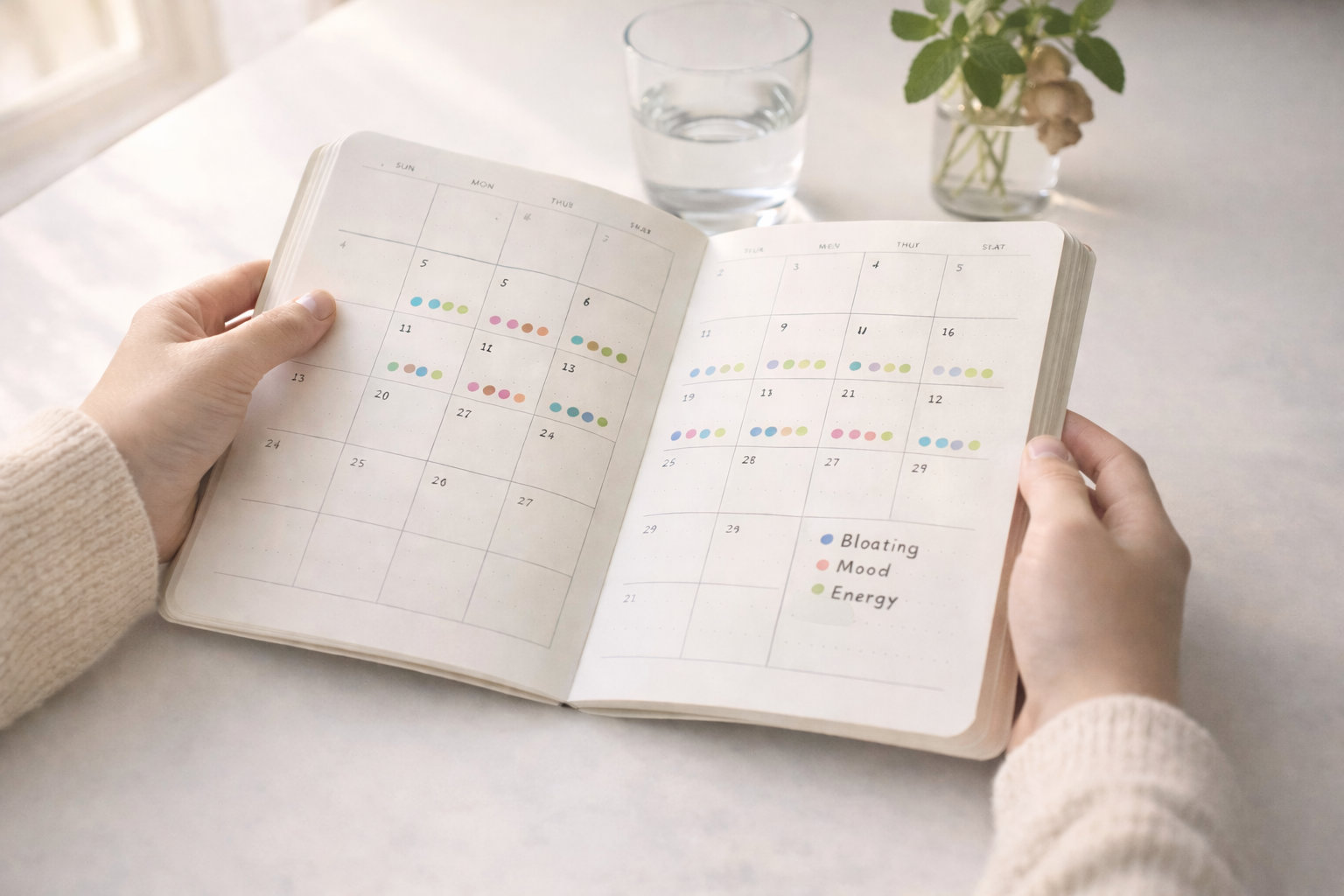
A good probiotic schedule should reduce decisions, not create more of them. You should know where the product lives, what daily event reminds you to take it, and what you will do if the morning gets away from you.
The digestive outcome takes longer. Probiotics are not rescue products for a meal that already made you bloated, and timing them to a symptom after it appears is usually the wrong mental model.
XOS gives a useful example of why repetition matters more than a single dose. In a randomized crossover study in healthy adults, daily xylo-oligosaccharides increased bifidobacterial counts and bowel-movement frequency at the studied dose. The XOS trial used 8 grams daily, far more XOS than a gummy can physically carry, and some authors were affiliated with DuPont Nutrition and Health.
That is not proof for Goli’s finished formula. It is a reminder that microbiome-facing interventions are usually studied as repeated exposure over time, not as one perfectly timed dose.
And that changes what success looks like. The schedule is working when it becomes automatic and gives you a stable way to judge the product over weeks.
Who Should Use a Simple Morning Rule, and Who Needs More Precision
A simple morning rule fits healthy adults taking a shelf-stable daily probiotic for general digestive support, especially if breakfast is already reliable. It is also useful for people who keep forgetting supplements later in the day.
More precision matters when the product has explicit directions, when you are using a strain for a specific clinical purpose, or when a clinician has given you a schedule around antibiotics or another treatment. In those cases, the indication and product instructions outrank a generic morning rule.
People who are severely ill or immunocompromised should not treat probiotics as a casual self-experiment. Mayo Clinic notes that probiotics appear safe for most healthy adults but advises people with health concerns to discuss supplements with a healthcare professional. Its probiotic overview also notes the more serious infection concerns seen in vulnerable groups.
The same goes for persistent digestive symptoms. If you are using timing tweaks to avoid getting a new symptom evaluated, the schedule has become a distraction.
For ordinary use, keep it simple. For medical use, keep it specific.
How Long to Hold a Probiotic Schedule Before Judging It
Do not judge a probiotic by one morning. The useful window is measured in weeks because you are trying to see whether a repeated routine changes bowel regularity, gas, or digestive comfort.
ISAPP’s consumer guidance suggests trying an evidence-backed probiotic for about a month when evaluating whether it gives you the benefit you want. That is not a guarantee that every product needs exactly four weeks, but it is a much better frame than switching timing every three days.
A stable schedule also makes the result interpretable. If you take the product before breakfast Monday, after dinner Tuesday, forget Wednesday, double Thursday, and skip the weekend, you have learned almost nothing about whether the probiotic itself fits you.
If you are comparing products, keep the routine fixed first. Our guide to the best probiotic for men explains why strain, evidence, and a routine you can maintain matter more than headline CFU counts.
The best experiment is boring. Same product, same general time, enough weeks to see a pattern.
Best Time to Take Probiotics: Common Questions
Is it better to take probiotics in the morning or at night?
For most everyday users, morning is a practical default rather than a universal biological requirement. It is easy to attach to breakfast, and that makes consistency easier. If your product allows flexible timing and night is the routine you never forget, a steady evening schedule can still be more useful than an inconsistent morning one.
Should I take probiotics before or after breakfast?
It depends on the product. Some laboratory studies found better survival when certain non-spore bacterial probiotics were taken with a meal or shortly before it, but those findings do not automatically apply to every strain or formulation. Follow the label first and use a repeatable meal anchor when the directions allow it.
Can I take probiotics on an empty stomach?
Some products can be taken on an empty stomach, while others may benefit from the buffering effect of food. There is no single rule for every probiotic. If the label gives no strict requirement, consistency and product-specific strain characteristics matter more than forcing an empty-stomach schedule.
What happens if I take my probiotic at a different time one day?
Usually, nothing dramatic. A one-off timing change does not erase a long-term routine. Resume your normal schedule rather than treating the day as a failure, unless your clinician or the product instructions give you a specific reason to do something different.
What is the best time to take Goli Pre+Post+Probiotics?
I use Goli Pre+Post+Probiotics in the morning. The formula contains the shelf-stable spore-forming DE111 probiotic, XOS prebiotic, and MCC1849 postbiotic, so my goal is a repeatable morning routine rather than chasing a narrow clock window. The product is built for daily digestive support, not as a same-hour response to bloating.
The practical answer to the best time to take probiotics is therefore not “exactly 7:30.” It is “at the time your product supports and your routine can keep.”
Using a Morning Routine That Sticks
A viewer once asked during one of my TikTok Lives, “If I forget my probiotic before breakfast, is there any point taking it later?” That question is exactly why I prefer a forgiving routine over a perfect one.
My own routine is morning. I use Goli Pre+Post+Probiotics because DE111 is shelf-stable and spore-forming, and because the XOS prebiotic and MCC1849 postbiotic are already in the same format instead of becoming three separate things I have to remember.
I am not claiming the gummy works because it is morning. Morning works because it is where I remember it, and the DE111 evidence gives me a reason not to obsess over a fragile survival window.
The Zero Sugar 3 Pack’s TikTok Shop tally has grown by more than 750,000 bundle sales since late May 2025. That scale is not proof that breakfast is biologically superior. It is evidence that a repeatable format can survive ordinary schedules.
You May Also Like
If you are following the current BGD publishing sequence, read copper iud bloating next.
The Bottom Line
Goli makes sense here because the formula is designed around a morning routine without requiring you to believe that morning itself has special probiotic powers. A shelf-stable spore-forming strain, a prebiotic, and a postbiotic give me one simple daily action instead of a timing puzzle.
Today, choose one anchor you already do every day. Breakfast is my default. Put the probiotic beside that routine and stop changing the schedule long enough to judge what the product actually does.
More than 750,000 Zero Sugar 3 Pack bundle sales now sit in TikTok Shop’s record since late May 2025. The useful lesson is not that all those doses happened at the same hour. It is that consistency is easier when the format fits a normal day.
References
- Tompkins TA, Mainville I, Arcand Y. “The impact of meals on a probiotic during transit through a model of the human upper gastrointestinal tract.” Beneficial Microbes. 2011;2(4):295-303. Author affiliation included Institut Rosell Inc.
- Cleveland Clinic. “When Should I Take Probiotics for Best Results?” 2025.
- Guarner F, Sanders ME, Szajewska H, et al. “Probiotics and Prebiotics.” World Gastroenterology Organisation Global Guidelines. 2023.
- Wang J, Wu P, Chen XD, Yu A, Dhital S. “Effect of Food Matrix and Administration Timing on the Survival of Lactobacillus rhamnosus GG During In Vitro Gastrointestinal Digestion.” Foods. 2025;14(17):3076.
- Colom J, Freitas D, Simon A, et al. “Presence and Germination of the Probiotic Bacillus subtilis DE111 in the Human Small Intestinal Tract: A Randomized, Crossover, Double-Blind, and Placebo-Controlled Study.” Frontiers in Microbiology. 2021;12:715863. Deerland Probiotics employees and the strain owner were involved.
- Childs CE, Röytiö H, Alhoniemi E, et al. “Xylo-oligosaccharides alone or in synbiotic combination with Bifidobacterium animalis subsp. lactis induce bifidogenesis and modulate markers of immune function in healthy adults: a double-blind, placebo-controlled, randomised, factorial cross-over study.” British Journal of Nutrition. 2014;111(11):1945-1956.
- International Scientific Association for Probiotics and Prebiotics. “How to choose a probiotic.” Updated 2025.
- Mayo Clinic. “Probiotics and prebiotics: What you should know.” 2025.