

Digestive discomfort after meals is one of those quiet frustrations that chips away at everyday life. The bloating, the heaviness, the unpredictable bathroom trips. For many people, the issue comes down to a simple mismatch between what they eat and what their body can actually break down.
Digestive enzymes are the proteins responsible for turning food into usable nutrients. When they work well, you barely notice digestion happening. When they fall short, everything from energy levels to gut comfort can suffer. Understanding which enzymes do what, and whether supplementation makes sense for you, can be the difference between guessing and actually solving the problem.
The Short Answer
The best enzymes for digestion depend on what your body struggles to break down. Lactase helps with dairy, alpha-galactosidase handles beans and vegetables, and broad-spectrum blends support mixed meals. Most healthy people produce adequate enzymes naturally, but specific deficiencies or digestive conditions may benefit from targeted supplementation taken with meals.
What Digestive Enzymes Actually Do
Your body produces digestive enzymes at multiple points along the gastrointestinal tract. Saliva contains amylase, which begins carbohydrate breakdown the moment you start chewing. The stomach releases pepsin to work on proteins. The pancreas contributes a powerful mix of lipase, protease, and amylase to the small intestine, where the majority of nutrient absorption occurs.
Each enzyme has a specific job. Amylase converts starches into simple sugars. Proteases break proteins into amino acids. Lipase separates fats into fatty acids your body can absorb. When any of these processes falter, undigested food continues through the digestive tract, often fermenting in the large intestine and producing uncomfortable gas and bloating.
The pancreas alone secretes roughly eight cups of enzyme-rich fluid into the small intestine each day. This remarkable output keeps digestion running smoothly for most people without any conscious effort.
The Digestive Enzyme Method
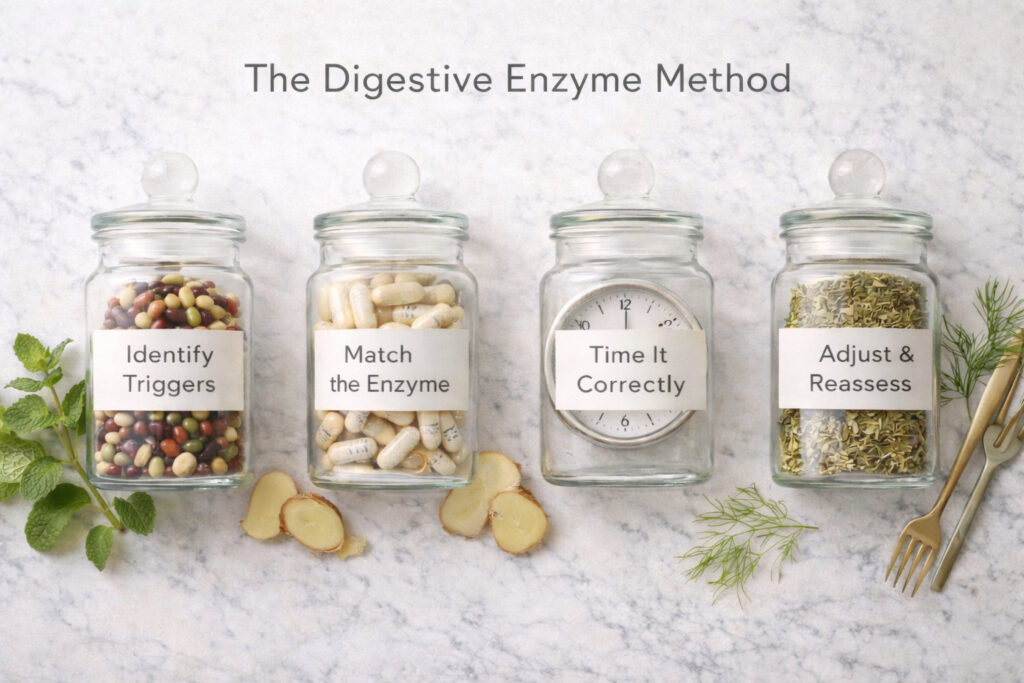
Finding the right enzyme support requires a systematic approach rather than random supplementation. This four-step method helps match your specific needs to the appropriate solution.
Step 1: Identify Your Trigger Pattern. Pay attention to which foods consistently cause problems. Dairy reactions suggest lactase insufficiency. Discomfort after beans, broccoli, or cabbage points toward difficulty with complex carbohydrates. Trouble with fatty foods may indicate lipase concerns. General digestive sluggishness after mixed meals could benefit from broad-spectrum support.
Step 2: Match the Enzyme to the Mechanism. Once you recognize your trigger pattern, select the enzyme that addresses that specific breakdown process. A single targeted enzyme often works better than a kitchen-sink approach when you have a clear food sensitivity.
Step 3: Time It Correctly. Digestive enzymes work on food, not on your body. They must be present in your stomach when food arrives to be effective. Take them at the beginning of a meal or with your first few bites, not afterward.
Step 4: Adjust and Reassess. Start with the lowest effective dose and increase only if needed. Larger meals or higher-fat foods may require additional enzyme support. Keep notes on what works and refine your approach over time.
The Best Enzymes for Digestion by Need
Different digestive challenges call for different enzymatic solutions. Here are the primary options and who benefits most from each.
Lactase
Best for: Dairy-related bloating, gas, cramping, or diarrhea
Lactase breaks down lactose, the natural sugar in milk and dairy products. Lactose intolerance affects up to 75% of the world’s adult population, making this one of the most common enzyme insufficiencies. The condition results from declining lactase production that occurs naturally with age in most people.
How to use: Take lactase supplements immediately before consuming dairy. Dosing depends on how much lactose you plan to eat. Some people find they tolerate hard cheeses or yogurt better than milk, so a little experimentation helps determine when enzyme support is actually needed.
Who should be careful: People with galactosemia should consult a doctor before using lactase products. Pregnant and breastfeeding women and young children should also check with a healthcare provider first.
Alpha-Galactosidase
Best for: Gas and bloating from beans, lentils, and cruciferous vegetables
The human body does not produce alpha-galactosidase, which explains why so many people experience gas after eating beans, cabbage, broccoli, or Brussels sprouts. These foods contain galacto-oligosaccharides that travel undigested to the large intestine, where bacteria ferment them and produce gas.
How to use: Take with your first bite of gas-producing foods. The enzyme breaks down the problematic carbohydrates before they reach the colon, reducing fermentation and the resulting discomfort.
Who should be careful: People with alpha-gal syndrome or mold allergies may experience reactions. Those with the rare metabolic disorder galactosemia should consult their doctor before use.
Broad-Spectrum Enzyme Blends
Best for: General digestive sluggishness, heavy meals, or multiple food sensitivities
Combination products typically include amylase, protease, lipase, and sometimes lactase and alpha-galactosidase. They provide support across multiple food categories, which can be helpful when digestive difficulties are not limited to one food type.
How to use: Take with meals, especially larger ones or those containing a variety of foods. Some people benefit from splitting the dose between the beginning and middle of a meal.
Who should be careful: Check ingredient sources if you have allergies or dietary restrictions. Some blends use porcine-derived enzymes, while others are plant-based or microbial.
Lipase
Best for: Difficulty digesting fatty foods, post-gallbladder surgery, or pancreatic concerns
Lipase breaks down triglycerides into fatty acids that your body can absorb. Without adequate lipase, fats pass through undigested, potentially causing fatty stools, diarrhea, and deficiencies in fat-soluble vitamins A, D, E, and K.
How to use: Take with meals containing fat. People with diagnosed pancreatic insufficiency require prescription pancreatic enzyme replacement therapy, which includes lipase along with other enzymes at therapeutic doses.
Who should be careful: Prescription enzymes are necessary for conditions like chronic pancreatitis, cystic fibrosis, or pancreatic cancer. Over-the-counter lipase supplements are not appropriate substitutes for these medical conditions.
Bromelain and Papain
Best for: Protein digestion support and mild digestive discomfort
These plant-derived enzymes come from pineapple and papaya respectively. Both help break down proteins and have been used traditionally to support digestion after protein-rich meals.
How to use: Take with meals containing significant protein. These enzymes work across a range of pH levels, meaning they remain active from stomach to intestine.
Who should be careful: People with allergies to pineapple, papaya, or latex should avoid these enzymes. They may also interact with certain blood-thinning medications.
Fructan Hydrolase
Best for: Sensitivity to wheat, onions, garlic, or foods containing fructans
Humans do not produce fructan hydrolase, which means fructans reach the large intestine intact and become food for gut bacteria. For people with irritable bowel syndrome or FODMAP sensitivities, this fermentation process can trigger significant symptoms.
How to use: Take immediately before or with the first few bites of fructan-containing foods. This enzyme is often included in specialized FODMAP-focused enzyme blends.
Who should be careful: This enzyme addresses a specific sensitivity pattern. It may not help if your symptoms stem from other food components.
Common Myths About Digestive Enzymes
Myth: Everyone needs digestive enzyme supplements. Most healthy people produce adequate enzymes naturally. Supplementation makes sense for specific deficiencies or diagnosed conditions, not as a general wellness practice. As one Johns Hopkins dietitian explains, the best digestive enzymes are the ones your body makes naturally, and they work best when you eat a whole food diet.
Myth: More enzymes are always better. Enzyme effectiveness depends on activity levels, not just quantity. Taking excessive amounts provides no additional benefit and may cause side effects like constipation or abdominal cramping.
Myth: Digestive enzymes help with weight loss. No credible evidence supports enzymes as a weight loss tool. Some supplement marketers make this claim, but it lacks scientific backing.
Myth: All enzyme supplements are the same. Over-the-counter supplements are not regulated the same way as prescription medications. The FDA does not guarantee their potency, purity, or effectiveness. Quality varies significantly between brands.
Myth: Enzyme-rich foods replace supplements. While pineapple, papaya, and other foods contain natural enzymes, the amounts are relatively small and may not survive stomach acid well enough to meaningfully improve digestion. These foods offer other nutritional benefits but should not be relied upon to treat enzyme deficiencies.
What to Realistically Expect
Days 1-3: If you have matched the right enzyme to your specific trigger food, you may notice reduced bloating and gas relatively quickly. Lactase and alpha-galactosidase often provide noticeable relief with the first few uses when taken correctly.
Weeks 1-2: Patterns become clearer. You can refine your dosing and identify which foods still cause problems versus which respond well to enzyme support.
Weeks 3-4: Consistent use with trigger foods should produce reliable results. If you see no improvement after a month of proper use, the enzyme may not address your underlying issue.
Month 2 and beyond: Enzyme needs may shift over time. Some people require ongoing support while others find their tolerance improves. Periodic reassessment helps ensure your approach remains effective.
Who Should Be Careful With Digestive Enzymes
People with serious digestive conditions: Conditions like chronic pancreatitis, cystic fibrosis, or pancreatic cancer require prescription pancreatic enzyme replacement therapy under medical supervision. Over-the-counter products do not provide therapeutic doses for these conditions.
Those on medications: Digestive enzymes may interact with blood thinners and certain other medications. Discuss enzyme supplementation with your healthcare provider if you take prescription drugs.
People with allergies: Check ingredient sources carefully. Porcine-derived enzymes are common in prescription products. Plant-derived enzymes like bromelain and papain can cause reactions in people with fruit allergies or latex sensitivity.
Pregnant or breastfeeding women: Limited safety data exists for many enzyme supplements during pregnancy and breastfeeding. Consult a healthcare provider before use.
Those with celiac disease: While research is exploring enzyme therapy as an adjunct treatment for celiac disease, enzymes cannot replace a gluten-free diet. They should not be used to intentionally consume gluten.
Choosing Quality Enzyme Products
The supplement market lacks the tight regulation applied to prescription medications. Protecting yourself requires some due diligence.
Look for third-party testing. Independent verification from organizations like NSF, USP, or ConsumerLab provides some assurance that the product contains what the label claims.
Check activity units, not just milligrams. Enzyme effectiveness is measured in activity units specific to each enzyme type. Lactase uses ALU, bromelain uses GDU, and so on. A product listing only weight in milligrams without activity information may not provide therapeutic benefit.
Consider the source. Enzymes can come from animal, plant, or microbial sources. Each has different stability characteristics and may work better or worse for different individuals. Microbial-source enzymes often remain active across a wider pH range.
Read the full ingredient list. Some products contain allergens, fillers, or additives that may cause their own digestive issues. Simpler formulations are often preferable.
Supporting Digestive Health Beyond Enzymes
Enzyme supplements address the mechanical breakdown of food, but overall digestive wellness involves broader habits.
Chewing thoroughly begins the digestive process and reduces the workload on your stomach and intestines. Eating slowly gives your body time to signal fullness and reduces the likelihood of overeating. Staying hydrated supports the production of digestive juices. Managing stress matters because the gut-brain connection can significantly influence digestive function.
A diet rich in fiber from whole foods supports the gut microbiome, which plays its own role in digestion and overall health. Fermented foods like yogurt, kefir, and sauerkraut introduce beneficial bacteria. Limiting highly processed foods reduces the burden on your digestive system.
Frequently Asked Questions About the Best Enzymes for Digestion
What are the best enzymes for digestion if I have multiple food sensitivities? Broad-spectrum blends containing amylase, protease, lipase, and lactase cover the most common needs. Some products also include alpha-galactosidase for plant foods and cellulase for fiber. Start with a comprehensive formula and narrow down if specific triggers become clearer.
Should I take digestive enzymes every day? This depends on your needs. People with diagnosed enzyme deficiencies may need daily support with every meal. Those with occasional trigger foods might only need enzymes when eating specific items. There is no benefit to taking enzymes with meals your body already digests well.
Can digestive enzymes cause side effects? The most common side effect is constipation. Some people experience nausea, cramping, or diarrhea. These symptoms often resolve with dose adjustment. If enzymes cause mouth irritation, avoid chewing or holding them in your mouth before swallowing.
What is the difference between prescription and over-the-counter enzymes? Prescription pancreatic enzyme replacement therapy is FDA-regulated with guaranteed potency and consistency. Over-the-counter supplements are classified as dietary supplements with less manufacturing oversight. Prescription enzymes are necessary for serious conditions like pancreatic insufficiency.
How do I know if I need digestive enzymes? Consistent symptoms after eating specific foods suggest a potential enzyme mismatch. Bloating with dairy points to lactase insufficiency. Gas after beans suggests alpha-galactosidase needs. A healthcare provider can help diagnose underlying conditions. If symptoms are persistent or severe, professional evaluation is appropriate.
Supporting Your Digestive Wellness Journey
Building sustainable digestive comfort involves consistent habits rather than quick fixes. Small adjustments to eating patterns, mindful food choices, and targeted enzyme support when needed can make meaningful differences over time.
For those looking to complement their digestive wellness routine, Goli Apple Cider Vinegar Gummies offer a convenient way to incorporate apple cider vinegar’s traditional digestive support into daily life. These supplements work alongside healthy habits, not as replacements for addressing the root causes of digestive discomfort.
The Bottom Line
The Digestive Enzyme Method starts with identifying your specific trigger patterns, then matching the right enzyme to the right mechanism.
This week, pay attention to which foods consistently cause discomfort and experiment with targeted enzyme support at your next challenging meal. Take enzymes with your first bite, not after symptoms appear.
Over the coming month, refine your approach based on results. Digestive wellness is not about perfection. It is about finding reliable patterns that work for your body. Small improvements compound into meaningful quality-of-life gains.
References
- Harvard Health Publishing. Digestive enzymes: How supplements like Lactaid and Beano can help with digestion.
- FODZYME. Best Digestive Enzymes for Bloating and Gas.
- Darwin Nutrition. Best digestive enzymes: a pharmacist’s opinion.
- Pancreatic Cancer Action Network. Pancreatic Enzymes.
- Digestive & Liver Disease Consultants. The Best Digestive Enzymes and When to Take Them.