There is no single best ashwagandha, and the honest reason is more useful than a ranking. The two extracts with real clinical records behind them were studied for different things, at different doses, and they do not behave the same way in the evening.
The question as posed has no answer. Narrow it to sleep, or to daytime stress, or to training recovery, and each version has a reasonably clear one waiting in the trial record, and the three do not converge. Someone taking a sedating extract at breakfast because a listicle called it the strongest has bought the right herb in the wrong form.
Some version of this question lands in my comments most days, which follows from 750,000 Zero Sugar 3 Packs having gone out through TikTok Shop. What follows is the part the rankings leave out.
The Short Answer
The best ashwagandha depends on your goal. KSM-66 is a root-only extract at 5 percent withanolides, studied at 300 to 600 mg daily, with the deepest evidence for stress, cortisol and physical performance. Sensoril is a root-and-leaf extract at 10 percent, used at 125 to 250 mg, with a sleep-leaning and more sedating profile. Unstandardized root powder has almost no trial evidence at any dose.
Two Extracts, Studied for Different Things
Almost all the human research on ashwagandha runs through two branded extracts, and the differences between them are structural rather than promotional.
KSM-66 is a root-only extract standardized to about 5% withanolides and commonly studied at doses of 300 to 600 mg per day. It also has a substantial clinical trial record. In one frequently cited stress study, participants took 300 mg twice daily for 60 days and experienced a 27.9% reduction in serum cortisol, along with improvements across the stress measures used in the study. So does the performance work, with a trial in resistance-trained men at the same dose over eight weeks reporting gains in strength and recovery markers.
Sensoril uses root and leaf, standardized to around 10 percent withanolides, and is taken at 125 to 250 mg. The higher concentration means a smaller capsule delivers a comparable amount of active compound, and the leaf material shifts the profile. It is widely described as more sedating, which is a drawback at nine in the morning and the entire point at nine at night.
Neither is better in the abstract. They were pointed at different questions, and the answer you get depends on which question you were asking.
Matching the Extract to the Reason You Are Taking It
Four goals, four different answers. Find yours and the shelf narrows immediately.
If it is daytime stress and cortisol, KSM-66 at 300 to 600 mg has the deepest evidence, and the studies split it into two doses rather than one. It is the least sedating of the standardized options, which matters when you need to function afterwards.
If it is sleep, the picture is more interesting than the marketing suggests. KSM-66 has sleep data too. One study involving both healthy adults and people with insomnia used actigraphy to measure sleep objectively and found improvements in sleep onset latency, total sleep time, and sleep efficiency. Sensoril’s sedating character makes it a common evening choice. Either can work; what matters more is taking it in the evening rather than switching brands.
If it is training and recovery, KSM-66 at 600 mg is where the strength and testosterone trials sit, and the evidence base outside young men in resistance training is thin, which is worth knowing before you extrapolate.
If it is general daily support, KSM-66 at 300 mg is the sensible default, because it is the form with the widest trial coverage and the least likely to make you drowsy at the wrong hour.
The Question That Comes Before Any of This
Before choosing between extracts, there is a threshold most products fail, and it makes the comparison irrelevant if you skip it.
Does the label name a standardized extract at all? Withanolide content in unstandardized powder swings between roughly 1.5 and 10 percent depending on where the plant grew and how it was processed. Run that across a 600 mg capsule and you get somewhere between 9 and 30 mg of active compound, a threefold spread that the packaging gives you no way to detect.
Look at how the federal supplement office catalogues this field and a pattern emerges: trial after trial, six to eight weeks long, each one naming the preparation it tested. That naming is not bureaucratic; it is what allows a result to belong to a product.
Anything that declines to identify itself has quietly stepped outside the whole body of work. There is more on why one name in particular carries so much weight in our look at KSM-66 itself.
Getting the Timing Right Once You Have Picked Your Ashwagandha

Choosing the extract is the part everyone researches. Timing is the part almost nobody does, and it decides more than brand choice for anything sleep-related. Three simple steps can help you get it right, and they take less than a minute.
Step One: Name the Outcome You Are Buying
Write down the single thing you want, in the terms the trials used: lower daytime stress, faster sleep onset, better recovery from training. A vague goal produces a vague purchase, and it is the reason people end up with a sedating extract they take at breakfast.
Step Two: Put the Dose Where the Trials Put It
The stress and performance studies split the daily amount into two, morning and later. The sleep work concentrated it in the evening, an hour or two before bed. Copying the dose without copying the schedule discards half of what the study actually tested.
Step Three: Hold the Schedule for Eight Weeks Before Judging
Whatever you decide in the first two steps, leave it alone long enough to produce an answer. Changing the timing at week three because nothing has happened resets the clock on a process that the research says takes roughly twice that long. Buying the right extract and taking it at the wrong hour is the most common way to conclude that ashwagandha does nothing, and changing the hour every fortnight is the second.
What People Get Wrong When Choosing
Four assumptions send most people to the wrong product, and each has a short answer.
Is a higher milligram count better? Not across different extracts, and that is the trap here specifically. Sensoril at 250 mg and KSM-66 at 600 mg are both inside their studied ranges, so the smaller figure is not the weaker product. Comparing the two by weight alone will point you at the wrong one.
Is the strongest extract the best one? Concentration and suitability pull apart here. The same higher withanolide load that makes Sensoril more potent by weight is what makes it more sedating, which is an asset at bedtime and a liability at nine in the morning.
Are the branded extracts just marketing? They are the reason the evidence exists. The trials were run on specific extracts, so a product using one inherits that research and a product using generic powder does not.
Does it matter what time you take it? More than most people expect, and more than brand choice for anything sleep-related. The extract sets the ceiling; the timing decides whether you get near it.
What Realistic Results Look Like
Expectations set to the trials rather than the packaging are what keep people taking it long enough to find out.
The measured outcomes are stress scores, cortisol, sleep quality and, in trained men, strength markers. They appear over six to twelve weeks, not days, and the size of the effect is meaningful rather than dramatic.
There is a caveat worth carrying: a study found the cortisol drop held up reliably while perceived stress scores did not always follow, which says something about how imperfectly the number and the sensation track each other. The findings that repeat across studies are the cortisol reduction and the movement on clinical anxiety measures at around eight weeks, so that is the horizon to plan against.
Who Should Not Take It
Ashwagandha suits most healthy adults, and the exclusions are specific and worth respecting.
Pregnancy and breastfeeding rule it out entirely. Thyroid conditions warrant a doctor’s view first, because the herb can shift thyroid hormone levels, and the same goes for sedatives, thyroid medication, immunosuppressants and autoimmune disease. Liver injury has been reported rarely but seriously.
A review of the published cases applied a standard causality assessment to two new cases and classified the relationship between ashwagandha and liver injury as probable in both. The review also documented an earlier reported case in which the patient ultimately required a liver transplant. Both new cases involved 450 mg capsules and resolved once the supplement was stopped, which is the argument for staying inside tested doses rather than improvising upward.
No regulator checks a supplement’s effectiveness before it ships, as the Food and Drug Administration sets out, so the label check above is the only audit this product gets. Persistent stress or sleep problems deserve proper assessment rather than a supplement alone.
Best Ashwagandha: Your Questions Answered
Which ashwagandha extract is the best?
There is no single best, and the honest answer depends on your goal. KSM-66 has the widest clinical record and the strongest evidence for stress, cortisol and physical performance, at 300 to 600 mg daily. Sensoril is more concentrated, more sedating, and used at 125 to 250 mg, which suits evening and sleep-focused use. Unstandardized root powder has almost no trial evidence at any dose and is the one to avoid regardless of goal.
Is KSM-66 better than Sensoril?
Better for different things rather than better overall. KSM-66 is root-only at 5 percent withanolides and carries most of the stress, cortisol and strength research. Sensoril is root-and-leaf at 10 percent, taken at lower doses, and leans sedating, which is why it turns up more often in evening formulas. For the widest span of outcomes backed by human data, KSM-66 is where that currently sits.
What dose of ashwagandha should I take?
It depends on the extract, which is exactly why the extract name matters. The KSM-66 trials generally used 300 mg twice daily, so 600 mg total, with some using 300 mg alone. Sensoril trials used 125 to 250 mg, because the higher standardization delivers comparable active compound in a smaller amount. Copying a dose across extracts without adjusting is a common error, and taking more than the studied range adds risk without evidence of benefit.
Are ashwagandha gummies as good as capsules?
The format matters far less than what is inside it. A gummy carrying a named standardized extract at a studied dose has the same claim on the evidence as a capsule with the same contents.
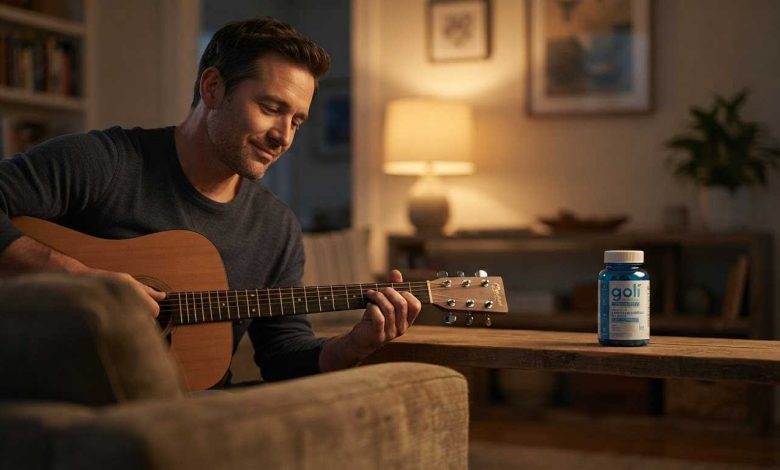
Goli’s ashwagandha gummy uses KSM-66 at 300 milligrams, which is the extract with the deepest research record at a dose inside the studied range. Where a gummy actually earns its place is adherence, since none of these findings came from people who took it sporadically.
When is the best time to take ashwagandha?
Match the timing to the goal rather than following a general rule. For sleep, take it in the evening, an hour or two before bed. For daytime stress, morning or split across the day as the trials did. If you are using a more sedating extract like Sensoril, evening is the sensible default. Consistency matters more than the exact hour, since the effects accumulate over weeks rather than working dose by dose.
How long until ashwagandha works?
Give it eight weeks before judging. A fortnight in, some people report evenings that feel a little easier and plenty report nothing at all, both of which are ordinary. The bulk of the evidence clusters at eight weeks, so quitting at three lands you just outside the window where the research says the effect shows up.
Matching the Format to the Habit You Already Have
Once the extract question is settled, what remains is whether the thing you bought becomes part of a routine or an item in a drawer.
Goli Ashwagandha Gummies answer the label test in one line: KSM-66, named on the front, at 300 milligrams, which sits inside the studied range and is the extract carrying the deepest human evidence. L-Theanine and Maca come with it.
One viewer asked during a Live which brand was strongest, and the more useful answer was that she was taking hers at breakfast when she wanted help sleeping.
Most of the 750,000 bundles that have gone out never had any of these checks run on them. They did not have to, because the label answers them before you ask. If that fits, the code is waiting here.
You May Also Like
Format decisions catch people out elsewhere too. Probiotics powder explains why the liquid you stir it into decides most of the outcome, and why hot coffee is the most expensive mistake in that category.
The Bottom Line
So, the best ashwagandha is the one matched to your reason for taking it. KSM-66 for stress, cortisol and training, at 300 to 600 mg. Sensoril for evening and sleep-focused use, at a lower dose because it is more concentrated. Unstandardized powder for nobody, because no trial supports it.
Today, look at whatever you own and check two things: whether an extract is named, and whether you are taking it at the hour that matches your goal. Most disappointment traces to one of those two rather than to the herb. Then give it eight weeks without gaps, which is what the research actually asks of you.
Goli sells the three pack by the hundreds of thousands and has never had to hide what is in it, which is the whole reason this article could name a dose at all. Name the goal, match the extract, fix the timing.
References
- Wankhede S, Langade D, Joshi K, Sinha SR, Bhattacharyya S. Examining the Effect of Withania somnifera Supplementation on Muscle Strength and Recovery: A Randomized Controlled Trial. Journal of the International Society of Sports Nutrition (2015);12:43.
- Ashwagandha: Is It Helpful for Stress, Anxiety, or Sleep? National Institutes of Health, Office of Dietary Supplements.
- Bokan G, Glamočanin T, Mavija Z, et al. Herb-Induced Liver Injury by Ayurvedic Ashwagandha as Assessed for Causality by the Updated RUCAM: An Emerging Cause. Pharmaceuticals, MDPI (2023);16(8):1129, doi 10.3390/ph16081129.
- FDA 101: Dietary Supplements. U.S. Food and Drug Administration.