
If you are comparing matcha vs coffee, the useful question is not which drink is healthier in the abstract. They can overlap in caffeine, but they deliver that caffeine in different amounts and alongside different plant compounds that can change how the overall drink is experienced. Coffee usually carries more caffeine per serving. Matcha adds L-theanine and uses powdered tea leaf, which changes both the chemistry and the way you should compare a serving.
Since 2018, Goli’s worldwide sales record has accumulated more than ten billion gummies. During my old TikTok Lives, people often asked whether matcha was simply a gentler version of coffee. That shortcut misses the important part. Dose comes first, the surrounding compounds come second, and the better choice is the one that fits what you actually want from the day without forcing every caffeine decision into a winner-versus-loser comparison.
The Short Answer
In matcha vs coffee, coffee usually provides more caffeine per typical serving, while matcha can overlap depending on how many grams of powder you use. The caffeine molecule itself is the same. Matcha also provides L-theanine and tea polyphenols, while coffee brings its own polyphenols, including chlorogenic acids. Choose by dose, timing, taste, and the routine you can repeat rather than assuming one is universally better.
The Same Caffeine Molecule, Two Different Drinks
The biggest misconception in this comparison starts with the feeling of the drinks.
People often describe coffee as sharp and matcha as smooth, then assume the caffeine itself must behave differently. It does not. Caffeine is still caffeine, whether it came from a coffee bean or a tea leaf.
What changes is the amount you consume and what travels with it.
Mayo Clinic lists about 96 mg of caffeine in an 8-ounce brewed coffee, while also warning that actual caffeine varies with the product and preparation. Its caffeine chart is a useful baseline, not a guarantee about the mug in your hand.
Matcha is harder to summarize by cup because you consume the powdered leaf rather than brewing and removing it. A review of matcha composition reported roughly 18.9 to 44.4 mg of caffeine per gram of powder. The matcha review means that a 2-gram serving could land around 38 to 89 mg before you account for brand-to-brand variation.
That creates overlap. A lightly dosed matcha can sit well below a brewed coffee, while a larger matcha serving can move surprisingly close.
Our guide to matcha caffeine content explains the gram-to-cup calculation in detail. Here, the important point is simpler: do not compare two drinks until you know the dose.
The Diagnostic Question: What Job Do You Want the Drink to Do?
I use one diagnostic question for this comparison: What job do you actually want the drink to do?
If the answer is simply “give me a predictable caffeine dose,” start by comparing the amount of caffeine in the serving you actually drink. Coffee often makes that easier to estimate by a familiar serving, while matcha requires you to know how many grams of powder you used.
If the answer includes the broader drinking experience, then the surrounding compounds matter too. Matcha brings L-theanine and tea polyphenols. Coffee brings chlorogenic acids and other coffee compounds.
That question prevents the comparison from turning into a false universal ranking. A drink can fit one goal better without being biologically superior in every category.
Once the job is clear, dose, timing, and the rest of the drink become evidence you can use instead of competing reputations.
How to Compare Matcha and Coffee Without Guessing
Step One: Compare Caffeine in the Actual Serving
Start with what you actually make, not a generic category.
For coffee, serving size and brewing method matter. Espresso, drip coffee, instant coffee, cold brew, and a café drink made with several shots can all land in different places.
For matcha, grams of powder matter more than fluid ounces. Adding more water or milk makes a larger drink without changing the amount of matcha unless you also add more powder.
The FDA cites 400 mg per day as an amount not generally associated with negative effects for most healthy adults, while emphasizing that sensitivity varies widely. Its caffeine guidance also makes the most practical point in this entire comparison: caffeine from coffee and tea should be counted together with every other source in the day.
The better drink is not the one with the lower number by default. It is the one whose dose fits your tolerance and your total.
Step Two: Separate L-Theanine From the Caffeine Story
Matcha contains L-theanine, an amino acid naturally present in tea.
That matters, but it should not be turned into the myth that matcha caffeine is released slowly or becomes a different kind of stimulant. The caffeine is not chemically altered by theanine.
What the research does support is more specific. A 2025 systematic review and meta-analysis found that theanine plus caffeine probably produced small-to-moderate improvements on some attention tasks compared with placebo, although uncertainty remained around the size and consistency of those effects. The Nutrition Reviews analysis looked at healthy participants and included both tea-related interventions and isolated compounds.
That can help explain why the experience of matcha is not identical to caffeine alone, but it does not prove every cup creates a smoother feeling.
Dose still matters.
Step Three: Give Coffee Its Own Matrix Instead of Treating It as Pure Caffeine
Coffee is not just caffeine in brown water.
It contains chlorogenic acids and other compounds created or changed through the bean and roasting process. Those compounds have their own research base, although the cognitive claims are less straightforward than the caffeine story.
A 2025 systematic review and meta-analysis of coffee-derived chlorogenic acids found no significant cognitive benefit in the pooled randomized trials, even though the broader literature contained some supportive findings. The Cambridge review is useful because it stops coffee from being reduced to a single molecule without overclaiming what the other molecules do.
That is the fair comparison. Matcha has a tea matrix. Coffee has a coffee matrix.
Neither matrix gives you permission to ignore caffeine dose.
Step Four: Put Timing After Dose and Sensitivity
Once you know how much caffeine you are taking, timing becomes the next useful variable.
Caffeine metabolism varies substantially between people. A systematic analysis of human pharmacokinetic studies found wide differences in caffeine half-life and clearance, with factors such as smoking, pregnancy, medications, and liver function influencing how long it remains in the body. The pharmacokinetic review is why somebody else’s afternoon coffee rule should not automatically become yours.
Sleep is the clearest reason to care. A controlled study found that 400 mg of caffeine could still reduce sleep when taken six hours before bedtime. The sleep study used a much larger amount than many matcha servings, so it does not prove a small afternoon matcha will disturb everyone.
It proves that dose and clock time belong in the same decision.
The Myths That Make Matcha and Coffee Look More Different Than They Are
The first myth is that matcha contains a special form of caffeine that releases slowly. The caffeine molecule is the same one found in coffee. Matcha’s theanine and other tea compounds can change the overall experience, but they do not turn caffeine into a different substance.
The second myth is that coffee always has more caffeine. A standard brewed coffee often does, but the comparison can reverse or narrow depending on the amount of matcha powder, the coffee preparation, and the serving size. A large matcha made with several grams of powder is not automatically a low-caffeine drink.
The third myth is that one drink is the clear cognitive winner. Coffee has strong acute caffeine effects and its own non-caffeine compounds. Matcha combines caffeine with theanine and tea polyphenols. The evidence does not support a universal winner across attention, mood, memory, and long-term cognition because the studies differ in dose, preparation, population, and the outcomes they measure.
And the fourth myth is that feeling calmer proves a lower caffeine dose. It does not. A familiar ritual, food intake, caffeine tolerance, expectation, and dose can all influence how the drink feels.
The comparison gets easier when you stop asking which drink has the better reputation and start asking what is actually in your serving.
What a Better-Fit Caffeine Routine Looks Like
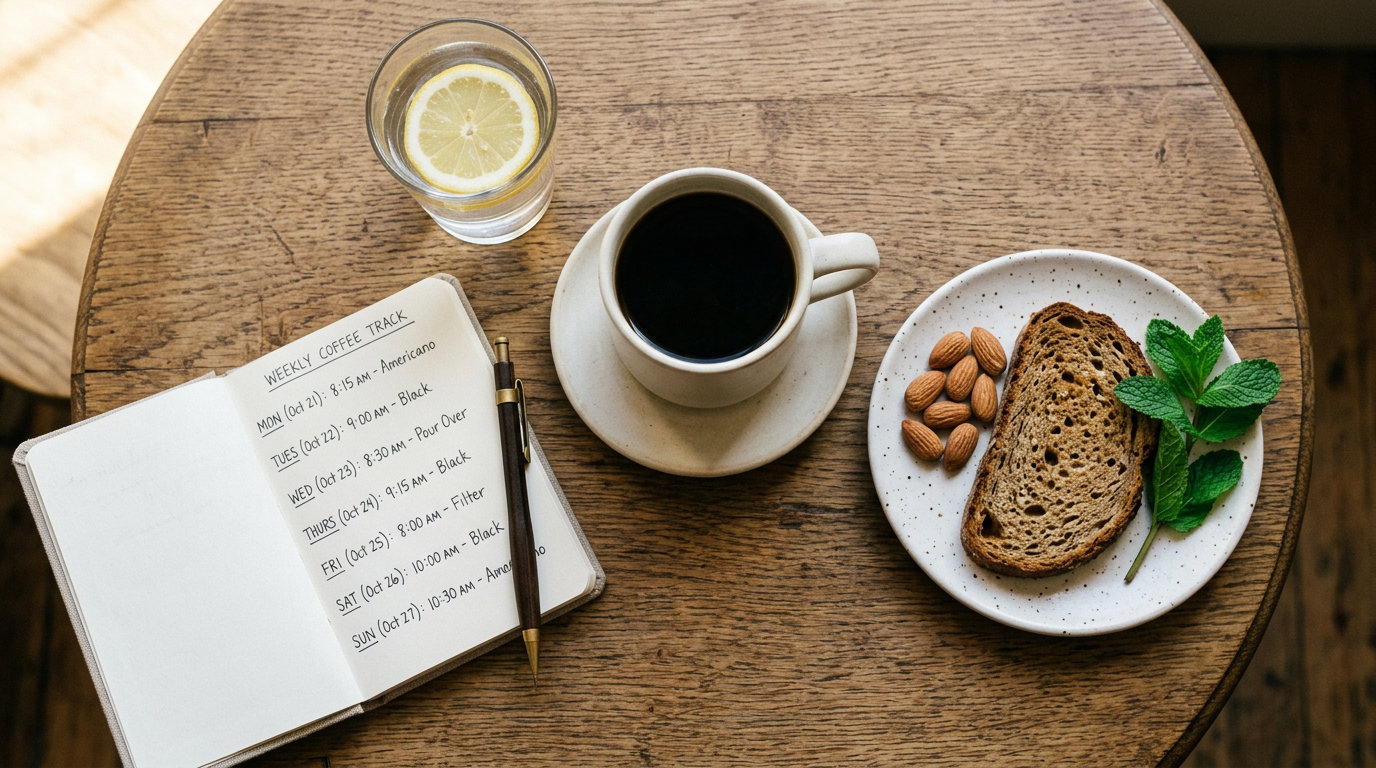
A better routine is predictable.
You know roughly how much caffeine you are getting, you know when you stop taking it for the day, and you do not need a second or third drink just because the first one was impossible to quantify.
For a coffee drinker, that might mean one measured morning coffee instead of several café drinks with unknown shot counts. For a matcha drinker, it might mean using the same powder amount every morning instead of estimating with a spoon that changes from day to day.
The goal is not to flatten every day into laboratory precision. It is to reduce enough variability that you can tell whether the drink actually fits you.
If sleep stays steady, concentration is where you want it, and the caffeine total remains inside a range you tolerate well, the routine is doing its job.
That is a better outcome than switching between matcha and coffee every few days because one is currently being called cleaner or calmer online.
Who Should Choose Matcha, Who Should Choose Coffee, and Who Should Choose Less Caffeine
Matcha is a sensible fit if you like the taste, prefer controlling caffeine by grams of powder, and want tea compounds such as theanine as part of the drink.
Coffee is a sensible fit if you enjoy it, tolerate the caffeine well, and want a familiar beverage that can deliver a clear caffeine effect without pretending it is anything else.
Neither choice is ideal if caffeine regularly leaves you restless, shaky, anxious, or unable to sleep. The drink name does not override your response.
The FDA’s 400 mg figure is a population-level benchmark for most healthy adults, not a target. Some people function better far below it.
Pregnancy, certain medications, heart-rhythm concerns, and other medical situations also deserve individualized advice rather than a generic drink comparison.
The better choice can also be decaf or a smaller serving. There is no prize for maximizing caffeine.
How Fast the Differences Show Up
The caffeine part is acute.
You do not need eight weeks to know whether one coffee or one matcha gives you more caffeine. The relevant effects on alertness and sleep happen on the scale of hours.
The companion-compound story is less simple. Studies on theanine plus caffeine often measure attention within the first couple of hours, while research on coffee polyphenols includes both acute experiments and longer-term intake.
That means the immediate comparison and the long-term comparison are different questions.
If you are choosing a morning drink, test the practical variables first: dose, timing, concentration, appetite, and sleep later that night.
Keep the serving stable for a week before drawing conclusions. One stressful Monday is not a useful matcha-versus-coffee experiment.
And if your goal is cognition rather than a beverage ritual, that is where this comparison stops being enough.
Matcha vs Coffee: Common Questions
Which has more caffeine, matcha or coffee?
Coffee usually has more caffeine per standard serving, but the ranges overlap. An 8-ounce brewed coffee is commonly around 96 mg, while matcha depends on how many grams of powder are used. A 2-gram matcha serving can vary substantially by product.
Is matcha better than coffee for focus?
Not universally. Matcha combines caffeine with L-theanine, while coffee delivers caffeine alongside its own plant compounds. Theanine plus caffeine has some evidence for attention, but that does not make every matcha superior to every coffee for concentration.
Does matcha caffeine last longer than coffee caffeine?
There is no separate matcha form of caffeine with a different chemical half-life. How long caffeine affects you depends more on the dose and your own metabolism than on whether the caffeine came from matcha or coffee.
Is matcha easier on sleep than coffee?
It can be if your matcha serving contains less caffeine, but the drink name itself does not guarantee that. A heavily dosed matcha late in the day can still add meaningful caffeine. Compare milligrams and timing rather than assuming tea is automatically a nighttime-safe option.
Is Goli Matcha Mind a coffee replacement?
No. Goli Matcha Mind is not designed as a coffee replacement, an energy product, or a stimulant product. It contains 100 mg of matcha powder, but the main cognitive ingredient is 250 mg of Cognizin citicoline per serving.
That distinction matters because the exact caffeine amount in the finished gummies is not stated. I would not use them to recreate the caffeine effect of a cup of coffee.
The practical answer to matcha vs coffee is therefore about the drink you want, the dose you tolerate, and the job you expect it to do.
Where Matcha Mind Fits When the Goal Is Focus, Not a Beverage
A viewer once asked me during a TikTok Live whether I would take Matcha Mind instead of my morning coffee. I would not compare them that way because one is a caffeinated beverage and the other is a cognitive-support gummy.
I use Matcha Mind for the Cognizin citicoline, not for a caffeine hit. A serving provides 250 mg of Cognizin, plus 100 mg of matcha powder, with turmeric and spirulina used for natural color. It also contains 6 grams of sugar per serving, so this is not a Zero Sugar formula.
The research-dose gap should stay visible. One randomized trial in healthy older adults used 500 mg of Cognizin daily for 12 weeks and reported improvements in memory outcomes. The trial was connected to the ingredient manufacturer, with employees of Kyowa Hakko among the authors, so that relationship matters when interpreting the result.
A serving of Matcha Mind gives you 250 mg, not the 500 mg used in that trial. That is the honest comparison.
The matcha is part of the formula, but I would not turn its name into an energy claim or estimate the finished gummy’s caffeine as if the label had provided a tested value.
Across Goli’s worldwide catalog, the running gummy total is now above ten billion sold. That scale does not make Matcha Mind a coffee replacement. It makes label clarity more important because the product should be judged on the dose it actually states.
See where the focus formula fits
You May Also Like
If you are following the current BGD publishing sequence, read collagen gummies next.
The Bottom Line
Goli Matcha Mind belongs beside this comparison only when it stays in its own category. Coffee and matcha drinks are beverages whose immediate effect is strongly shaped by caffeine dose. Matcha Mind is a cognitive-support gummy built around 250 mg of Cognizin citicoline, with 100 mg of matcha powder as part of the formula rather than as a promised stimulant dose.
Today, write down the actual coffee serving you drink or the grams of matcha powder you use. Compare the likely caffeine, move the serving earlier if sleep is suffering, and choose the drink you can make consistently without guessing.
Goli’s worldwide gummy sales have moved beyond ten billion units across its catalog since 2018. That history does not pick a winner between matcha and coffee. It does reinforce the more useful rule here: judge the product in front of you by what it contains and what job it was designed to do.
References
- Kochman J, Jakubczyk K, Antoniewicz J, Mruk H, Janda K. “Health Benefits and Chemical Composition of Matcha Green Tea: A Review.” Molecules. 2021;26(1):85.
- Mayo Clinic Staff. “Caffeine content for coffee, tea, soda and more.” Mayo Clinic. 2025.
- U.S. Food and Drug Administration. “Spilling the Beans: How Much Caffeine is Too Much?”
- Payne ER, Aceves-Martins M, Dubost J, Greyling A, de Roos B. “Effects of Tea (Camellia sinensis) or its Bioactive Compounds L-Theanine or L-Theanine plus Caffeine on Cognition, Sleep, and Mood in Healthy Participants: A Systematic Review and Meta-Analysis of Randomized Controlled Trials.” Nutrition Reviews. 2025;83(10):1873-1891.
- Grzegorzewski J, Bartsch F, Köller A, König M. “Pharmacokinetics of Caffeine: A Systematic Analysis of Reported Data for Application in Metabolic Phenotyping and Liver Function Testing.” Frontiers in Pharmacology. 2022;12:752826.
- Drake C, Roehrs T, Shambroom J, Roth T. “Caffeine Effects on Sleep Taken 0, 3, or 6 Hours before Going to Bed.” Journal of Clinical Sleep Medicine. 2013;9(11):1195-1200.
- Johal K, Jones DJW, Bell L, Lovegrove JA, Lamport DJ. “Impact of coffee-derived chlorogenic acid on cognition: a systematic review and meta-analysis.” Nutrition Research Reviews. 2025;38(1):393-406.
- Nakazaki E, Mah E, Sanoshy K, Citrolo D, Watanabe F. “Citicoline and Memory Function in Healthy Older Adults: A Randomized, Double-Blind, Placebo-Controlled Clinical Trial.” The Journal of Nutrition. 2021;151(8):2153-2160. Manufacturer-linked study.