
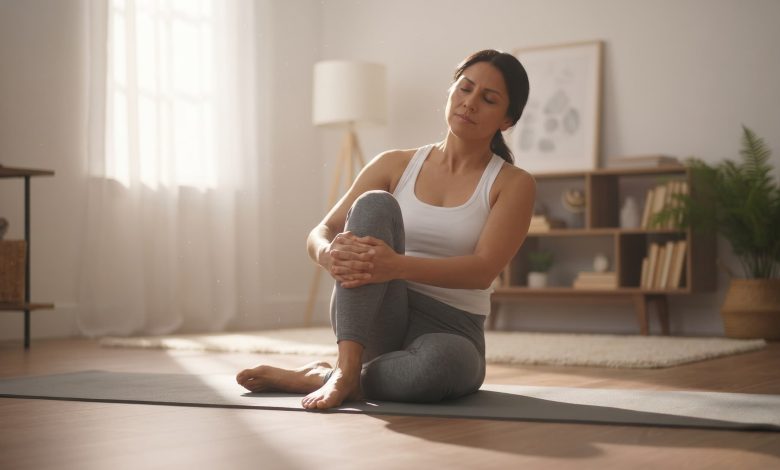
That tight, pressurized feeling in your abdomen after a meal is one of the most universally uncomfortable digestive experiences. You know movement helps, but collapsing on the couch feels more natural than unrolling a mat. Here is what most people do not realize: the right yoga poses for bloating work through a specific mechanical sequence, not through generic stretching. The sequence is what makes the difference between feeling slightly better and actually moving the gas through.
The Bloat Release Flow works through three phases: compression moves trapped gas forward, twisting routes it through the colon, and reset activates the parasympathetic nervous system digestion depends on.
Over 750,000 Zero Sugar 3 Pack bundles have been sold on TikTok Shop since late May 2025, and 10 billion Goli gummies have been sold worldwide since 2018.
The Short Answer
Yoga poses for bloating work through three mechanisms: direct abdominal compression that moves trapped gas through the digestive tract, spinal twists that sequentially stimulate the ascending and descending colon, and parasympathetic nervous system activation that switches the gut from stress mode to digest mode. The most effective approach is a sequenced flow of these three phases rather than a single pose held for a long time.
Why Yoga Actually Helps Bloating
Bloating is typically caused by trapped gas in the intestinal tract, slowed gut motility that allows more fermentation time, or a combination of both.
Yoga addresses bloating through two overlapping pathways. The first is mechanical: specific poses apply direct compression to the abdominal organs, encouraging gas to move in the direction of natural peristalsis. Twisting poses route that movement through the colon. The second pathway is neurological: stress activates the sympathetic nervous system, which suppresses digestion. Deep, slow breathing during yoga activates the parasympathetic nervous system, restoring blood flow and nerve activity to the digestive organs.
PMC research on physical activity and functional abdominal bloating confirms that even short-term light physical activity after meals significantly reduces gastrointestinal symptoms including bloating compared to rest, and that the combination of gentle movement and positional change produces faster gas clearance than either resting or high-intensity activity (PMC physical activity and bloating RCT).
Cleveland Clinic confirms that bloating is commonly driven by excess gas production in the digestive tract and that movement and positional changes can help gas travel through the intestines and relieve the pressure and discomfort associated with it.
The Bloat Release Flow
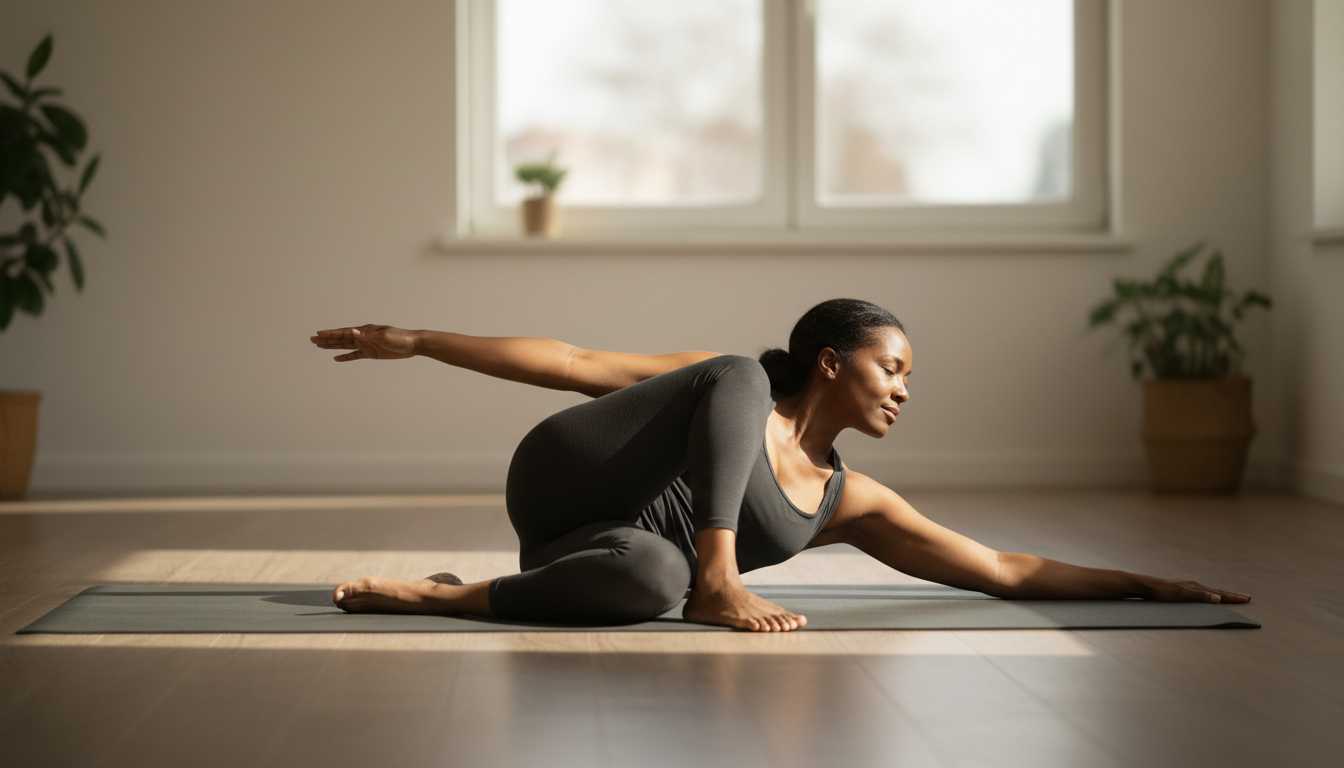
The Bloat Release Flow sequences these poses across three mechanical phases. Each phase builds on the previous one, and the full sequence takes approximately ten to twelve minutes to complete. You can use any single phase in isolation for quicker relief, but the complete sequence produces the most durable result.
The Compression Phase
The compression phase applies direct abdominal pressure through two poses that squeeze gas from the lower digestive tract upward and forward.
Wind-Relieving Pose (Pavanamuktasana): lie on your back, draw one knee toward your chest, and wrap both hands around your shin. Press the knee gently but firmly toward your abdomen while keeping your lower back flat and the other leg extended. Hold for five to eight slow breaths, then repeat on the other side. The sustained compression against the colon creates the mechanical pressure that encourages trapped gas to move.
Happy Baby (Ananda Balasana): draw both knees toward your chest, grab the outer edges of your feet or ankles, and open your knees toward the floor with feet flexed toward the ceiling. Press your lower back into the floor and hold for six to eight breaths, rocking side to side if comfortable. Happy Baby applies compression across a wider abdominal area while releasing the lower back tension that often accompanies digestive discomfort.
The Twist Phase
The twist phase routes gas through the colon in the anatomically correct direction using poses that compress the ascending and descending colon sequentially.
Supine Twist (Supta Matsyendrasana): lie on your back, draw one knee into your chest, then let it fall across your body to the opposite side, arms extended. Keep both shoulders on the floor and look away from the crossed knee. Hold six to eight breaths on each side. Twisting right first stimulates the ascending colon; twisting left second stimulates the descending colon. This order routes gas in the direction of natural elimination.
Seated Spinal Twist (Ardha Matsyendrasana): sit with legs extended, cross your left foot outside your right thigh, place your right elbow on the outside of your left knee, and rotate your torso to the left. Hold for five to six breaths, then repeat on the other side in the same order. The seated version produces deeper compression of the digestive organs and is particularly effective for gas that has been building for several hours.
The Reset Phase
The reset phase activates the parasympathetic nervous system and allows the digestive organs to settle into relaxed function after the compression and twisting of the previous two phases.
Child’s Pose (Balasana): from kneeling, sit hips back toward heels and fold your torso forward over your thighs, abdomen resting against your thighs. Hold for eight to ten slow breaths. Child’s Pose applies gentle forward compression to the lower abdomen and signals a shift to parasympathetic mode through the combination of forward folding and slow breathing.
Cat-Cow (Marjaryasana-Bitilasana): on all fours, inhale as your belly drops toward the floor and you lift your chest and tailbone. Exhale as you round your spine toward the ceiling and tuck your chin. Move slowly between the two for six to eight complete breath cycles. The rhythmic flexion and extension massages the digestive organs from above and stimulates peristalsis in people whose bloating is driven by slow gut transit.
Why the Sequence Order Matters
Most yoga guides for bloating present poses as a menu to choose from. The Bloat Release Flow presents them as a sequence because the order produces a different physiological result than the same poses done randomly.
Compression first creates the mechanical pressure that moves trapped gas upward. Twisting second routes that mobilized gas through the colon in the anatomically correct direction. Reset third allows the digestive system to settle in relaxed parasympathetic mode.
Doing the reset phase first reduces effectiveness because the nervous system has not been primed for mechanical intervention. Doing the twist phase without compression first is less effective because there is less mobilized gas to route.
Mayo Clinic confirms that bloating is often caused by intestinal gas that has accumulated in the digestive tract, and that the combination of movement and positional change is one of the most reliable ways to encourage that gas to move toward elimination.
The Breathing Technique That Makes Each Pose Work
The mechanical effect of every pose in the Bloat Release Flow is amplified or reduced by how you breathe during it. Shallow chest breathing does not produce the intra-abdominal pressure change that deep diaphragmatic breathing creates, and it does not activate the parasympathetic nervous system effectively.
Inhale slowly through the nose, allowing the belly to expand outward. Exhale slowly, allowing the belly to draw gently inward. In compression poses, the exhalation deepens the mechanical pressure. In twist poses, the exhalation allows the torso to rotate a little further with each breath.
Counting breaths is more practical than watching a clock. Five counted breaths with full inhalation and exhalation produces the physiological result that the Bloat Release Flow requires.
How Long to Hold Each Pose and When to Practice
The minimum effective hold for compression and twist phases is five to six full slow breaths, approximately 30 to 45 seconds per pose. The reset phase benefits from eight to ten breaths where the parasympathetic activation has time to deepen.
The optimal timing window is 30 to 60 minutes after a meal, when gas production from fermentation is peaking but the digestive organs still have content to work with. Practicing immediately after eating is uncomfortable. Practicing more than three hours after a meal is still useful but less effective for acute bloating.
Morning practice before eating addresses the transit pattern that produces the overnight gas accumulation many people experience as morning bloating. Evening practice before bed reduces the residual gas that interrupted digestion produces during the afternoon and prevents it from accumulating during sleep.
NIH MedlinePlus confirms that digestive health is supported by consistent movement and dietary habits, and that addressing bloating through both physical and nutritional approaches produces more durable improvement than either alone (NIH MedlinePlus digestive health).
What the Research Actually Shows
The most direct evidence comes from a randomized controlled trial that found short-term physical activity after meals significantly reduced functional abdominal bloating compared to rest.
Research on yoga for functional digestive disorders including IBS and functional dyspepsia has found consistent signals for improvement in bloating and abdominal discomfort. The parasympathetic activation mechanism is the most documented pathway, with multiple studies confirming deep breathing during yoga produces measurable shifts toward rest-and-digest mode.
WebMD confirms that bloating is commonly related to the digestive system’s gas production and that lifestyle approaches including movement are among the first-line recommendations for managing it in people without underlying conditions (WebMD digestive disorders and bloating).
Who This Approach Is For
Adults with predictable post-meal bloating benefit most directly, because the three-phase sequence addresses the immediate mechanical cause. People who sit for extended periods benefit because sedentary postures slow transit and allow gas to accumulate. People whose bloating worsens under stress benefit because the reset phase directly addresses the sympathetic nervous system activation that suppresses digestion.
If bloating is severe, persistent across all foods, or accompanied by significant pain or blood in stool, professional evaluation is more appropriate than a physical practice.
Common Myths About Yoga for Bloating
Any yoga pose will help with bloating. Poses that elevate the heart rate, engage the core intensely, or require breath-holding may worsen acute bloating. General yoga or power yoga classes do not produce the same targeted mechanical effect as the compression and twist phases of the Bloat Release Flow.
You need to hold poses for a long time. Quality of compression and breath depth matters more than duration beyond a minimum. Five to eight slow breaths per pose produces the physiological response that mechanical relief requires.
Yoga is enough on its own to fix chronic bloating. The Bloat Release Flow is effective for acute post-meal bloating. For chronic or recurring bloating, the underlying cause is usually in the gut microbiome or the digestive enzyme environment. Yoga addresses the mechanical and neurological layer, not the bacterial and enzymatic layers.
You have to be flexible to do yoga for bloating. Every pose in the Bloat Release Flow is accessible at any flexibility level. Wind-Relieving Pose requires only the ability to lie on your back and draw one knee toward your chest. Happy Baby and the supine twist have the same requirement. Child’s Pose can be modified with a blanket under the hips if the full fold is uncomfortable. Flexibility is irrelevant to the mechanical effectiveness of the compression and twist phases.
Frequently Asked Questions: Yoga Poses for Bloating
What yoga poses are best for bloating?
Wind-Relieving Pose, Happy Baby, Supine Twist, Seated Spinal Twist, Child’s Pose, and Cat-Cow. Wind-Relieving Pose is consistently identified as the single most effective because it applies direct sustained compression to the colon. The Bloat Release Flow sequences all six across compression, twist, and reset phases for the most complete mechanical relief.
Does yoga actually help with bloating?
Yes, for the right type. Research confirms light physical activity including positional changes reduces functional abdominal bloating symptoms. Yoga’s combination of abdominal compression, spinal twisting, and deep breathing addresses the three primary mechanisms of gas-related bloating. The evidence is strongest for acute post-meal bloating driven by trapped gas. Yoga is most effective as part of a broader gut health routine that also addresses the microbiome and digestive enzyme layers.
How long should I hold yoga poses for bloating?
Hold compression and twist poses for five to eight slow breaths, approximately 30 to 45 seconds. Hold reset phase poses for eight to ten breaths. Shorter holds reduce mechanical effectiveness because compression needs sustained pressure to move gas forward. Longer holds beyond ten breaths do not significantly improve results once the parasympathetic response has been activated.
What yoga pose relieves gas immediately?
Wind-Relieving Pose (Pavanamuktasana) produces the fastest relief because it applies direct sustained compression to the colon. Pressing one knee firmly toward your abdomen creates the mechanical pressure that moves trapped gas. Most people notice a response within two to three minutes. Following it with a Supine Twist routes the mobilized gas toward elimination.
Is yoga or walking better for bloating?
Both are effective through different mechanisms. Walking stimulates peristalsis through full-body rhythmic movement. Yoga is more effective for gas trapped in a specific location because the compression and twisting phases create targeted mechanical pressure that walking does not. Research suggests any light movement after meals reduces bloating compared to rest.
Should I do yoga before or after eating for bloating?
Thirty to sixty minutes after eating is the most effective window. Gas production is peaking and the digestive system still has content to work with. Practicing immediately after eating is uncomfortable. Morning practice before eating addresses overnight gas accumulation. If you experience meal-specific bloating predictably, building the Bloat Release Flow into the 30 to 60 minute post-meal window produces the most consistent relief.
Why Yoga Is One Layer, Not the Whole Answer
The Bloat Release Flow addresses the mechanical and neurological layers of bloating with real effect. What it does not address is the gut microbiome layer, which is often the underlying reason the same meal produces bloating on some days and not others, or the digestive enzyme layer, which determines how efficiently food is broken down before it reaches the bacteria that ferment it into gas.
After 200 consecutive days on TikTok Live watching people describe their bloating patterns, the people who get the most consistent relief combine the physical layer with the gut support layer. The Goli Pre+Post+Probiotics gummies address the microbiome with DE111, XOS, and MCC1849. The Goli ACV+ gummies support the digestive enzyme environment so that less undigested food reaches the fermentation stage where gas is produced.
All six certifications confirm the formulation standard: Gluten-Free, Non-GMO, Vegan, Gelatin-Free, Physician-Owned, and Science-Backed.
Over 750,000 Zero Sugar 3 Pack bundles have been sold on TikTok Shop since late May 2025. Ten billion Goli gummies have been sold worldwide since 2018.
NIH ODS confirms that probiotic supplementation with clinically studied strains supports gut microbiome health and digestive function, with consistent daily use producing more durable improvement in digestive symptoms than intermittent use (NIH ODS probiotics fact sheet).
Healthline confirms that probiotics support digestive health including microbiome diversity and gas management, making them a complement to physical practices like yoga (Healthline probiotics overview).
I have linked exclusive TikTok pricing below for Better Gut Daily readers.
Exclusive TikTok pricing below
You May Also Like
If bloating is only one part of the digestive picture, comparing different supplement approaches can help you build a more targeted daily routine.
For readers building a broader supplement routine alongside yoga, the NAD vs NMN comparison covers all three options through the Precursor Selection Standard.
The Bottom Line
The Bloat Release Flow gives yoga poses for bloating a mechanical framework: compression moves trapped gas forward, twisting routes it through the colon in the right direction, and reset activates the parasympathetic system digestion requires. In sequence, these three phases produce more consistent relief than the same poses done randomly.
Do the full Bloat Release Flow starting thirty minutes after your most reliably bloating-producing meal. Wind-Relieving Pose first, both sides. Supine Twist second, right then left. Child’s Pose and Cat-Cow to close. The practice takes twelve minutes and the mechanical result is repeatable.
Over 750,000 Zero Sugar 3 Pack bundles have been sold on TikTok Shop since late May 2025. Add the Goli Pre+Post+Probiotics and ACV+ gummies to your morning routine and the Bloat Release Flow to your post-meal window. Your gut responds to what you give it consistently, across all three layers.
References
- PMC The effect of short-term physical activity after meals on gastrointestinal symptoms in individuals with functional abdominal bloating, a randomized clinical trial
- Cleveland Clinic Bloating symptoms and causes overview
- Mayo Clinic Bloating causes and overview
- NIH MedlinePlus Digestive diseases overview
- WebMD Digestive disorders and bloating
- NIH Office of Dietary Supplements Probiotics health professional fact sheet:
- Healthline Probiotics 101, a simple beginners guide